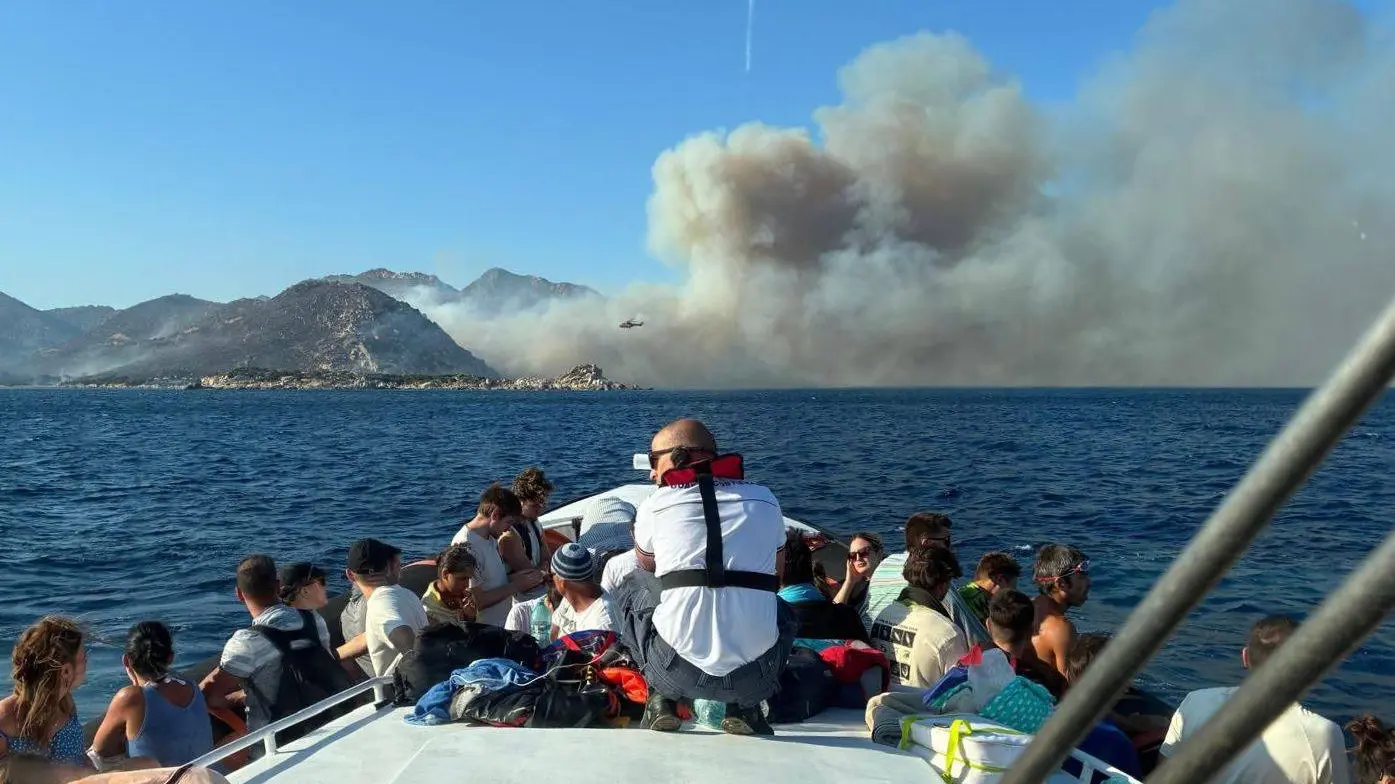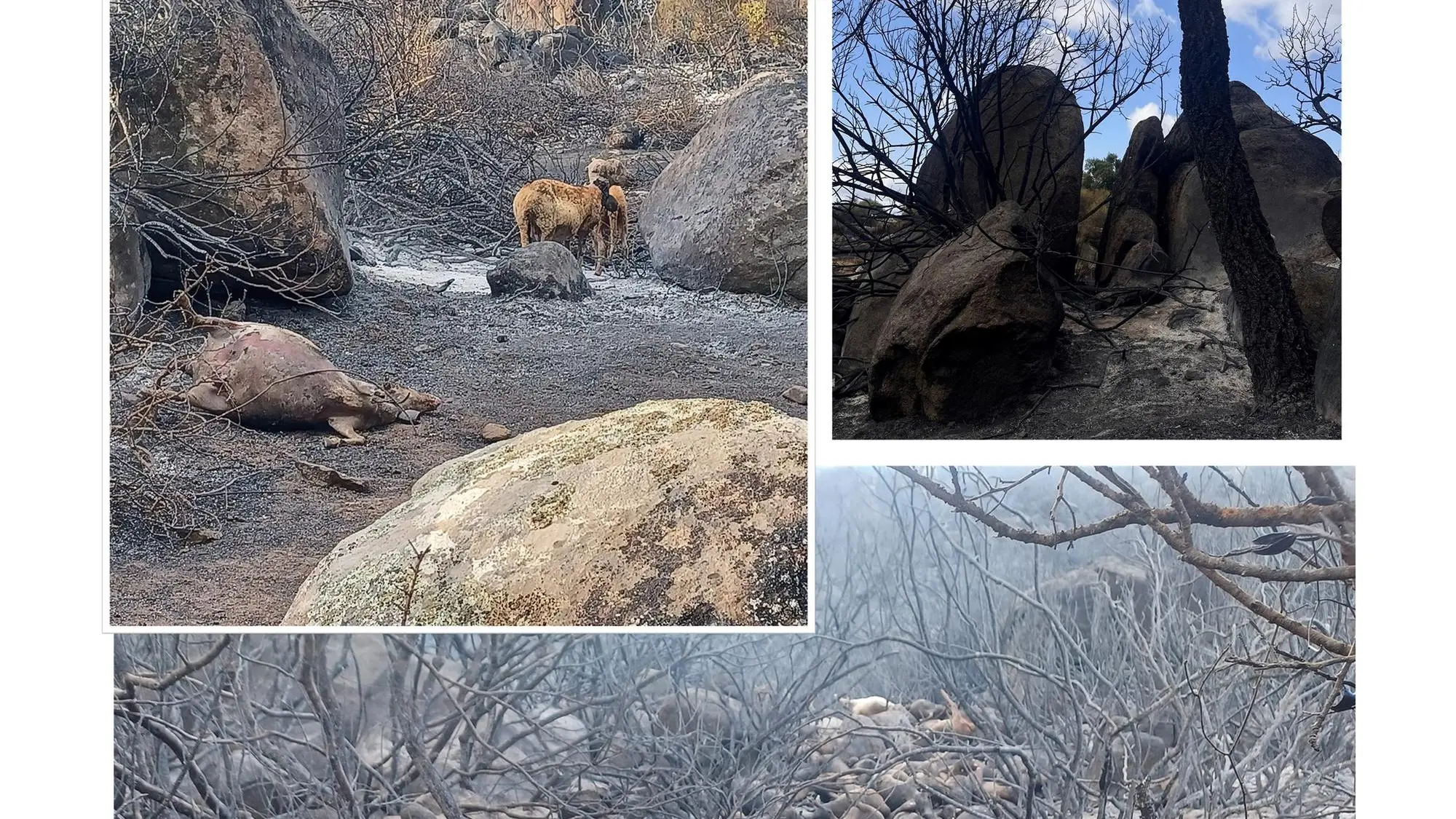


The town is an open-air monument. The “natural genius” has shaped and shaped it over millennia, with lush water and furious wind. Each casting of silver white granite placed in the land of Orotelli belongs to the "natural statuary" of a proscenium that until yesterday was filled with junipers and oaks, with lush paths of a mysteriously irreproducible green. Until yesterday, in fact. The night, yet another in the modern history of incendiary wickedness, was hell. The tongues of fire, after hours and hours of Canadair and helicopters, have shown no sign of abating, forcing exhausted volunteers, who arrived at the front of the flames from neighboring countries and beyond, to keep their eyes wide open all night long in front of the latest trench, before the houses.
The specter of dawn
Waking up at dawn is spooky. The front of hell pushed itself to the last meter before the town centre, after transforming what it overwhelmed in the furious night advance into white dust and black desert. He spared nothing. He tore down the galvanized fences, twisting them as if he had to send that iron back to the foundry, he relentlessly infiltrated the tiny cracks of those dry stone walls that have always marked the "tancati" of the countryside, of the sheepfolds, of the rural sanctuaries.
Power struggles
The lookout, that of the forestry, can be glimpsed close to one of nature's monuments, perched at the highest point compared to the devastation that has just passed with great fanfare before the eyes of the night. The look is resigned, albeit alert and with binoculars in order. In a Region where the power struggles to divide commanders and directors have long eluded satellites and technological modernity, organization and risk planning, nothing remains but the sad counting of the damage, as if the "funeral rite" of fire were a curse fallen from the sky.
Lunar footprint
Those few glances left on the "theater of war" are cracked with blood, as if the progress of the flames had done so much as to also mark the eyes of those who tried in every way to stop that fury. What was earth is now soft dust, crunchy, still warm, enveloping, reduced to conspicuous dust, but imperceptible to the touch. The footprints remain imprinted like those of on the lunar soil, except that here the disaster is entirely terrestrial. Each monumental stone forged by nature here has a name, a nickname and also the free interpretation of the symbols. Since yesterday, however, those granite silver stones have become black. Not only sprinkled with ash and flows of fire, but attacked to the point of marking their chemical-physical composition, to the point of splitting them, detaching the rocky bark forever. If you place your hand on that statue of Orotelli, scattered in the epicenter of the flames, you feel it to be crumbly, still boiling, ready to crumble into dust.