

"Two months at sea to rescue migrants: many were exhausted, others didn't make it."
The Coast Guard patrol boat CP306 has completed its mission. Five Sardinian military personnel were on board: "A truly dramatic human and professional experience."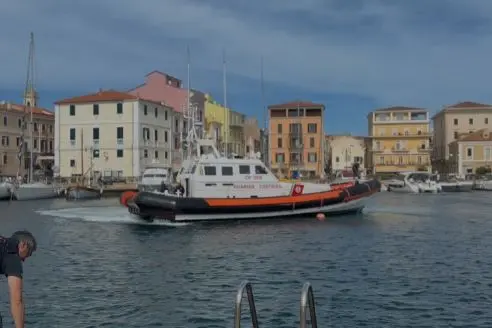
Per restare aggiornato entra nel nostro canale Whatsapp
Lifeless bodies recovered from the sea, migrants exhausted by the cold and rain, women dying during the crossing to Lampedusa. These are images that will long remain etched in the memories of the crew of the Coast Guard's offshore SAR patrol boat CP306, which returned to La Maddalena last Sunday after a two-month operational mission in the Strait of Sicily.
Engaged in rescue operations coordinated by the VII Naval Squadron of the Port Authorities, the military carried out the dramatic intervention on the night between March 31 and April 1 when, with the patrol boat, they intervened approximately 85 miles south of Lampedusa, in the Libyan SAR area, to rescue a boat in very serious difficulty.
Upon arrival, the military encountered a shocking scene: dozens of exhausted migrants, exposed for hours to the cold and harsh weather, and numerous lifeless bodies aboard the vessel. Weather conditions were harsh, with strong winds, pouring rain, and temperatures around 10°C (40°F). The survivors and their bodies were transferred to the patrol boat, and from that moment on, the long journey to Lampedusa began.
Along the way, other people, including several women, died from hypothermia. The boat arrived at the Favarolo dock in the early afternoon of April 1st. Among the most serious cases was a child, who was immediately transferred to the island's outpatient clinic.
Waiting for the crew upon their return to Cala Gavetta were the commander of the La Maddalena Port Authority, Vittorio Vanacore , together with the soldiers' families and friends .
On board the CP306 operated the first lieutenant and commander Stefano Brigida , the chief 3rd Class Nicola Percudani and the sergeants Emiliano Carta and Antonello Salis .
The crew's experience was both professional and human, a deeply dramatic one. For hours, in the dead of night and with sea conditions in extreme conditions, the military continued rescue and assistance operations "while the bodies and rescued people piled up on board." Every available space on the patrol boat was used to accommodate the migrants rescued from the sea, including the crew cabin, "in order to save what could be saved."