

Port Authority: "Porto Torres, a strategic port for the Free Zone, cruises, and pleasure craft."
President Bagalà: "We can promote 300 hectares of land and encourage the establishment of new businesses."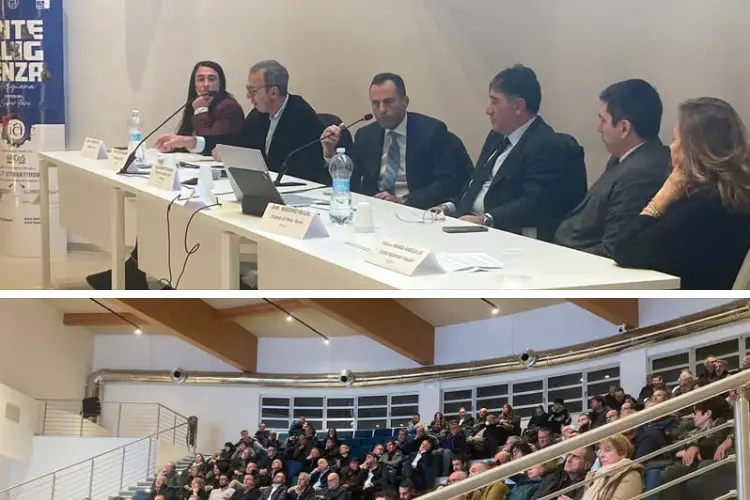
Per restare aggiornato entra nel nostro canale Whatsapp
A combination of a customs free zone, strengthening the shipbuilding industry, and developing the cruise industry will make the Northwest port more competitive, transforming it into an integrated industrial and logistics hub. At the meeting "Small and Medium-Sized Enterprises - Energy for Development," organized in Porto Torres by the Sassari Confederation of Artisans, Domenico Bagalà, president of the Port System Authority, urged all stakeholders to pool all available resources within the region and implement a strategic plan to promote the port and its economic growth. "My proposal is for a fully operational and protected customs free zone," Bagalà said. "This is possible because it falls within my powers as president of the Port Authority. The law allows me to jointly identify a specific area, including the logistics platform, a dock that can serve the back-port area. We can promote 300 hectares of land and encourage the establishment of new businesses by setting up a fenced area with cameras, where tax incentives and tax credits can be activated, taking advantage of what the Single Economic Zone offers." At the Friday evening meeting, in the "Cozzi" conference room of the Porto Torres Port Authority, before a large audience, speakers included the mayor of Porto Torres, Massimo Mulas, the president of Confartigianato Sassari, Marco Rau, the president of SFIRS, Riccardo Barbieri, and Simona Fois, president of the Sassari Provincial Industrial Consortium. The meeting, moderated by Maria Amelia Lai of Confartigianato, aimed to offer opportunities and support tools for small and medium-sized businesses.
This coming May, Porto Torres will take center stage with Cruise Day International, the main forum dedicated to the cruise industry. This event will provide a platform for analysis, discussion, and debate on the sector's present and future, bringing together operators, institutions, ports, and stakeholders to discuss trends, infrastructure, and economic impact. "We need to fix the rather ugly docks and work on hospitality, keep shops and museums open, and organize tour operators and excursions if we want this area to be attractive to cruise operators," emphasizes President Bagalà. There is also room and potential for developing shipbuilding and recreational boating. "Porto Torres is promising for shipbuilding development," adds Bagalà. "We could start by training twenty young people to work in an innovative shipyard. But we need to start now if we want to be ready in two years." While awaiting the tender for the travel lift, which has become operational at the industrial port, the focus is on catering for large yachts—vessels over 70 meters long—sailing in the Mediterranean. "Vessels that often come in the summer and then leave, when it would be desirable for them to stay in the winter as well. Luxury vessels that might return because they want to redecorate, which means jobs, skilled workers, all the qualities that the port of Torre del Greco offers, spaces to promote to show that we are serious: but we must believe in it." A joint approach with all stakeholders. The Port Authority has commissioned a study by the Financial Times to understand market demand, with economic surveys and monitoring of new investors and projects underway at a given time. "Once we have the results of the study, we will be able to finalize the package and actively promote it at trade fairs and marketing," is the Port Authority's proposal.
It is within this context that the three proposals presented by Confartigianato President Marco Rau fit. "The first is that Porto Torres, like other areas in the Northwest, has a real need for guidance and support in accessing credit and financial instruments. Therefore, we will provide expertise to support businesses, thus reopening a Confartigianato office in the city, where those interested in starting a business can obtain information. The second concerns the definition of a protocol that encourages the involvement of the local supply chain in a new investment to try to connect all businesses. Finally, a shared skills plan, that is, connecting schools, local politicians, ITS (Institute for Technical Institutes), and businesses to try to train the necessary skills for the companies that will be needed in the area in the coming years."