

Tragedy in the Maldives, first photos of the cave: "Light at the entrance, but visibility rapidly diminishes."
The five Italians, this is one of the hypotheses, would have run out of oxygen in their tanks while they were desperately looking for a way outPoor visibility due to coral sediments, doubts about adequate equipment, and the sea caves of Vaavu Atoll, which may have unexpectedly turned out to be a labyrinth of narrow passages, are all factors contributing to the tragedy of the divers in the Maldives. The hypothesis that the five Italians, while at depth on May 14th, may have run out of oxygen while desperately searching for a way out is becoming increasingly likely. These conjectures are supported by the testimonies of the super team of three Finnish divers, who recently completed the recovery of the victims' bodies.
In the next few hours, the bodies of the four victims, recovered by the team of speleologists, will arrive in Italy for an autopsy on Monday, while investigators are processing testimonies from professors from the University of Genoa. In the Maldives, the Dan Europe rescue team has completed its mission, and team leader Sami Paakkarinen told ANSA: "Those bodies were all together in one section of the cave. After the first dive, we couldn't find them and we feared they were no longer there," he explained, noting that the cave "is very deep, 60 meters, not very long, about 200 meters, but it's very challenging."

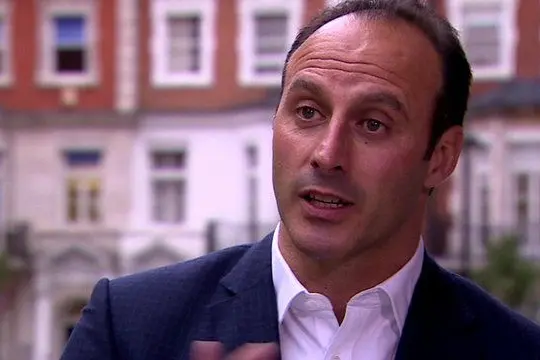
The other cave diver who was with him, Jenni Westerlund, emphasizes that "in these cases, human error often plays a role." Experts are not commenting on the causes of the Italians' deaths, who were trapped in a crevice in the second chamber of the cave. However, it cannot be ruled out that they may have gotten lost, having failed to enter the corridor from the second chamber to the first, the one open to the outside. They also ran out of air in their 12-liter tanks, suitable for recreational diving. Paakkarinen, however, has made a recommendation to the Maldivian government: "Recreational and technical diving must be clearly defined, as must the cave, and diving must be performed with the appropriate equipment and proper training."

Publishing photos of the divers at work, Dan Europe notes that within the initial section of the cave, natural light still filters through the entrance, but in the narrower internal sections of the cave, "visibility can quickly disappear due to the raised coral sediments, and navigation becomes more difficult." Meanwhile, investigations are already underway in Italy. In the next few hours, the bodies of four victims will be brought to Malpensa Airport: Monica Montefalcone, a professor at the University of Genoa, her daughter Giorgia Sommacal, researcher Muriel Oddenino, and Federico Gualtieri, a recent graduate of the Ligurian university. Then, on Monday, the Busto Arsizio prosecutor's office, delegated by the Rome prosecutors, will assign the assignments and begin the autopsies.
The first body to be examined will be that of Gianluca Benedetti, the 44-year-old boat captain from Padua, whose body was first recovered by Maldivian authorities. Investigators have already acquired some testimonies, such as that of Stefano Vanin, a forensic entomologist and professor at the same university who was on the boat from which the five dived. The police have also acquired the materials Vanin brought back from Malé and interviewed several university employees regarding the nature of the mission assigned to Professor Montefalcone, which appears to be unrelated to that dive. Carlo Sommacal, Monica Montefalcone's husband and Giorgia's father, has also intervened: "They've already removed her name from the university website, with a haste I don't understand... but Monica's CV also includes her cave diving certifications."
(Unioneonline)