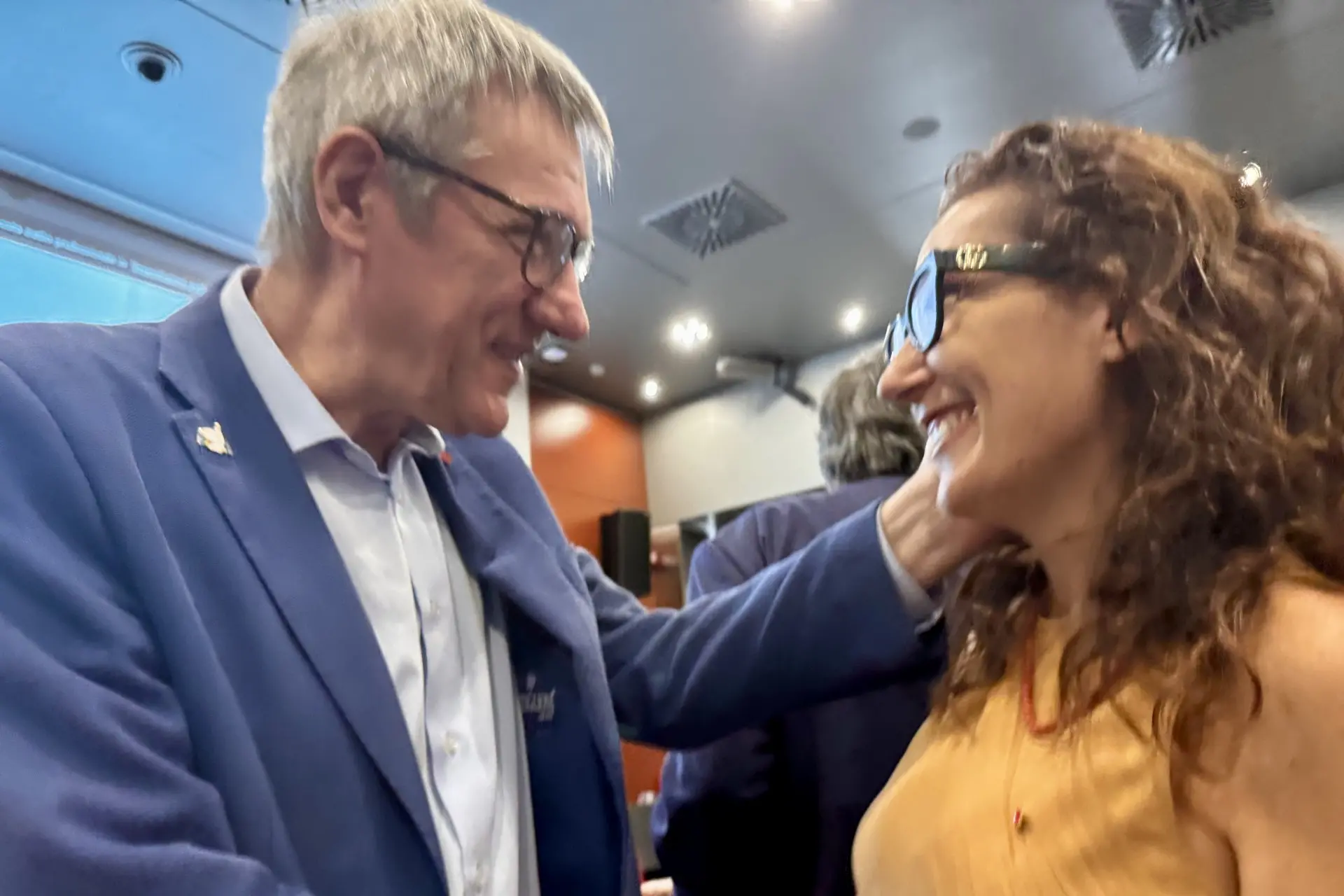
With no maternity ward and few specialists, Todde meets with the "Hands Off Ogliastra" Committee.
The meeting in Cagliari to seek structural answers on safety and proximity of care: the Region opens to dialogue and a shared path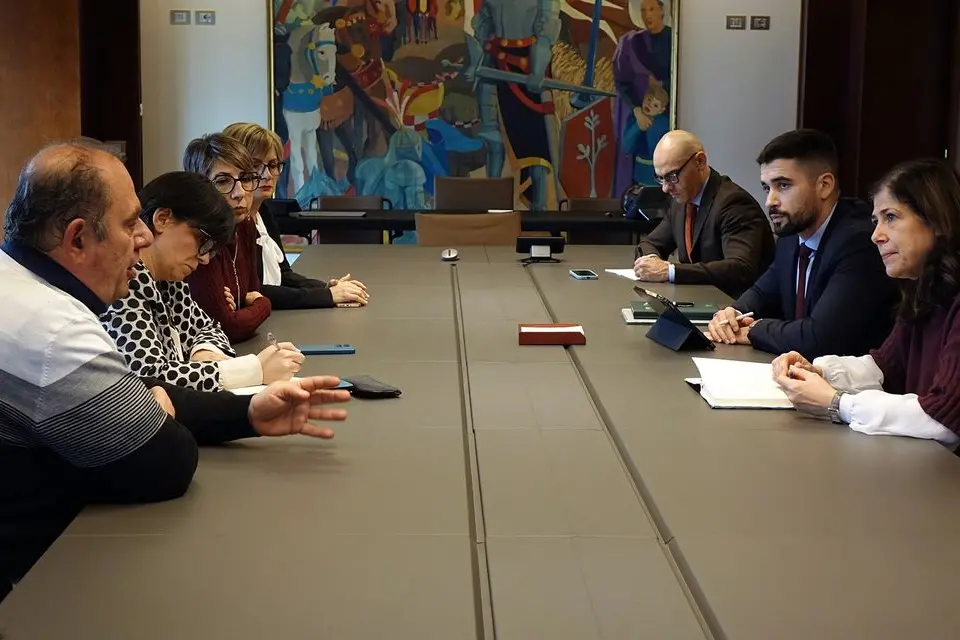
Per restare aggiornato entra nel nostro canale Whatsapp
"Ogliastra cannot continue to pay the price of distance and the structural deficiencies of its healthcare system." This was stated by Alessandra Todde, President and Interim Councilor for Health, this morning at a meeting with Stefano Ferreli, Chief of Staff of the Department of Health, and the "Hands Off Ogliastra" Committee. During the approximately one-hour meeting on Viale Trento, the main healthcare issues facing the region and prospects for strengthening local services were addressed.
The president also spoke to Committee members Arianna Depau, Daniela Sanna, Simona Demurtas, and Adriano Micheli. The four representatives immediately focused on the main critical issue : the reopening and proper functioning of the maternity ward, closed for four years and considered a priority that can no longer be postponed to ensure, first and foremost, the safety of mothers giving birth and their unborn children, as well as a fundamental right for the local community.
" Traveling from Ogliastra to Nuoro or Cagliari poses a risk to women and children," emphasized Daniela Sanna. Among the critical issues, the characteristics of the region should not be overlooked, as it often snows, and "taking the journey to Nuoro is risky, as is reaching Cagliari in the summer, with congested roads." The debate then focused on the issue of safety , which President Alessandra Todde addressed: " Safety cannot be assessed solely on the basis of the number of births performed in a facility, but must also necessarily take into account the experience and organization of the healthcare teams ."
Within this framework, the possibility of establishing networks and agreements between facilities was discussed, including in conjunction with Nuoro, to ensure adequate overall capacity and continuity of care. The Committee also proposed involving and collaborating with the Muravera hospital. "For some users, that facility is closer to Lanusei than Cagliari," noted Simona Demurtas and Daniela Sanna.
Much attention was given to staffing shortages, particularly in pediatrics, a critical issue structurally linked to the closure of the maternity unit. "We need an additional pediatric specialist with diabetes expertise," the Committee members emphasized.
In this regard, President Todde and Chief of Staff Ferreli analyzed various options for strengthening staff, including agreements with universities, the involvement of specialist students, and improved planning of competitions and mobility, currently slowed down by complex procedures and contractual constraints that penalize peripheral areas .
During the meeting, critical issues related to underserved specialties, including cardiology, hemodynamics, ophthalmology, and endocrinology, were also addressed, with particular reference to the needs of an elderly population, often forced to resort to private care or costly travel outside the region, especially for the most common conditions in this age group. Both sides reiterated the need to overcome the fragmentation of services and focus on a regional healthcare network capable of leveraging expertise and ensuring appropriate responses to real needs.
Another focus was on the emergency system and the use of air rescue . The interim councilor and the chief of staff emphasized that the priority is the full operation of hospital helipads, to ensure safe landings and takeoffs when necessary. In this regard, the ongoing work with Areus was confirmed, taking into account real distances and response times in the most isolated areas of the island, such as Ogliastra. "The issue of safety must be addressed seriously, looking at the organization of teams, clinical networks, and the ability to ensure timely responses. The reopening of the maternity ward and the strengthening of local services are objectives that require a clear, shared path with a clear timeline," emphasized President Todde, who added: "The Region is ready to do its part, together with the local communities, to rebuild trust and ensure equal access to care."
The Region has confirmed its willingness to continue discussions with the "Hands Off Ogliastra" Committee, the General Directorate, and the entities involved, with the goal of defining a concrete and verifiable operational framework capable of structurally responding to the region's healthcare needs. This openness to dialogue was welcomed by Micheli, Demurtas, Sanna, and Depau, who reiterated that the Committee "was born as a form of protest at a time when the concerns of Ogliastra were not being heard, while today it presents itself as a willing partner for discussion to identify solutions to the critical issues facing local healthcare."
(Unioneonline)