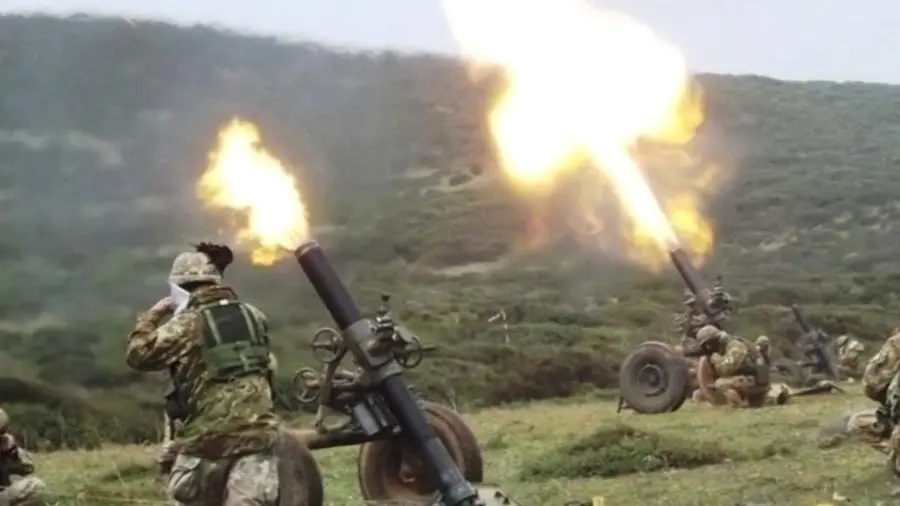


It is not a process yet. For the history of criminal law, however, it is already a crossroads destined to forever mark the primacy between life and simulated war, between respect for the environment and an alleged "fulfillment of duty". In the hall number one of the Preliminary Hearings of the Court of Cagliari, starting next May 6, at ten thirty, the dispute is to make the veins in the wrists tremble. There is an unprecedented game to be resolved in the courtrooms of the Bel Paese, which has always aimed at the protection and safeguarding, in words, of the supreme good of the environment, of the landscape, of its natural habitat. Always and everywhere, except in the extreme tip of south-western Sardinia, that stretch of coast that the Judge of the Preliminary Investigations did not hesitate to define as "rare beauty". It is here, in this strip of Sardinian land, Capo Teulada, stretching towards the coasts of North Africa, that a titanic clash between the powers of the State takes place, between absolute values, such as the environment and life, and that of wars. simulated that, according to the accusation, devastate health and territory.
The dilemma of "duty"
There is an atavistic dilemma to be resolved that in this portion of Sardinia, segregated and forbidden, has persisted since the age of time, at least from those of Andreotti and Nixon, President of the United States of America. A dilemma that, in this first phase of the judicial procedure, was resolved on the eve of August 15th of last year with a decision as imposing as it was revolutionary by the Judge for Preliminary Investigations, Alessandra Tedde: there is no legal principle that can make an alleged "Fulfillment of duty" to the detriment of constitutionally protected values such as the environment and health.
It is forbidden to pollute
Basically, no one is authorized to pollute, devastate a territory, jeopardize the health of the military and civilians, of animals and more generally of the natural habitat, in the name and on behalf of the important function of exercising the armed forces. What is celebrated in Cagliari is much more than a Preliminary Audience, at stake is an underground clash between the military leaders, supported by the most warm-hearted politics, and the very principle of the rule of law. In practice, the Cagliari judges are called to a task that no one, in such an explicit way, had ever been destined for: deciding whether military bases are a "free zone" of laws, where rules and regulations, from environmental protection to those on safety of the military and civilians, are systematically disregarded, ignored and violated, or belong, to all intents and purposes, to the legal power of the State. To be more explicit: do the laws of the Republic also apply within the confines circumscribed by kilometers of barbed wire of military bases? Do they have the effectiveness that they would have in any other territorial context of the Italian state? The question would seem rhetorical, but reading the defense and prosecution devices, the answer is far from obvious. There are three pillar measures of this which promises to be a real judicial war, destined to keep the spotlight on on a large scale, given the weight and functions of the men called to defend themselves, for the moment from the "only" accusation of having caused an "unnamed disaster".