

Sestu, Michela Mura: "The dry stone wall technique is against me."
The mayoral candidate rejects criticism and reiterates: "I will take care of my city."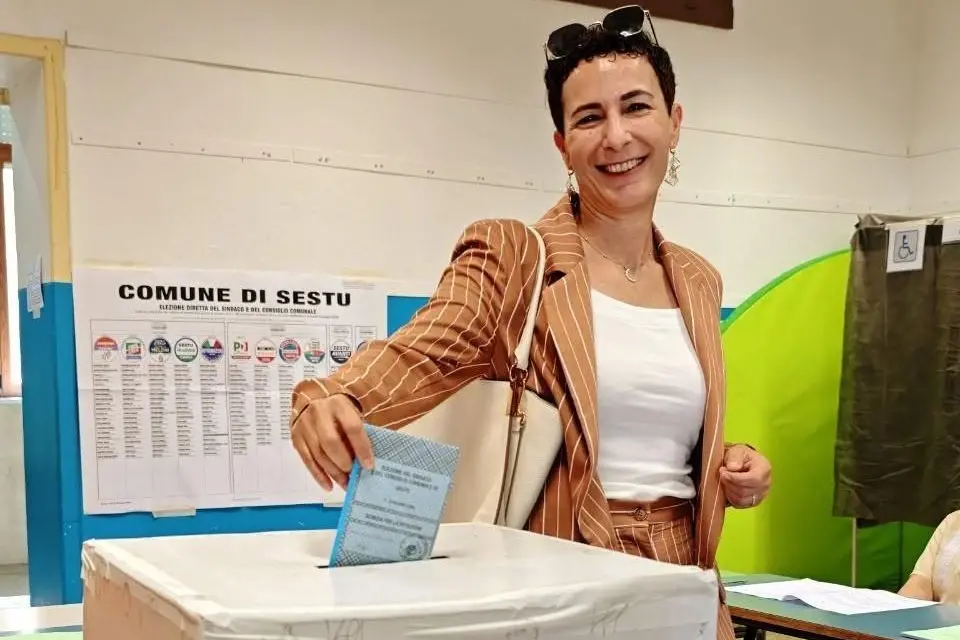
Per restare aggiornato entra nel nostro canale Whatsapp
"There are no rags flying inside Campo Largo, but we are witnessing the dry-stone wall technique of those who, in recent years, have always preferred to distinguish themselves through cronyism rather than building a real alternative to the right in our city."
After losing the first round of the mayoral race in Sestu against Michele Cossa, center-right leader Michela Mura, 50, former Democratic Party group leader in the city council, has decided to get some things off her chest after controversial posts began appearing—especially on social media—about the election outcome and who was responsible for the defeat.
The polls have spoken and now some criticisms are emerging: do you find them unfair?
To be useful and allow for constructive reasoning, vote analysis should be as objective as possible, but sometimes it happens that personal factors influence it to the point of distorting reality. Let's start with the data: out of 9,227 voters, Cossa won with 4,881 preferences, and his five lists received 4,757 votes. Thanks to Campo largo Unito, I received 3,371 votes, while our coalition of four lists received 2,948. Therefore, Cossa received 124 more votes than his lists, and I received 423 more than our coalition. The number of people who didn't vote was 8,732.
So you're satisfied with your personal result. And with that of the entire coalition?
Campo Largo presented itself with a clear and recognizable program and not only confirmed its past results but also grew. In 2010, Aldo Pili won with 3,254 votes out of 9,697, with a coalition that received 2,790 votes with four lists (one of which featured candidates who have now moved to the center-right). In 2015, Anna Crisponi received 2,990 votes out of 8,853 (the highest percentage of abstentions, excluding Covid) with a coalition that received 3,043 with five lists (one of which featured several candidates now in the Brothers of Italy and Sardinia Center 2020).
Why did three councilors who were in opposition to Paola Secci either not run again or switched sides to Michele Cossa?
The center-left Campo largo has presented itself as a unified group, excluding those individual elements who have demonstrated over the years that they belong to the center-right. The divisions within the center-left, artfully fueled in recent years, are now over, and those who instrumentally fomented them have ended up politically isolated. Now there is finally a cohesive group united around shared values and ideas. We have nothing to mend, only to consolidate and develop for a future free in ideas and politically healthy.
So, no drama. But isn't the first-round defeat, by about 1,300 votes—37.4% for her versus 54.2% for Cossa—a significant blow?
Despite the disappointment of the outcome, we have succeeded in uniting Campo Largo in a political project that continues what is being done in the Region and nationally. We will continue to work within the Sestu community and in the City Council, honoring with our commitment the trust of the 3,371 citizens who voted for us and the many who would have liked to do so.
Where do we start again?
"From the Democratic Party, which obtained its best result ever: 1,743 votes, or 20.7%, and 5 councilors. We surpassed the 2010 list by 472 votes and the 2015 list by 638."
What will he do now?
"I will take care of Sestu as I promised I would do during the election campaign."
Francesco Pinna