

Pellet emergency: a proposal: "A law to incentivize production in Sardinia."
Signatures are being collected for the approval of a bill in the Regional Council. The proponent: "Hundreds forced to queue for hours, skimping on a few bags at a cost of over €10, and unable to keep warm in the dead of winter: unacceptable."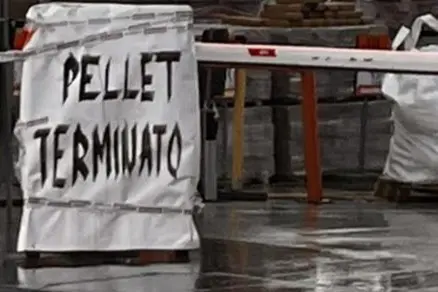
Per restare aggiornato entra nel nostro canale Whatsapp
Pellet shortage? Let's produce it in Sardinia. This is the thrust of the online petition: "We ask the Regional Council to pass a regional law that recognizes, incentivizes, and regulates local pellet production as an ancillary, non-industrial, agricultural and forestry activity, with a clear purpose: not to replace the market, but to act as a guarantee and buffer in times of crisis."
The initiative's promoter is Michele Virdis, president of the Barbagia rural district. Currently, there are fewer than 100 registered supporters on the Change.org platform. However, the initiative has only recently begun.
"The current pellet crisis in Sardinia is producing scenes that should not be seen in a European region in 2026," the presentation reads, "with elderly people and families forced to queue for hours, skimping on just a few bags at a price of over €10 a bag, and the inability to keep warm in the dead of winter. All of this will, in the coming months, cost families a lot and pose a risk to public health, as well as yet another blow to the dignity of individuals, especially the most vulnerable. Pellet fuel is now one of the main household fuels in Sardinia, not out of ideological or environmental choice, but out of economic necessity."
According to the initiator of the petition, "gas and electricity costs on the island are among the highest in Italy and Europe; for thousands of families (32% of households) , pellets represent the only sustainable alternative. When this resource is lacking, or becomes unaffordable, the problem is no longer the market: it's safety and health."
Virdis also analyzes the phenomenon: "Why did it happen (and why will it happen again)? This crisis was not caused by exceptional events or typical local speculation," he argues, but is "the predictable result of an economic model that has made Sardinia structurally dependent on long, unstable external energy supply chains . During the winter months, global demand for pellets regularly exceeds available supply. Under these conditions, the product is absorbed by the largest and closest markets; small, peripheral, and island markets are served last; prices rise everywhere, but even more so in Sardinia, due to logistics costs (+20–30%)."
Sardinia, with a population of approximately 1.5 million, "does not have a competitive freight port system for these supply chains and is forced to import almost all of its energy and fuel. When the global market goes into crisis, we are left exposed."
The proposed law should include "incentives for agricultural and forestry companies that produce pellets from on-site biomass; use of simple agricultural equipment (chippers, mills, pelletizers, including cardan shaft-driven ones); short and local supply chains, geared toward self-consumption and the local market; and a clear regulatory framework that avoids arbitrary interpretations and bureaucratic bottlenecks."
The benefits, according to Virdis, would be immediate and structural: "Calming prices during times of scarcity, supplementing agricultural income, reducing the risk of fires by clearing forests of dead material, strengthening human protection of the territory, and reducing energy dependence on external sources."