

Nuoro's fertility rate is above the Sardinian average, but demographic winter continues.
In 2025, the average number of children per woman will rise to 1.00, a slight recovery compared to 0.98 in 2024.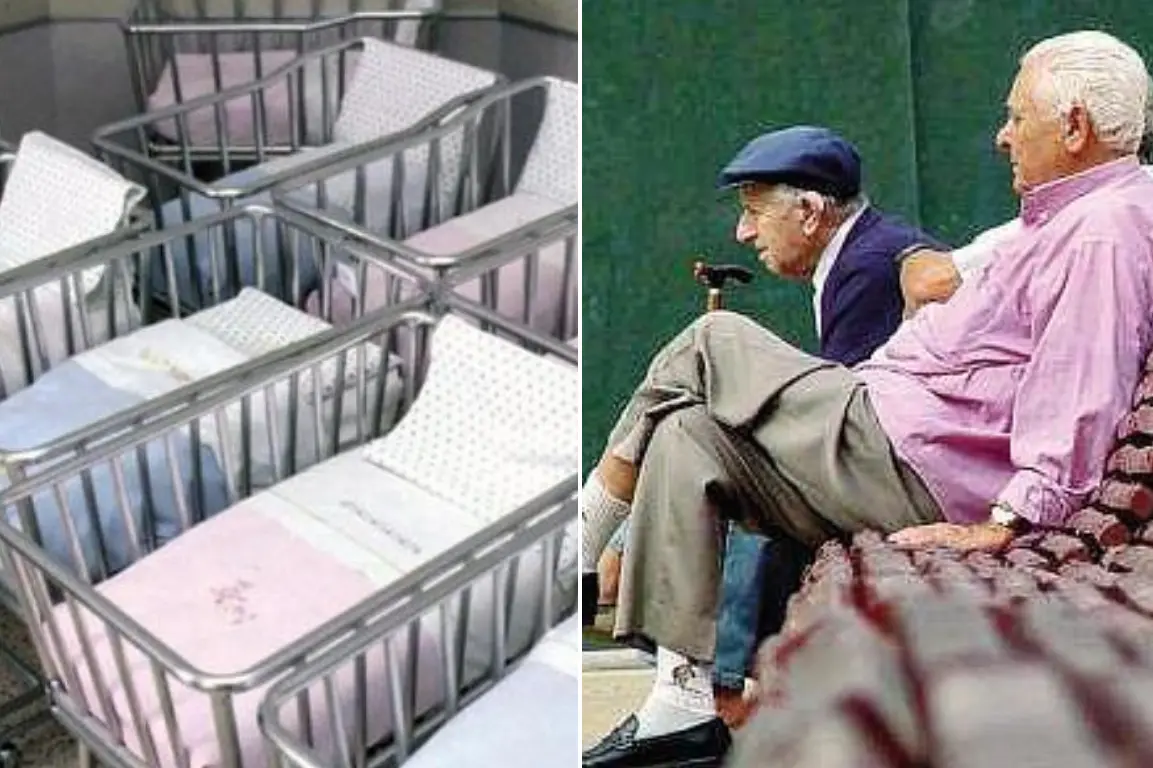
Per restare aggiornato entra nel nostro canale Whatsapp
The island's highest birth rate, but on the other hand, unstoppable depopulation and an increasingly aging population. This is the picture emerging for the province of Nuoro from the new update of the Territorial Economy Barometer dedicated to demography, produced by the Guglielmo Tagliacarne Research Center of the Chambers of Commerce in collaboration with Unioncamere. Maria Luisa Ariu, head of the Economic Observatory of the Nuoro Chamber of Commerce, outlines this scenario, commenting on the data from the study that analyzes demographic trends through 2025 and offers projections through 2050. The picture that emerges is one of light and shade: while the Nuoro area continues to stand out from the rest of Sardinia in terms of fertility rate, it is failing to reverse the trend of population decline and the progressive aging of its residents. In 2025, the average number of children per woman will rise to 1.00, a slight recovery from 0.98 in 2024.
This figure places the province 100th in the national rankings and, while still far from the Italian average, confirms Nuoro's position above the regional average, which stands at approximately 0.85 children per woman. Far more worrying, however, are the figures relating to the resident population. Between 2002 and 2026, the province lost 12.1% of its population, and according to projections based on ISTAT (Italian National Institute of Statistics), the decline could reach a further 25.4% by 2050. At the same time, the aging index is also rising, from 272.3 in 2024 to 288.4 in 2026, with a forecast of exceeding 446 by 2050. Among the more positive aspects, however, is the low average annual rate of outward migration of Italian citizens between 2017 and 2025. With 1.62 emigrants per thousand inhabitants, Nuoro ranks 12th nationally, a sign of the region's ability to retain its residents within the country. This figure confirms that depopulation is primarily driven by a negative natural population balance—that is, the number of deaths exceeding the number of births—and by migration to other areas of Italy, rather than by emigration abroad. "The data confirm that demography is now one of the main indicators of the region's future stability," emphasizes Maria Luisa Ariu, head of the Economic Observatory of the Nuoro Chamber of Commerce.
The Nuoro area has a fertility rate higher than the regional average and a lower propensity to migrate abroad, but these factors are not enough to offset the declining population and progressive aging. Therefore, it is essential to strengthen the region's attractiveness: jobs, services, business opportunities, and the ability to attract new skills will be crucial to combating depopulation in the coming decades. The analysis therefore confirms that demographic rebalancing represents one of the main challenges for the province's future. Investing in economic growth, employment opportunities, and the quality of life in inland areas will be crucial to reversing a trend that, without structural interventions, risks compromising the region's development in the medium and long term.