

Cagliari's traffic councilor: "I hope for a future with fewer cars."
Yuri Marcialis talks about coordinating construction sites in the city, aware of protests from motorists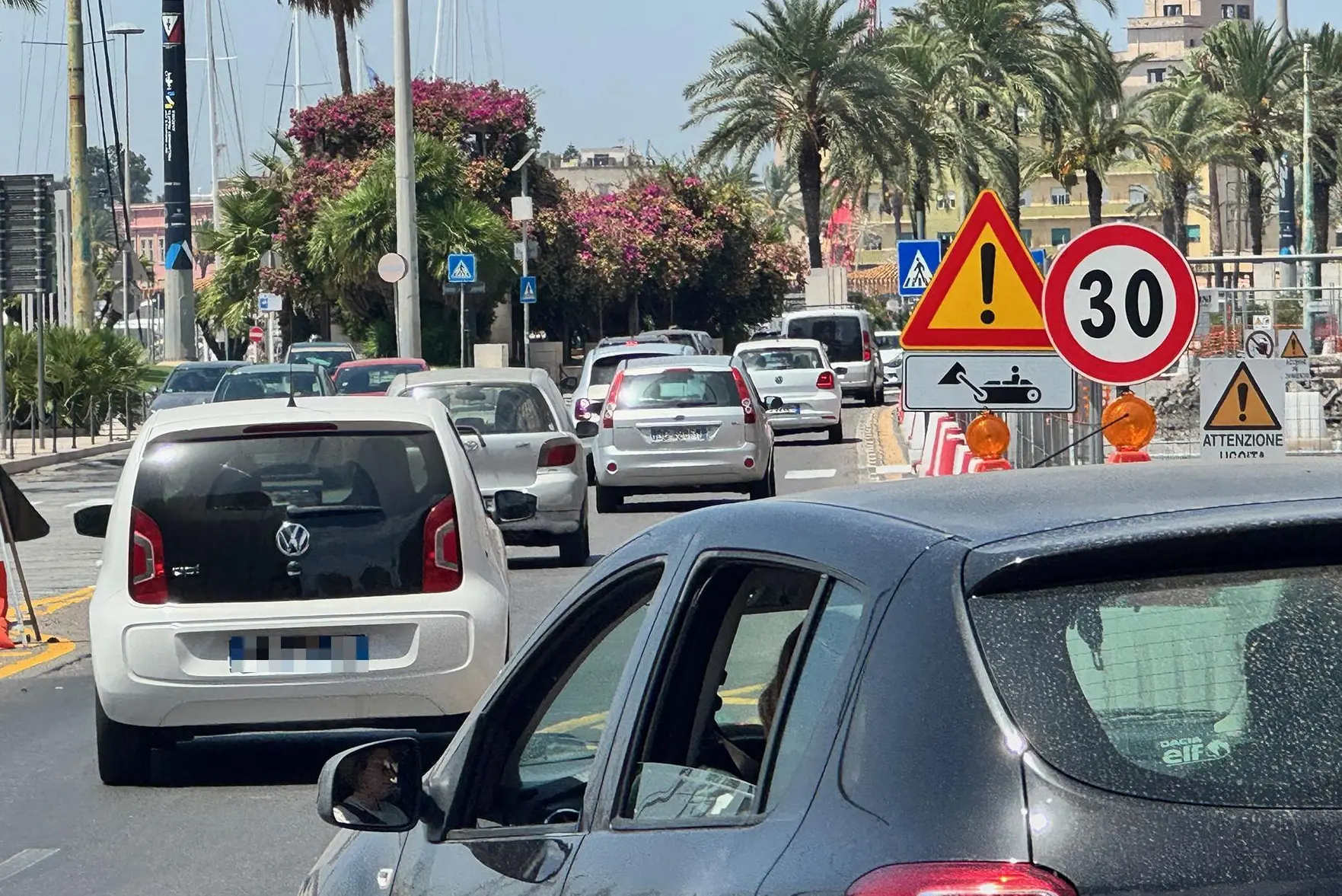
Per restare aggiornato entra nel nostro canale Whatsapp
The same city, two different vantage points. For motorists, Cagliari is increasingly held hostage by construction sites. For Roads Councilor Yuri Marcialis, however, the disruptions exist but don't describe a city under siege. "It's often said that Cagliari is paralyzed by traffic. The data, however, paint a different picture," he says.
Every day, however, motorists remain stuck in traffic.
Cagliari records a vehicle influx equal to approximately 140% of the number of residents. Despite this, it ranks only twentieth in Italy for time wasted in traffic. This tells us that traffic exists but is not a structural condition.
Yet the city seems like a permanent construction site: a new one pops up every day (the latest, the one opened yesterday on Via Molo Sant'Agostino). Is there a control room?
The Municipality's work is planned based on technical priorities, available resources, and funding deadlines. Coordination with all the others exists, but it's inevitable that, in a phase in which so many interventions coincide, temporary disruptions will occur.
Many of the projects are being carried out by other agencies, but the permits are always issued by Palazzo Bacaredda. Why aren't construction site openings better coordinated?
"Even in this case, I believe the perception is different from what happens on a daily basis. Coordination with the utilities managers is constant."
But you can't see it.
Take Via Roma. We found a design that didn't adequately address mobility. We implemented targeted solutions to improve its operation, such as the roundabouts between Via Roma and Viale Diaz, which made traffic flow more smoothly. This is the method we're applying throughout the city.
There are construction sites that are progressing slowly. Does the municipality also carry out inspections on work that isn't its own but is causing traffic disruption?
«The Municipality cannot intervene directly».

So he is not involved in these construction sites?
No. Through the relevant offices, the contractor verifies compliance with the requirements contained in the issued permits, particularly regarding the time allowed for occupation of public land. Any penalties for delays, however, depend on the relationship between the contractor and the client.
Roads: Some look like lunar landscapes. How do you decide which roads to pave now and which can wait?
"The road network conditions we found were the result of years of inadequate maintenance. Priorities aren't set randomly. They take into account the condition of the road surface, traffic levels, the presence of public transportation, and safety conditions."
Every time a road is paved, it often gets excavated again shortly thereafter. Why can't we plan these interventions to avoid constant disruption?
It can happen, but much less frequently than you might think. In most cases, it's not due to poor planning. Before proceeding with asphalt paving, the Municipality checks with the utilities managers to see if any work is planned on the networks and, when possible, coordinates the interventions.
So why does this happen?
"These may be interventions requested subsequently or urgent work by utilities managers. These are circumstances that, by their very nature, cannot be planned. The goal is always to avoid duplicate interventions and unnecessary inconvenience."
The City Council is focusing heavily on public transportation and sustainable mobility (such as bike lanes). But residents are primarily demanding pothole-free roads and safe sidewalks. What do you think?
This contrast is misleading. Sustainable mobility doesn't mean specifying which means of transportation to use. It means empowering everyone to choose the means best suited to their needs, while being able to rely on an efficient and safe network: some use cars, some public transportation, some walk, and some bicycle. An administration's job is to ensure that all modes coexist as effectively as possible.
If a Cagliari resident told you today that getting around the city by car has become more difficult than it was a few years ago, would you tell him he was wrong or…?
I think the real question is different. The goal isn't to increase private car traffic, but to allow people to get around better. A city works when everyone can choose how to get around. Rather than look nostalgically to the past, I prefer to look to the future. I hope that in twenty years, Cagliari will be a city with fewer cars on the road, an increasingly lively historic center, even more efficient public transportation, and a better quality of life.