

Cagliari, wedding at the hospice on Via Jenner: Paolo and Constanta say yes.
Love Day by Day: "We'd Postponed It So Many Times"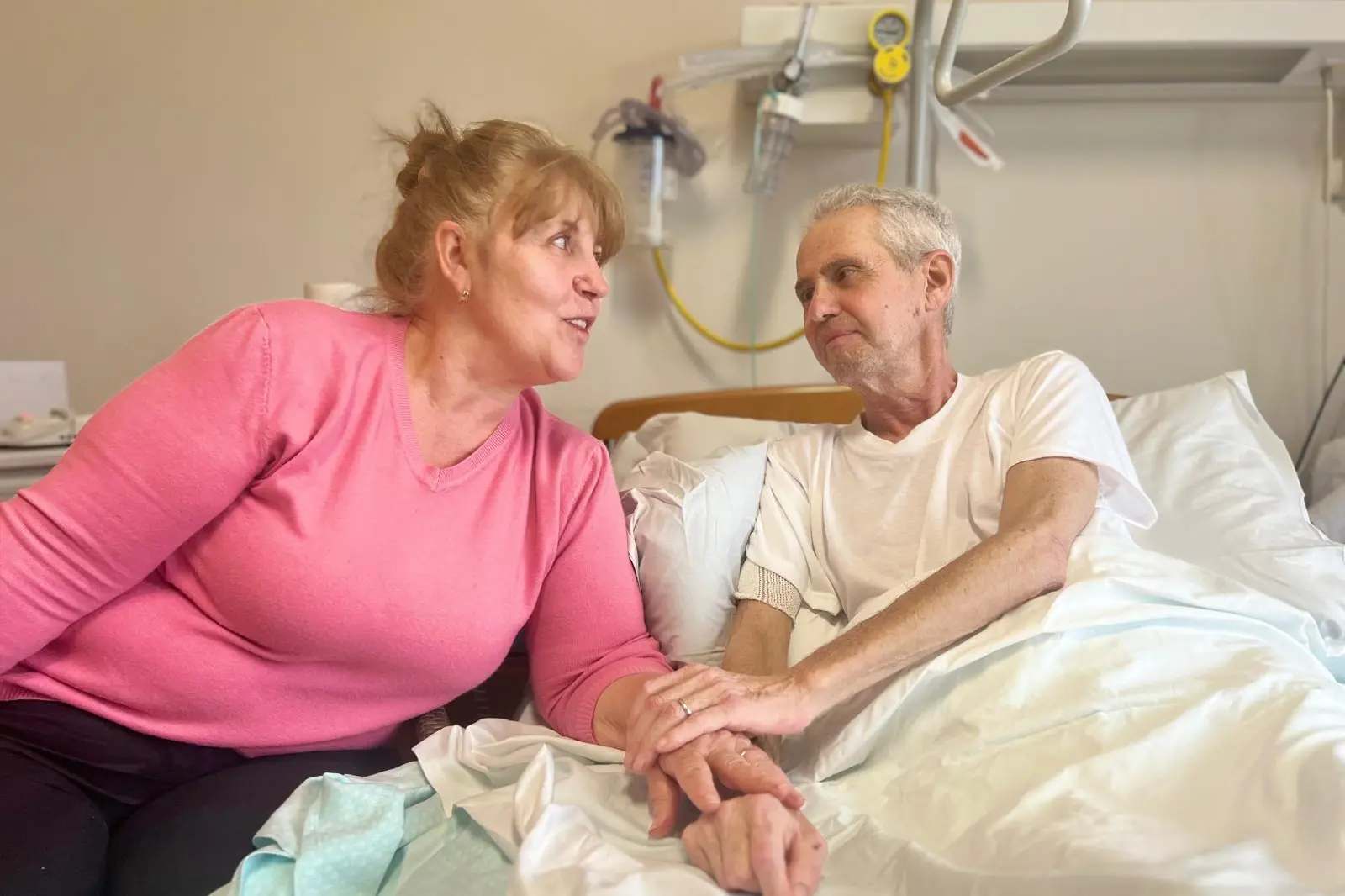
Per restare aggiornato entra nel nostro canale Whatsapp
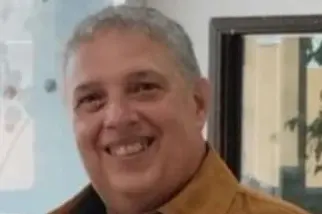
A cough, then she sits up in bed. "Yes, I do": perhaps that's all there is to life; in that formula whispered by Paolo, terminally ill, from Room G of the hospice on Via Jenner. A sort of limbo, where you'd expect to find only death and resignation, but instead, in those corridors that smell of goodness, dignity and resilience chase each other. As if life could move beyond; beyond a diagnosis that forces you into a finite existence. "Everything changes, your order of priorities, your perception of time. You realize you can no longer put it off like you always have. Like we all do. You start living day by day." She, Constanta, struggles to hold back the tears. She sobs. "I don't know when the last one will come, but I know that when it does, I'll be at peace because I've achieved my greatest wish: to marry her." And as he says this, he squeezes her hand tighter.
The window
A timid sun, discreetly creeping through the second-floor window of the Local Health Authority (ASL) building: the realm of palliative care; the medicine of the soul for bodies impervious to treatment. And perhaps it's a coincidence, but its rays seem to shine straight on the wedding rings the newlyweds proudly display, as if they were their most precious treasure. A material symbol of the eternal love between Constanta Fatu, 57, of Romanian origin, and Paolo Pretta, a widower from Cagliari, three years older and suffering from a lung tumor: rare and in such a position that it's inoperable. The merciless verdict, which leaves no chance, arrived after a journey through hospitals and doctors begging for answers to that breath that grew shorter every day. "In January, in a hospital in Bucharest where we were spending Christmas, they told me what had been clear to me for some time. I was too sick to have the “simple” emphysema with chronic bronchitis they talked about at length.” Another cough, and then another. “Cancer.”
The shock
Terminal, without treatment. No surgery, not even chemotherapy: "I haven't shed a tear, but obviously when they shove the naked truth in your face and you realize there's no way out, you feel strange, different." He takes a breath. "Stunned, maybe that's the state of mind you feel." He says he's a strong believer, and that even his relationship with faith, when you're sentenced to life in prison without bars or punishment to serve, takes on a different form. Like everything else. "I could be angry with God, maybe ask why me: none of that. I pray, even more if possible. For my wife, for those who will remain after me and will bear the burden of my absence." On the nightstand, next to the bed, he has the blessed rosary. Next to it is the bottle of still water and the bouquet of white flowers that tell of a marriage without an altar but celebrated twice: a civil and a religious ceremony. Both there, in Room G, embraced by the sun. With doctors, nurses, and volunteers: special guests and daily witnesses to what happens at the hospice. It's a mix between a residence with ochre-colored walls and a sort of silent, faceless peacemaker who seems to settle all the unfinished business with life. As if finding the missing piece of the puzzle.
The kilometers
He had a mechanic's shop in Cagliari: he experienced the thrill of commuting, with round trips to Semestene, where love blossomed. He continued, then moved closer to his workplace: they'd lived together for sixteen years, with the idea of marriage postponed year after year. "We actually thought about it many times, then with our days always hectic and full, we found ourselves putting it off almost unconsciously," Paolo explains. And immediately after, Constanta intervenes: "When you're well, you don't think about death. It's as if time were unlimited, then everything changes." Terminal cancer, inoperable, which imposes a deadline, with tomorrow you no longer know if it will arrive. And it's back to the beginning: to those priorities that change order. And to the wedding celebrated in Room G, with the gentle sun and a view of the colorful windows of the Microcitemico hospital. Which tell of other struggles and also show the bitter side of life.
The cure
That life that goes beyond; beyond a diagnosis that gives you a deadline but you decide to avoid it. Paolo is doing it, having contacted the IEO in Milan and learned of a treatment that doesn't change your fate, but he's trying his hand anyway. In this game where the right hand systematically and cynically slips away. "Hope remains, I don't delude myself and I don't expect anything. I know I'm terminal, but only when I stop breathing will I be dead. Until then, I'm holding on to the life I have left and my wife. I live, I savor every day, hour, minute, every single moment." Another cough, while she starts crying again: "I pray every day that they'll let me have him longer, I'm not ready to let him go. I never will be."
The corridors
It truly feels like an earthly limbo, with life and death tumbling over one another, racing through the long corridors where one feels at home, and stories unfold. Like that of Renata Agliata, 85, who is like a mother to Paolo and Constanta and has served as their best man. She has suffered three losses in her past: she lost her eighteen-year-old daughter, and shortly after her son. She had only her husband left; cancer took him away as well. That's how she discovered the hospice, shortly after it opened, and then decided to create a volunteer association that cares for the hospitalized patients daily. "Day by day": which is a precious lesson. They console, lend their heart and ear, offer comfort to those in need, and then dedicate themselves to those left behind: a process of mourning, which she learned firsthand. "You don't get used to pain, you don't forget the loss of a child or a husband. But in the end, you move on. Everyone finds their own way, mine is to stay here, where you don't think about death but focus on life. Even if there's little of it left." Day by day. Hour by hour, minute by minute. Like Paolo is doing, coughing once again and then letting out another wish: "I'd like a horse steak, but I can't, because the cancer is crushing my stomach." And it's disconcerting this life that knows how to move forward, embraced by the gentle sun that gracefully sneaks in through the window of room G.