

Baby dies at Monaldi Hospital, pediatric cardiologist Tumbarello: "So many errors, it's implausible."
The Florentine luminary, longtime head of the Brotzu Hospital, offers his views on the case of the child who died in Naples after a transplant with a damaged heart: "First and foremost, we need clarity, also to protect the hospital itself."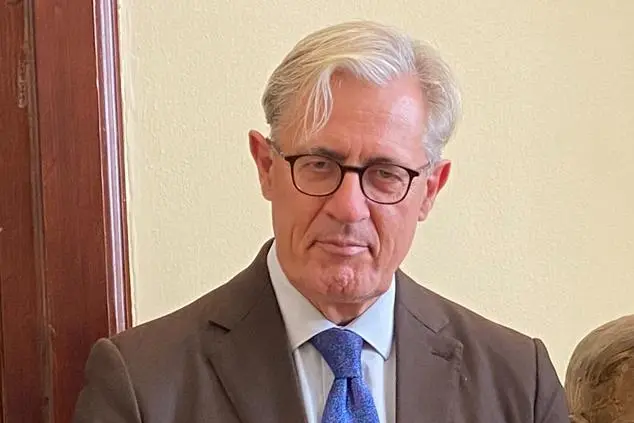
Per restare aggiornato entra nel nostro canale Whatsapp
"One mistake was certainly made: in communication." Then Roberto Tumbarello, a Florentine expert in pediatric cardiology, where he was a longtime head physician at the Brotzu Hospital in Cagliari, ventures no further comment on the story of Domenico, the boy from Naples who died from a transplant that seems to have started badly and ended even worse.
Professor, what do you mean by communication error?
"Given the circumstances as we know them today, it couldn't have happened as the newspapers report."
Why?
"I'll say one thing: dry ice, solid carbon dioxide, isn't exactly readily available. From a communications perspective, I would have expected the hospital to handle this situation differently. The Monaldi Hospital has a prestigious history that risks being overlooked by the public. Clarity is needed: in the best interests of patients and families, who have the right to trust the healthcare system, but also to protect the hospital itself, where great professionals work."
First of all: what is a “burnt” heart?
"A heart whose muscular structure, for some reason X, which could be physical, chemical, or otherwise, has lost its characteristics and is no longer able to function. That is, to ensure, through electrical impulses, the secondary contractility that allows blood to pump."
When the heart "burns" does it change color?
«Normally yes, although in some cases the alteration of the fibres may not be so evident».
How is a heart normally transported?
Using a series of interlocking pieces, it is placed on ice, either granular or flaked. The container's temperature must be between zero and four degrees Celsius, to avoid damaging the organ's fibers and minimize the most feared element: ischemia. If transported at the right temperatures, the heart's metabolic system rests and thus reaches the patient alive.
It appears that the Monaldi team went to collect the heart in Bolzano with an insulated container but without a thermostat.
"Today, technology has also improved organ transport containers, and the Naples hospital has this type of equipment, for safe and secure transportation."
Using dry ice at -80 degrees?
«It is not compatible with organ preservation».
As a doctor, what do you think?
This is a difficult story to interpret. Also because pediatric heart transplants are one of the most delicate and complex types of interventions. Indeed, every single step is marked by carefully studied, tested, and reapplied protocols. The chain of errors reported in the press is difficult to fathom.
In what sense?
"There would be too many mistakes, and moreover, they would all be made at once: this is difficult to reconcile with the outstanding professionalism of Monaldi, a structure of notable value, a benchmark for Southern Italy."
Let's get to the surgery: is it plausible for a doctor to implant a heart knowing it's damaged?
"The functionality of an organ is verified before the operation begins. Tests are performed in the operating room, tests that obviously also precede the removal of the diseased organ to be replaced."
It seems that none of this happened in Domenico's case. Is that possible?
These are aspects that will need to be clarified. I repeat: given the current state of the situation, normal protocols would not have been followed. A strange case, to say the least.
Something, however, definitely went wrong.
"Undoubtedly. And in fact, it will be a matter of understanding exactly what."
How does ECMO work, the machine from which the baby has never been separated?
«It ensures extracorporeal circulation by replacing the heart and lungs for blood oxygenation».
When the transplant goes well, is ECMO stopped immediately?
Not necessarily. Many times there's a transition where ECMO is used to support the new heart. A push, a little help for the recipient to adapt. The heart may need a warm-up period, which ECMO provides. In the long run, of course, it can damage the internal organs because the extracorporeal circulation with the machine is mechanical, so continuous, rather than pulsating. The child has endured those conditions for too long.
Justice for Domenico against a certain corporatism among doctors?
"There's an ongoing investigation that will serve precisely to avoid criminalizing a hospital and its healthcare workers a priori."




: "The documents that led to the transfer were denied."")