

Capaci, 34 years later: remembering Falcone and Borsellino in the spirit of authentic memory.
The intervention of the magistrate Luigi Patronaggio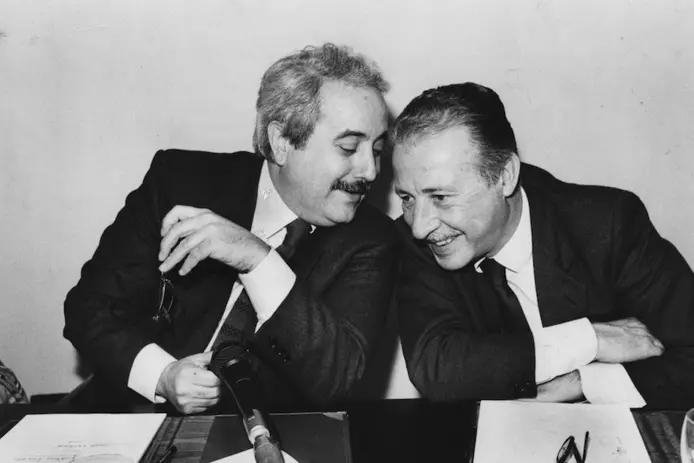
Falcione and Borsellino (photo Ansa)
Per restare aggiornato entra nel nostro canale Whatsapp
Today, on the thirty-fourth anniversary of the Capaci massacre, the customary ritual of institutional mourning begins, often marked by hypocrisy and formalism, which some have aptly defined as the "industry of popular mourning" and others as a "celebration of whitewashed tombs, beautiful on the outside but filled, on the inside, with dead men's bones and every kind of rot."
This intentionally clear introduction of mine arises from the persistent instrumental use that has been made for too long of the "holy cards of John and Paul", evoked from time to time according to the convenience of the various factions in the field.
It is well known that Giovanni Falcone's thinking on the necessary specialization of the public prosecutor in the new accusatory procedure was bent to the needs of those in favor of a "yes" vote in the referendum on justice, just as, not infrequently, his method and analyses were inappropriately invoked, as was his high political and institutional profile.
But what has been most disconcerting in recent times is the questioning of the motive for the 1992 and 1993 massacres, where it has been established in court, with irrevocable and unequivocal sentences, that the two anti-mafia heroes were killed because they were the architects of the definitive convictions handed down at the maxi-trial and, as for Borsellino, also because, after Falcone's death, he was considered the most dangerous enemy of Cosa Nostra.
Some well-informed political circles, however, intend to argue that the motives for the 1992 massacres were different and, in particular, that there were competing reasons attributable to the business interests of Cosa Nostra, believed to be in business with financial and business groups from Northern Italy operating in Sicily.
Now, given that Cosa Nostra has never neglected any relationship capable of procuring money or alliances with powerful forces, and that this very ability to become a system lies a key part of its criminal strength, we must ask ourselves why we persist in focusing solely on business interests, without considering the shadowy and powerful alliances the mafia organization forged over the 1990s.
It is therefore worth remembering Falcone's investigative interest in the Gladio affair, the Scontrino lodge in Trapani, the Alcamo Marina massacre, his attention to the "extremely refined minds" after the Addaura attack, his conflict with the prosecutor Giammanco, as well as his incisive investigations into the Sicilian and national Christian Democracy, from Salvo Lima to the Salvo cousins.
And what about the artfully spread rumors that the failed Addaura attack was a set-up, when it has been judicially confirmed that they also came from authoritative institutional circles?
Nor can it be overlooked that one of the first magistrates to publicly evoke the names of Silvio Berlusconi, Marcello Dell'Utri and Vittorio Mangano, the “groom of Arcore,” in relation to illicit financial and business dealings was Paolo Borsellino himself in an interview given on May 21, 1992, 48 hours before the Capaci massacre.
As always, Paolo Borsellino, in his speech given in the library of Casa Professa in Palermo on 25 June 1992, speaking about the Capaci massacre, stated “I don't know if it was the mafia and only the mafia, but it was the mafia anyway, and the mafia organisation prepared and carried out the attack on 23 May... when Giovanni Falcone was now one step away from becoming the National Anti-Mafia Director...", closely linking the motive for the Capaci massacre to the convergence of mafia interests with "other" interests which we might assume to be of a subversive-institutional nature.
Likewise, the disappearance of Borsellino's red diary seems difficult to explain except in light of the involvement of deviant state apparatuses, as even some images circulated after the massacre seem to document.
Moreover, the only cover-ups judicially confirmed to date in relation to the massacres appear once again to be attributable to deviant sectors of state institutions.
Let's not forget that the 1993 massacres in Milan and Florence, as well as the failed attack on the Olympic Stadium in Rome, appear unequivocally attributable to a political-terrorist motive, completely unrelated to investigations into second-tier entrepreneurs operating in Sicily, which were promptly prosecuted by the Prosecutor's Office headed by Giancarlo Caselli, who, in the space of a few seasons, along with his other highly authoritative collaborators, went from national hero to unreliable witness.
I therefore hope that the commemoration of these two anti-mafia heroes will be marked by authentic memory and the contribution they made to the fight against the Mafia, in terms of investigation, method, and analysis, without reducing them to icons to be hypocritically celebrated according to the convenience of one or the other officiant.
Luigi Patronaggio – Magistrate