

Maduro is in jail, Rodriguez is on interim leave, but Trump threatens: "Do what's right or you'll pay."
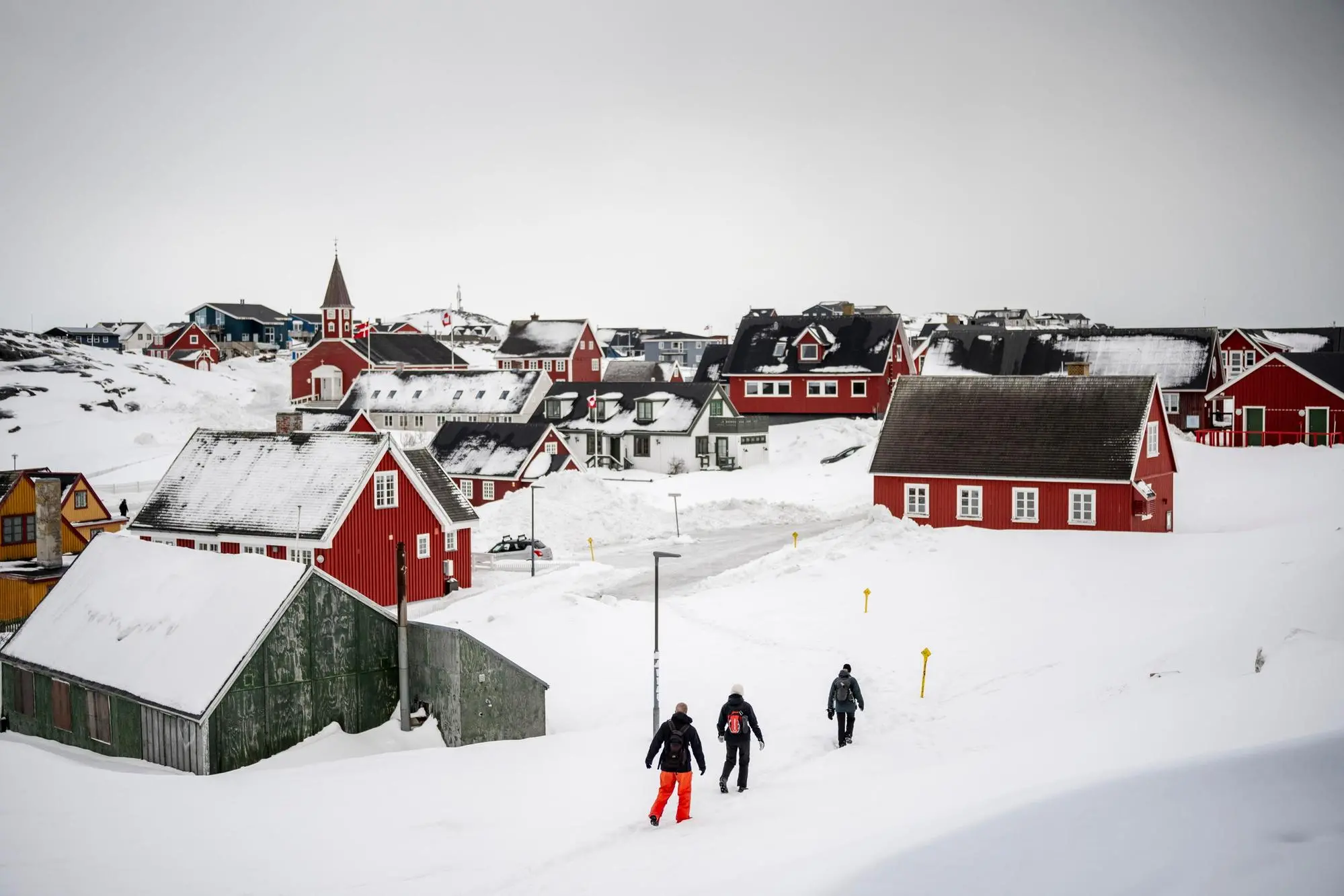
A CIA operative and the "Beast of Kandahar" to capture the deposed president: the behind-the-scenes story of "Absolute Resolve"What will happen next in Venezuela? This is the question circulating across US networks and government offices around the world, while Nicolás Maduro and his wife ended up in a New York prison after refusing an offer of exile to Turkey in December. And his deputy, Delcy Rodríguez, has been appointed interim president by the Venezuelan Supreme Court, but has already been threatened by Donald Trump . "If she doesn't do what's right, she'll pay a very high price, probably higher than Maduro's," the tycoon warned her in an interview with The Atlantic, after renaming the Monroe Doctrine the Donroe Doctrine, in homage to her name. "Reconstruction and regime change, whatever you want to call it, are better than what's happening now in Venezuela. It couldn't be worse," he observed. The Donald has also relaunched US expansionist ambitions in Greenland "for defense reasons."

Marco Rubio, dubbed by the Washington Post "the viceroy of Caracas" for his crucial role in masterminding the ouster of the now-former Venezuelan president and in the country's future transition, was the one setting the tone in the aftermath of the spectacular raid to capture Maduro and his wife. In a series of television interviews, the US Secretary of State immediately reined in Rodríguez, who in the hours following the raid had maintained a defiant tone, calling for Maduro's release and warning that "Venezuela will never return to being the colony of another empire." "She is not a legitimate president," Rubio said, explaining that the United States does not consider the current regime legitimate. "There are people who can actually bring about change," he continued, warning, however, that this is different from recognizing the legitimacy of the Venezuelan government, which will derive from a time-consuming transition period and a still "premature" election. Nobel Peace Prize winner María Corina Machado dismissed the idea : "She's fantastic, but the immediate reality is that, sadly and regrettably, the vast majority of the opposition is no longer present within Venezuela." She then pointed the way: "We will collaborate with Venezuelan officials if they make the right decisions," taking into account American interests, such as stopping drug trafficking, the flow of migrants, and opening the country to US oil majors.

After months of denying, both publicly and privately, that regime change was the goal, Trump took action, capturing Maduro and calling on the United States to manage the transition of a country of 30 million people in the South America Washington sees as its "backyard." The fight against drug trafficking, it became clear from the press conference, was the pretext to seize Venezuela's vast oil resources and end the regime of Nicolas Maduro, sending a clear signal to all of Latin America: anyone who doesn't stand with the United States is its enemy and could be targeted.

At 10:46 PM on Friday, the president gave the green light for the Mar-a-Lago operation and monitored the situation on the ground in real time. US intelligence had been studying Maduro and his movements for months—"where he lived, how he traveled, and what he ate," said Chief of Staff General Dan Caine—thanks in part to a CIA source within the Caracas government. After causing a blackout in Caracas, US forces arrived at Maduro's compound at 2:01 AM on Saturday morning and launched the attack. Videos released before the raid—one released by the US president— show the arrival of helicopters and the bombings that preceded the precision operation in the capital, as well as the raids in the states of Miranda, Aragua, and La Guaira. The Venezuelan army has denounced the "cold-blooded" assassination of Maduro's protection guards, and the New York Times reports at least 40 deaths, both military and civilian, in an operation about which new details continue to emerge: from the use of the RQ-170 Sentinel—the reconnaissance drone known as the Beast of Kandahar, used in 2007 in Afghanistan to hunt down al-Qaeda leaders—to internal CIA moles who knew not only Maduro's movements between his seven or eight safehouses but also what he ate.

Nicolas Maduro and his wife, Cilia, were surprised while sleeping in the bedroom of their "fortress" in Caracas. The Venezuelan leader attempted to escape from American troops by taking refuge in a vault. However, he failed to close the "very thick and very heavy" door, Trump said, and was captured by men from the deadly elite Delta Force division and the 160th Aviation Regiment, the "Night Stalkers" famous for the mission in Abbottabad that led to the killing of Osama bin Laden. Preparations for the raid had been ongoing for months, and everything was ready four days ago, but the operation was ultimately postponed due to unfavorable weather conditions. Then, on the night between Friday and Saturday, the turning point came.

After a few humiliating catwalks in handcuffs and slippers, the caudillo is now in a cell among the rats of the Metropolitan Detention Center in Brooklyn, the worst US federal prison. "Good night, happy new year," he wished seraphically upon entering the "Guantanamo" of New York. On Monday, while the UN Security Council meets, Maduro is scheduled to appear in court in Manhattan to be charged with conspiracy to traffic drugs, weapons, and terrorism. It remains to be seen whether he will choose a plea bargain or a trial. But the Justice Department already has a star witness against him: Hugo Armando Carvajal Barrios, former head of Venezuelan military intelligence, ousted by Maduro for treason and later arrested by the US for a trial in which last June he pleaded guilty to crimes carrying life sentences and similar to those charged to the former Venezuelan leader.
(Unioneonline/D)