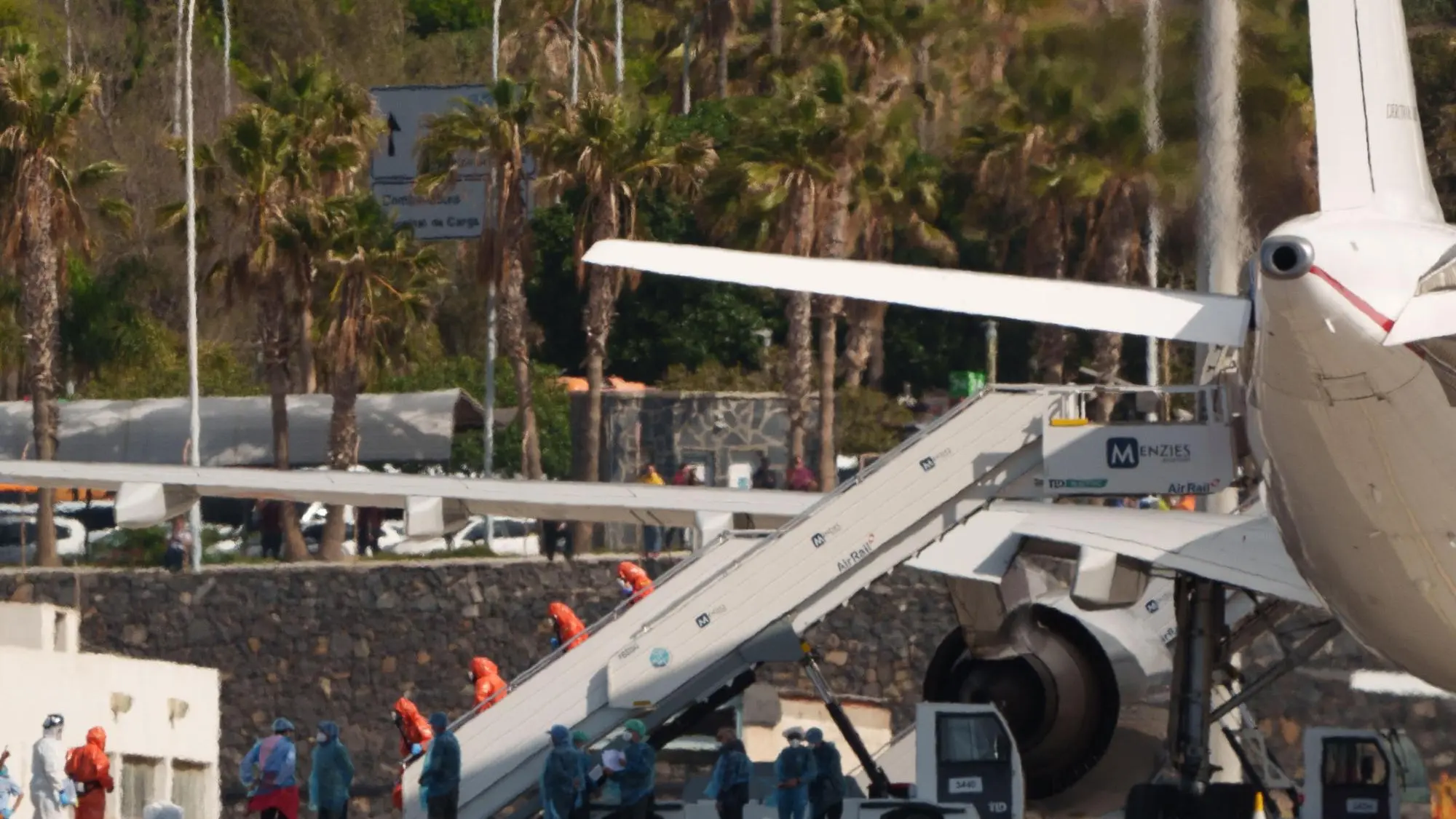


The Hondius cruise ship, aboard which an outbreak of Hantavirus was detected, entered the port of Granadilla on the island of Tenerife. The vessel dropped anchor, and around 10:30 a.m. (9:30 a.m. local time), the first passengers began disembarking, a special procedure designed to keep these people isolated and prevent further infection. The first group of evacuees consisted of 14 Spanish citizens.
The passengers were boarded a bus, escorted by officers from the Army's Military Emergencies Unit (UME), which will take them to Tenerife South Airport, about 12 minutes away, where they will be boarded directly on the tarmac by a military plane . All asymptomatic, they were authorized to carry only personal belongings, in plastic bags, for safety reasons. The flight from Tenerife will reach Torrejon de Ardoz Air Base (Madrid), from where the Spanish passengers will be transferred to the Gómez Ulla Central Defense Hospital, where they will be kept under observation for 42 days from the time of their last contact on board with an infected person, as recommended on Saturday by Maria Van Kerkhove, WHO director for prevention and preparedness for epidemics and pandemics, who is coordinating the health operation.
Meanwhile, "active surveillance" has been initiated for four people currently in Italy, two Italians and two foreigners . The four were on a connecting KLM flight to Rome, which briefly carried a woman who had been on the MV Hondius and was later hospitalized in Johannesburg, where she died of Hantavirus. The four were traced and their information forwarded to the relevant regions—Calabria, Campania, Tuscany, and Veneto—which immediately implemented the required protocols and activated surveillance "with the utmost caution." They were then quarantined, their contacts were traced, and their health conditions were constantly monitored until the completion of the surveillance period, which lasts approximately 45 days. Currently, the four are not showing any symptoms; they were seated on the plane, explained Mara Campitiello, head of the Department of Prevention, Research, and Health Emergencies at the Ministry of Health, in a row away from that of the deceased tourist.