Truncu Reale, solar panels evict artisans
The situation outside Sassari: wind and solar farms are suffocating production areas. The multinationals' assault continues: "Speculation hinders development."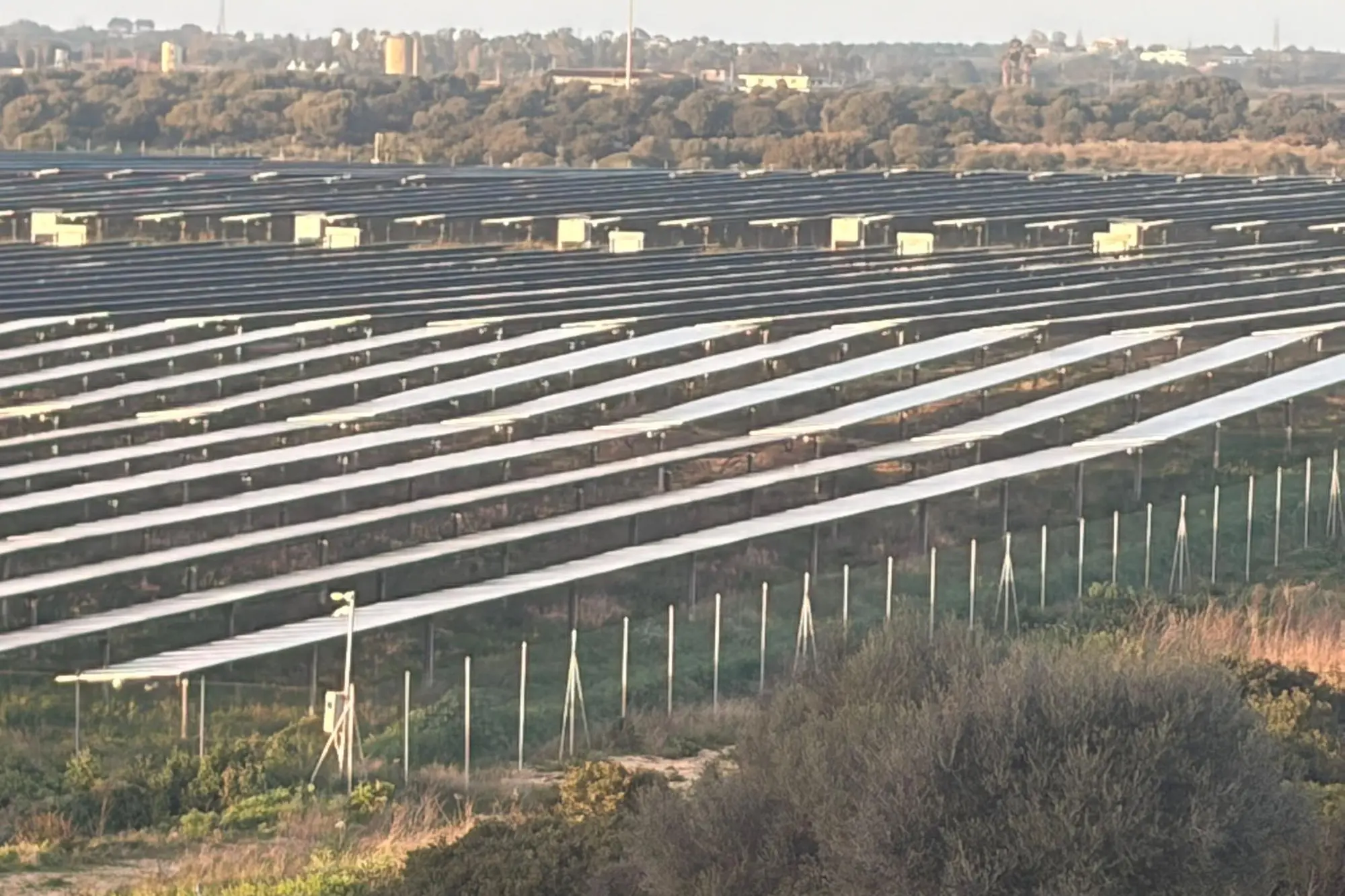
Per restare aggiornato entra nel nostro canale Whatsapp
The Region is without a regulatory shield, and multinationals are preparing to attack the island. Meanwhile, the Regional Administrative Court (TAR) is issuing a barrage of rulings, calling the regional law on suitable areas unconstitutional, especially when compared with Law 5 recently approved by Parliament. This effectively reinstates dozens of projects that had been blocked, even in areas containing historical or archaeological monuments.
The invasion
Meanwhile, some are questioning the future of supposedly productive areas like Truncu Reale, in the Sassari province. It was supposed to house artisanal businesses, but instead a fifty-hectare photovoltaic park was built, with an estimated investment of four hundred million euros. The land, owned by the Industrial Area Consortium, was expropriated several years ago with public funds to build warehouses and create jobs, but has now been granted for one of the largest ground-mounted photovoltaic systems, just a few hundred meters from the hamlet of Ottava, in the Pian di Sorres area. And for several years now, there has been talk of further land transfers to private individuals and an even more extensive, not to say speculative, investment.
The initiatives
A project calls for eight additional photovoltaic and agrivoltaic systems with a total capacity of 61.15 megawatts. And in the area near the Rio Mannu in Porto Torres and the Rio Ertas, a wind farm with a total capacity of 64 megawatts is also being considered. The plan includes seven wind turbines with a nominal capacity of 7,200 kilowatts each, located near a previously authorized wind turbine. The wind farm will be integrated with a battery storage system, known as a BESS. This was announced by former regional councilor Tore Piana, now president of the Agricultural Studies Center. This raises a question for regional authorities and others: "What will be the fate of the Truncu Reale industrial area?"

Questions
Production facilities are far fewer than previously thought. "The industrial function is being emptied, while a silent transformation is taking hold: from a work area to a hub for energy revenues," Piana continues. "We're not challenging the ecological transition here. We're challenging the method and the purpose. Is it morally permissible to make profits on land expropriated from citizens for a specific purpose—industrialization—and then convert it today without a serious public budget for employment, local impacts, territorial compensation, and the protection of neighboring communities?" The president of the Agricultural Studies Center clarifies: "We're not against renewables, but against the misuse of public assets. Land expropriated to create jobs cannot become a vehicle for speculation, while the industrial area dies and communities are left without prospects."
The lunge
In conclusion, the former regional councilor's thrust is clear and cuts straight to the heart of the matter: "If the future of Truncu Reale is energy, let's say so clearly and decide it democratically, with stringent rules," Piana concludes. "Priority should be given to production facilities, real employment benefits, fees and compensation for the local area, safe distances from the surrounding villages, and complete transparency in all proceedings. Otherwise, it's not an ecological transition. It's the transformation of public land into private income, at the expense of an industrial area created to provide jobs and now left without a vision. Because a photovoltaic park of this size in Truncu Reale certainly raises a question: is it development or speculation?"
Lorenzo Piras