

The Superintendency: "In Villanova Truschedu, there is no statue of the Mother Goddess, only a stone."
Experts are working on a report in the Santa Barbara archaeological area: the verdict is in.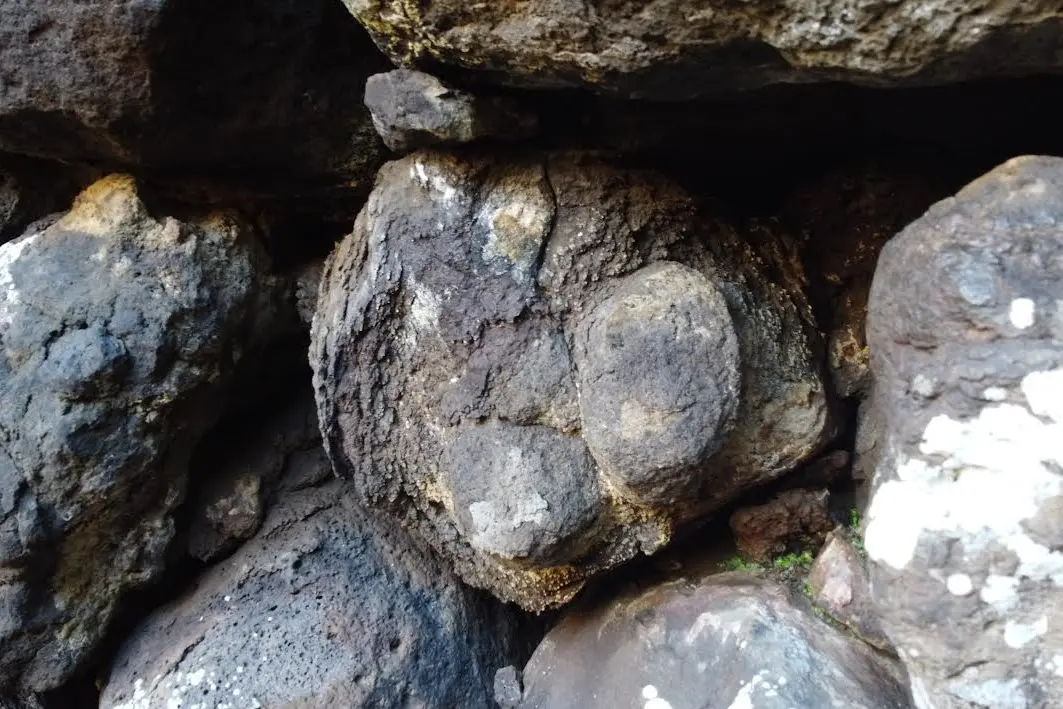
Per restare aggiornato entra nel nostro canale Whatsapp
The answer is clear: "The two protrusions interpreted as the alleged "breasts" of the Mother Goddess turn out, upon closer examination, to actually be stone elements incorporated into the igneous rock that are more resistant than the surrounding parts, which are now eroded . Furthermore, they are of different sizes and placed at different heights. These features cannot be attributed to a sculptural representation."
This is what is stated in a statement from the Superintendency after a report arrived in recent days regarding the alleged discovery of a sculpture depicting a Mother Goddess at the site of Santa Barbara, in the Villanova Truschedu area. "The archaeologist Alessandro Usai of the Superintendency of Archaeology and Landscape of the metropolitan city of Cagliari and the provinces of Oristano and Southern Sardinia intervened immediately, in consultation with the mayor of Villanova Truschedu, Claudio Palmas, to personally verify the report," the statement reads.
Indeed, there are, albeit rare, "cases of reuse of Nuragic monuments, not for religious purposes but as building materials. One example is the reuse of fragments of pre-Nuragic menhir statues (Copper Age: circa 3000-2500 BC) in the nuraghes Arasseda of Allai and Orrubiu of Laconi and in the giants' tombs of Paule Luturru of Samugheo and Pedras Doladas of Silanus. In the case of the nuraghe Santa Barbara, the stone in question is found approximately four meters high."
To observe it precisely, a ladder and a drone were needed to obtain a frontal view for a thorough archaeological analysis. "The images obtained show that the stone is deeply degraded by natural exfoliation and flaking, and shows no worked surfaces either on the front or sides," the statement continues. "To further investigate the nature of the stone and understand the causes of its pronounced erosion, a geological and petrographic survey is planned. The investigation will also be useful for assessing the need for consolidation of the masonry, which shows signs of fragility due to the material's poor resistance and the presence of large internal voids. These reports are a valuable aid to the Superintendency: they allow for timely intervention and careful inspection of any possible finds, preferably without removing them." In situations like this, anyone who notices something potentially relevant can contact the Superintendency of Archaeology, Fine Arts and Landscape, the Mayor, the Carabinieri of the Cultural Heritage Protection Unit, or the local station directly, so that the report can be handled as quickly and competently as possible.