

The massacre of historic shops in Cagliari has led to Zorro closing: "It's impossible to continue."
From Castangia to Signoriello, from Incaspisano to Loi: the process of "desertification" of the city centre continues inexorably.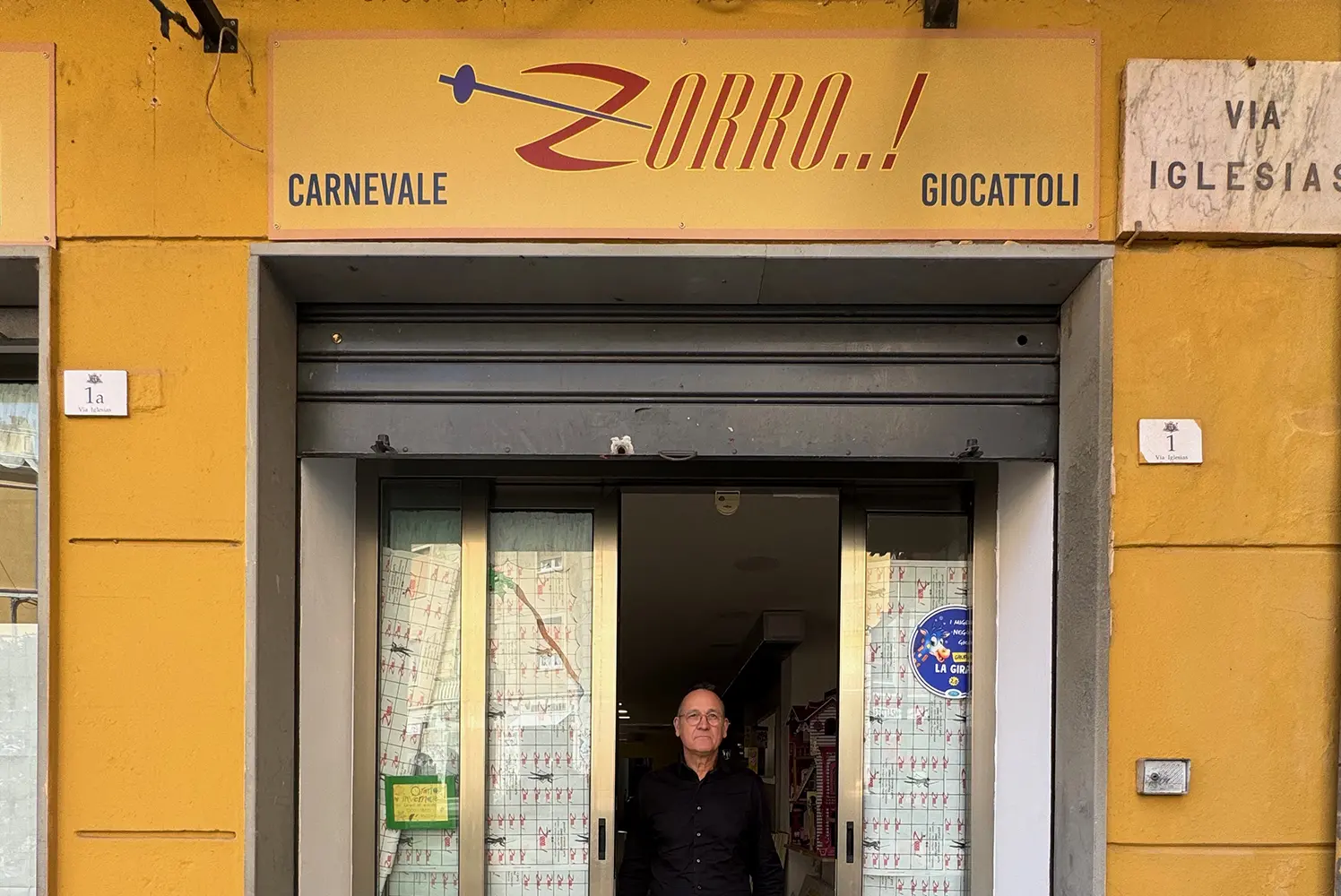
Per restare aggiornato entra nel nostro canale Whatsapp
The blacked-out windows are already telling the tale. The sign hanging next to the entrance confirms this in black and white: "Promotional sale due to business closure." After more than half a century of honorable service, Zorro toy store is also disappearing from the city scene. "When you can't make ends meet and are forced to dig deep for years, you realize you have no alternative." The final surrender, voiced bitterly by Paolo Bitti, takes us back to number 1 Via Iglesias, where the clearance is almost complete. It follows just a few weeks after Incaspisano moved from Viale Regina Elena to Viale Elmas, and the closure of many other historic businesses that have gradually disappeared from the shopping streets, leaving empty premises waiting for buyers and increasingly deprived of their identity and anchors.
The surrender
No more toys, given away at half price in the recently concluded sale. "It's heartbreaking, but I couldn't help it. Working 15 hours a day to bring home nothing is fine for a year or two, then you're forced to give up," explains Bitti, busy picking up the few things left on Via Iglesias. This is the fourth and final location of the business started by his father Umberto, on Via Sonnino, in 1968. And after 58 years, it has come to an unhappy end. "What are politicians doing? Until now, they've just stood by and watched," he observes. "In the 1990s, there were 29 toy stores in the city; today, there are only 7. But it's a problem that affects all the shops in the center. The truth is that local businesses can't compete with the Chinese giants who sell online and those who don't pay taxes in Italy." A painful farewell; yet another for a shopping center that has changed face.
Decline and Amarcord
Only memories and a few old signs seem to evoke the golden age. These are outposts of a silent resistance to time, but not to the decline that is harking back to the process of desertification underway throughout Italy. Nationwide, an average of one shop closes its shutters for the last time every four hours, with over a thousand businesses shuttered in fifteen years in the city alone. Almost all are concentrated in the fashion district, which begins on Via Manno, continues along Via Garibaldi, and reaches the Largo via Via Alghero and Sonnino. Among the latest to raise the white flag is Incaspisano: the stationery giant has left its historic headquarters on Viale Regina Elena—established in 1946 in the wake of post-war reconstruction—to move to Viale Elmas. "Closed for relocation," reads the sign on the door, which was permanently barred a few weeks ago. This exit is certainly more recent than that of the nearby Manno pizzeria, which shut down its oven in mid-October 2022, after 43 years, and where workers have been working inside for days. While mums are tight-lipped, some are rumouring that the Chinese have bought it.
Vacant premises
If change was supposed to happen, it hasn't happened yet. Instead, the number of shops that once housed the businesses that shaped the city's retail history is increasing, and they've been vacant for a long time. Like Signoriello: closed since June 2023, after 130 years of business. Today, the sign remains in the Largo, above the shutters that have never been raised again. A few meters further up, at number 56, the "for rent" ad has replaced the Castangia sign. It still stands on Via Manno, among the dusty windows targeted by graffiti artists. On Via Cima, another historic shop hasn't kept up: Loi 1926 has left its location on the corner of Via Manno. Here too, tenants are being sought. Just like elsewhere.
Sara Marci