The countdown begins for twelve thousand Sardinian students in their final exams. The most popular topics and authors since 2000.
The number of applicants is decreasing, the island still holds the record for non-admissions.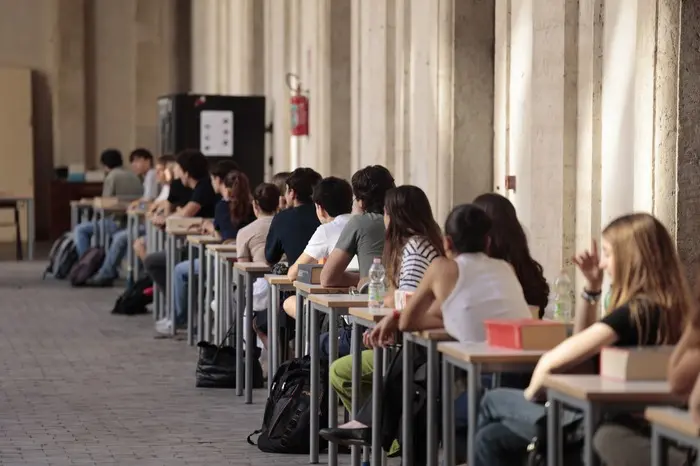
Per restare aggiornato entra nel nostro canale Whatsapp
Over twelve thousand Sardinian students are ready to take their final exams. The countdown is almost over: two days until the first exam, Italian. The second will follow on Friday. Then comes the drawing of the final letter that will decide the schedule for the oral exams.
Sardinia presented itself with 12,305 candidates , 0.6% fewer than last year. Ninety-three percent of students passed the tests, compared to the national average of 96.8%. The island had the highest number of failures (7%) , followed by Liguria, with 5.5% of those rejected.
But they will also be final exams for an army of teachers with 399 examination boards composed of an external president, two external members and two internal members of the school.
As is tradition on the eve of the exam, students have already begun guessing which topics will emerge from the Ministry's envelopes. Statistics suggest Ungaretti, Seneca, Technology, Wars, and the Constitution : these are the quintet of topics and authors that have dominated Italian exams and Latin translations over the past 25 years.
The most recurring choices were discovered by the Skuola.net portal, which analysed 168 different proposals for Italian subjects - from 2000 to today - and 51 for Latin from the post-war period onwards .
The first test, however, is not just about text analysis. Analyzing the argumentative and current affairs tracks (types B and C), from 2000 to today, a very clear podium emerges: the gold medal undoubtedly goes to the themes revolving around technology , social networks and digitalization , which appeared on 15 occasions. It is interesting to note the evolution of the themes: starting from the transition "from Gutenberg to the electronic book" (2000) and the first SMS and emails (2008), to arrive at the tracks on hyperconnection (2022), the praise of waiting in the age of WhatsApp (2023) and indignation as the driving force of social networks (2025). Will this year be the turn of artificial intelligence?
In second place among the most assigned macro-topics we find the Wars of the 20th century , totalitarianism and the Cold War (12 times) , followed in third place on the podium by the Constitution , Legality , Mafia and Rights (11 times) .
Moving on to the second test of the Classical High School - which this year is once again focused on the Latin version - history is characterised by an evident duopoly: Cicero was proposed 17 times , closely followed by Seneca, stuck at 16. The alternatives are clearly more detached: Tacitus (5 times), Quintilian (3) and Pliny the Younger (2).