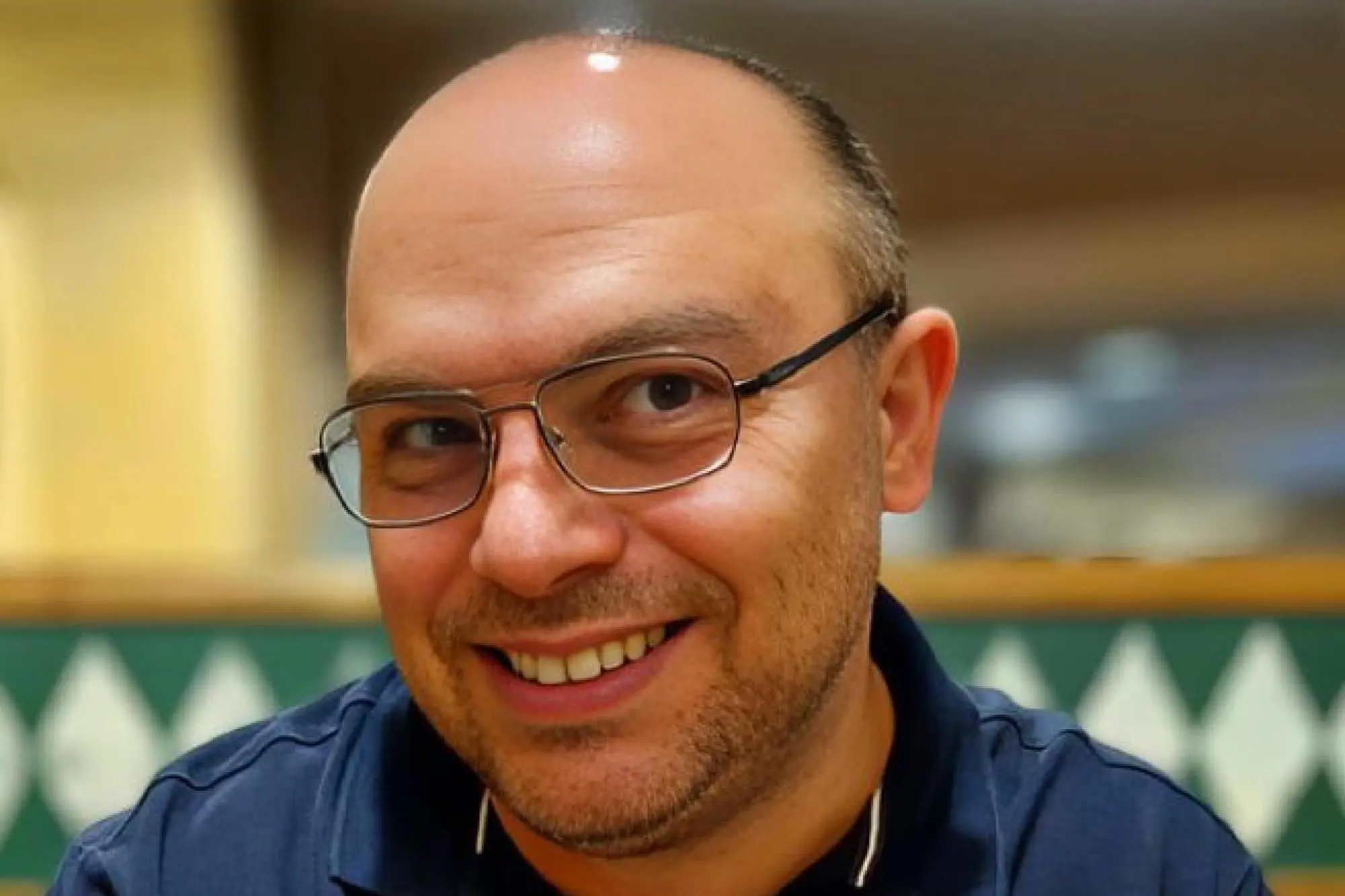


Peppino Loddo retires: "My school is a resource."
A lifetime in the union (CGIL), teaching and as a principal, the provincial leader of Cagliari is retiring at 69: "I love law, I will be an advocate for the poor."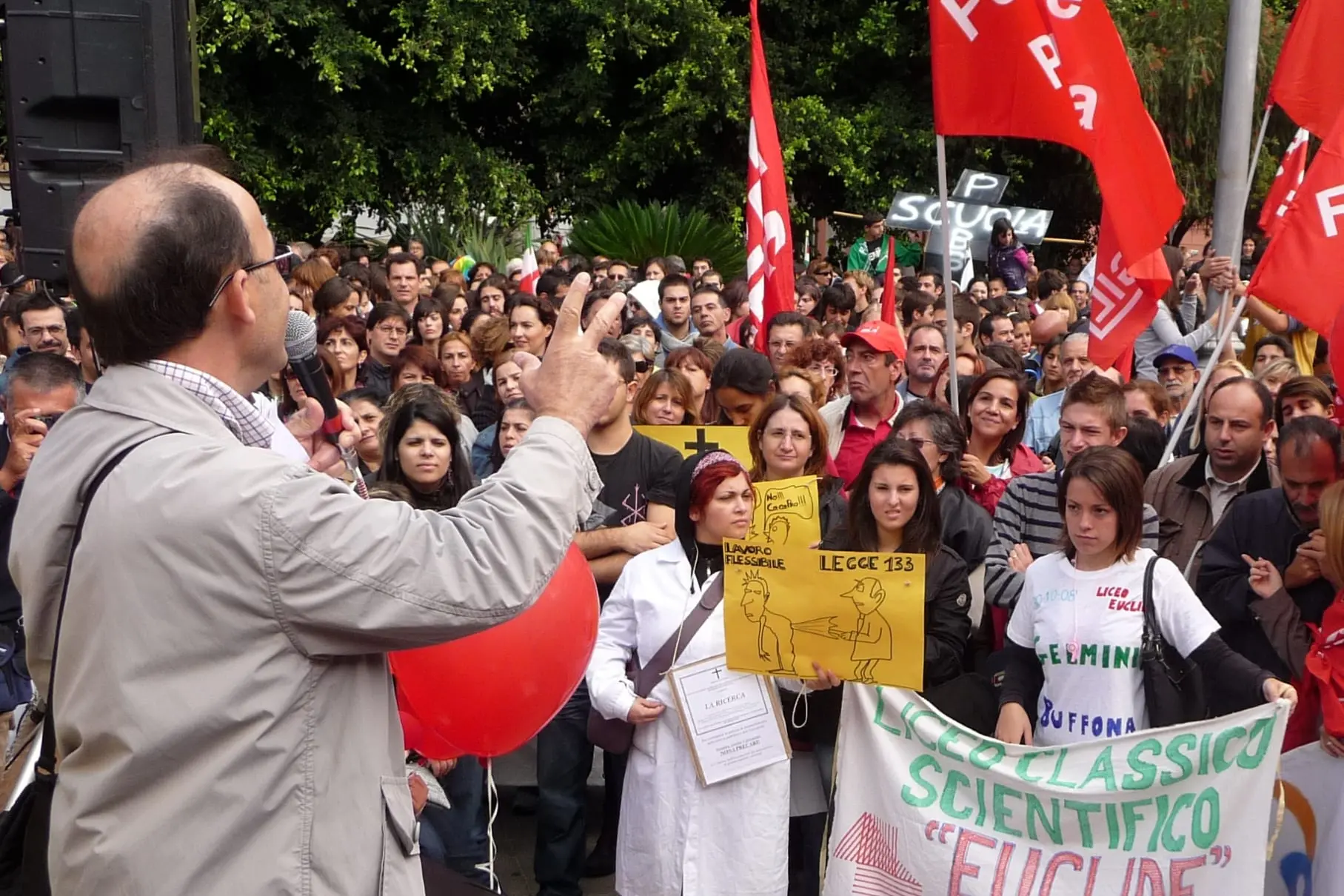
Per restare aggiornato entra nel nostro canale Whatsapp
At 69, the INPS bell has rung for him too. Peppino Loddo is retiring: after a life spent protesting with students and teachers for better schools, attending endless meetings at the CGIL (Italian General Confederation of Labour), teaching in various elementary schools in small towns, and leading the prestigious Siotto classical high school, which under his leadership was Cagliari's leading high school in terms of enrollment and attendance. His final step was a three-year term as a school inspector and his entry into what was once called the Provincial School Authority (Provveditorato), as Provincial School Director, a position he has held for seven years. This career path has earned him the title of Knight of Merit of the Republic. "Always on the side of the most vulnerable, by longstanding training," Loddo says, "and with respect for his role and the law."
So has the time come?
"Sooner or later it comes for everyone (laughs) . But not before ensuring a smooth start to the new school year, which for most schools begins on September 14th, with all teachers back in the classroom (thousands of appointments) and ATA staff in service from the first day of classes. So, a good school year to pupils and students, staff, and families. Then I'll work off a considerable number of unpaid vacation days and, immediately after, I'll retire and a new phase of my life will begin."
Happy?
"It gives me joy to conclude my work experience at the same time as my daughter's university start. I'm happy to have been involved in her entire school journey as a parent, too: from preschool to high school."
He was a trade unionist from another era.
"I don't know. I certainly fought passionately and with all my strength for rights, for jobs, and to preserve and improve public schools, in their role as a guarantee of the constitutional right to education for all."

He was a pillar of the CGIL.
For me, the 1970s, 1980s, and 1990s were times of civic passion, engagement, and intense participation, with the desire to make one's voice heard, and much was achieved. Perhaps I'm misinterpreting today's apparent disenchantment, but I remember that we mustn't take the gains in rights and working conditions for granted.
Regional Secretary for Schools.
"Thanks to the vote obtained in heated elections, workers' assemblies are taking part."
A step that foreshadowed higher positions.
"I'm not a 'system man.' If I disagree with something, I don't mince words: I don't keep quiet because my 'boss' forces me to, I'm not a 'Yes man.' I don't frequent any magic circle of any organization."
He was not treated well.
But I don't worry about it. My union experience enriched me enormously. It gave me a wealth of values, hard work, knowledge, and skills that have never left me. That sensitivity, that care for the less fortunate, for rights, and respect for work are the hallmarks of all my other endeavors. I'm not complaining: I've gone through three phases in my life, all fulfilling and fantastic, especially from a human perspective.
Which?
"The first was teaching. I come from a very poor family, and somehow I managed to graduate from high school and then get a degree, with top honors, which was a great source of pride for me. The first competition I saw—in fact, it was my aunt Caterina who forwarded my application—was for elementary school in the Nuoro area. I won and applied to the Nuoro Education Authority. To the delight of those ranked below me, I chose Ortueri, a small town of about a thousand inhabitants, and not Nuoro."
Why?
"I'm originally from Ortueri, a remote town with many challenges, not just economic ones. In 1982, I wanted to begin my journey into the world of education there. This journey then continued in other towns, such as Domus de Maria and Ussana, when I requested a transfer to the Cagliari area."
Is your union and teaching experience over?
"I won the competition to become a manager. A new experience. I have vivid memories of the relationship with the students."
Some saw this new assignment as a move to the “other side.”
If this is said by someone who, perhaps, "on the other side," actually passed through, it's the last straw. I won a competition, out of a desire to gain new experiences; I wasn't appointed. Of course, my "past" weighed heavily and generated misunderstandings galore. Even the relationship with students was sometimes tense, with heated school assemblies when I, in my role as principal, demanded respect for the school community's rules. It was believed—I still don't fully understand why—that my having been a union member authorized anarchic behavior, so to speak, legibus soluti . Some ended up calling me a "red fascist."
As a provincial school principal, you outline a profile of the school you are saying goodbye to.
It's a good school, at least the one in Cagliari. Despite the ups and downs, despite being mistreated by too many. The quality of the teachers is high. Italian schools are among the best in the world. Of course, there may be some bad apples, as everywhere, but I can confidently say that public schools fulfill with dignity their primary and irreplaceable function of guaranteeing the right to education and many other founding principles of our Constitution. This school, which should receive the grateful recognition of society, should return to the forefront of political and institutional concerns.
There have been some small salary adjustments.
"Go and ask teachers away from home about the expenses they incur to get to work, for teaching materials purchased with their own money, for the unlimited time they dedicate outside of school hours. There's no reimbursement whatsoever, and even asking to participate in refresher courses is almost unheard of. In other European countries, salaries are higher, with the same, if not shorter, school hours. It's not true that Italy has fewer teaching days: the opposite is true. In short, there's some food for thought."
Has there been any request, in forty years, that moved you?
"Not just once, but several, and recently too. School is also marked by hardship, poverty, episodes of self-harm, and drugs. There's school dropout, abandonment, and educational poverty. I recently intervened in a school specifically to try to resolve a complex, humane case, truly heartbreaking. Public schools are the last bastion of state presence."
Have you ever been tempted by politics?
Very much so. I have great admiration and respect for this high form of participation in social and democratic life, for the men and women who dedicate themselves to it out of ideals and not personal gain, despite the bad examples. I've been involved in a lot of grassroots politics in my life, but so far, the parties—I mean those close to my heart—have never approached me to offer me candidacies or positions. I don't cultivate relationships that might be useful when needed, partly because of my sometimes brusque and hasty nature, unaccustomed to being influenced. And I never stop apologizing for certain behaviors. Otherwise, my personal positions are well known and never repudiated: I assert my left-wing spirit, which has certainly not prevented me from carrying out my role as a state official to the best of my ability.
He said he won't sit idly by.
I will put my law degree to good use in other areas. I love law and could pursue legal practice, particularly in the service of school workers. I extend my sincere thanks to the staff of the Provincial School Office, to the managers who offered their invaluable assistance, and to the teachers and ATA staff who ensured the functioning of the schools and guaranteed the right to education.
Lorenzo Piras
REPRODUCTION RESERVED