Olbia, Maker Faire Sardinia a success: awards, talent, and visions for the sea of the future.
A lively three-day event that brought together many prominent guests such as engineer Enrico Dini, a pioneer of 3D printing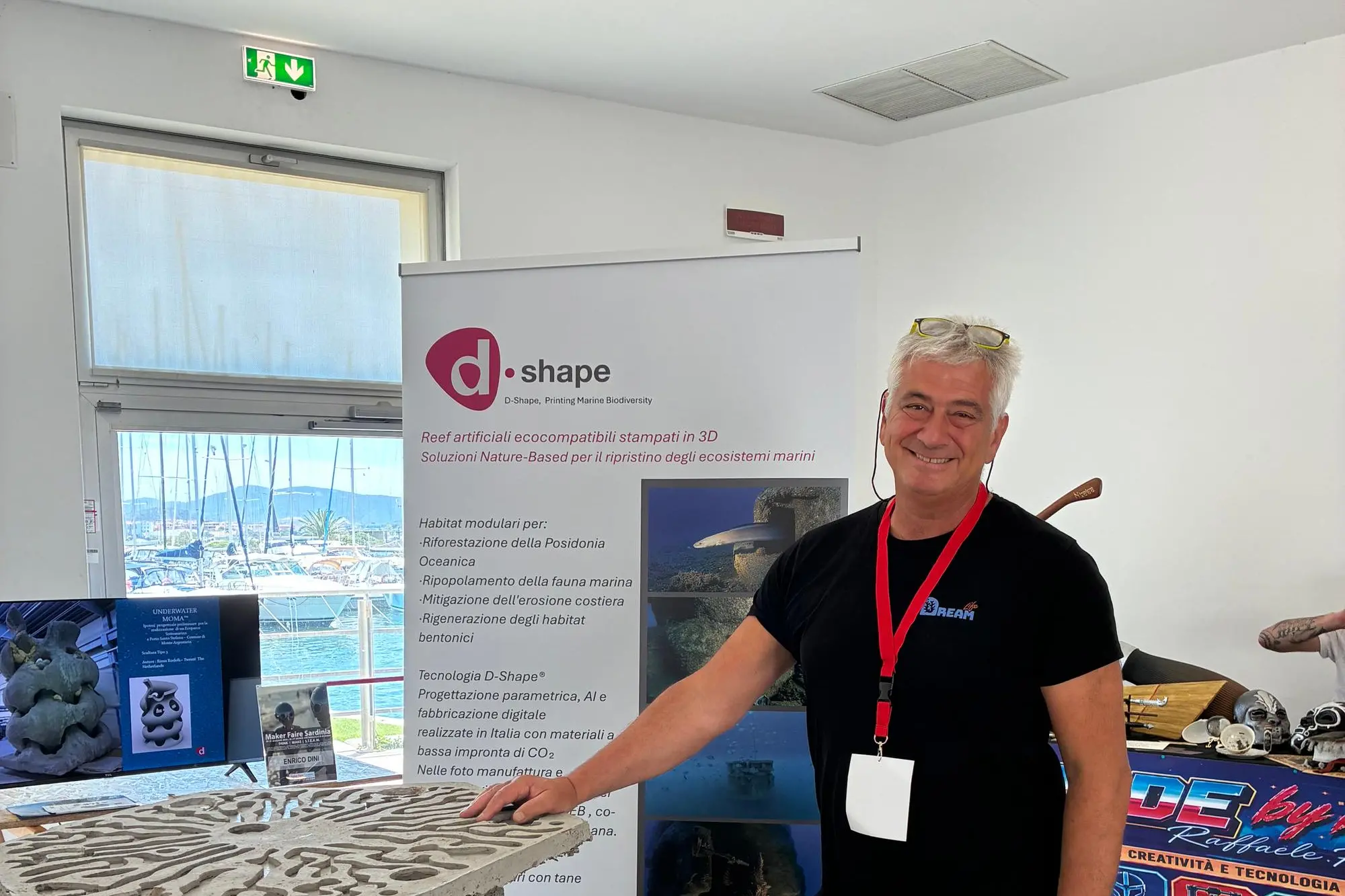
Per restare aggiornato entra nel nostro canale Whatsapp
The curtain falls on the fourth edition of Maker Faire Sardinia , dedicated to innovation and organized by engineer and FabLab Olbia project manager Antonio Burrai . "The results are excellent ," he states, "both for the number of visitors and the great interest shown by the foreign tourists who crowded the halls." Foreign visitors also participated in the workshops, underscoring the international character of the event, which culminated with the awarding of several prizes: Best Maker was awarded to Gabriele Orotelli for his Sardo Pop action figures; Best Artist was awarded to Olbia-based artist Marcello Steri for his POI-Proces of Idea project; and Best Project honored the robotic innovation of the Giaconella Veterinary Clinic.
A lively three-day event that brought together many young talents and prominent guests, such as engineer Enrico Dini, a pioneer of 3D printing. Son of Egisto , an engineer at Piaggio and collaborator of Corradino D'Ascanio —the brilliant inventor of the Vespa and pioneer of the helicopter—Enrico Dini followed in those footsteps, developing a passion for robotics and automated systems from a young age, a passion that would lead him to become one of the world's leading figures in digital manufacturing.
"Over twenty years ago, I realized the potential future of digital manufacturing applied to construction," Dini recalled. "So I filed a patent for 3D printing houses. And that's how I became known as the guy who prints houses." A vision, almost science fiction at the time, that helped make his name known in the world of international architecture and engineering, gradually shifting from building for humans to an even more ambitious challenge: using technology to help nature regenerate. "I wanted to build houses like Gaudí, so I met Mark Burry, the New Zealand architect known for his long-standing work on the team at the Sagrada Família in Barcelona. Through analyzing the problems of the Great Barrier Reef in Australia, affected by bleaching phenomena linked to climate change, he suggested I imagine structures designed for other forms of life." This encounter marked a turning point in Dini's research. He then turned his attention to the sea and the possibilities offered by digital fabrication to contribute to the recovery of natural habitats. He acquired expertise from marine biologists, ecologists, researchers, and universities, which allowed him to develop a new vision of architecture in dialogue with the ecosystem. Thus, his "fish houses" take on organic forms, inspired by natural processes and designed to offer shelter to fish and invertebrates, encourage the establishment of new biological communities, and create suitable substrates for the regrowth of Posidonia oceanica, one of the most important species for the health of the Mediterranean.
"The real challenge of the present and the future," he explained at Maker Faire, "lies in the possibility of generating ecosystems from scratch with the aim of transforming degraded or impoverished portions of the sea into environments rich in life, contributing to the increase in biodiversity and the repopulation of fish species." Dini's D-Shape technology is already in Sardinia, in the waters of the Asinara National Park. "Seventy-five modules made with my technology have been installed here," he explained. "The structures were designed for fish repopulation, inspired by organic forms, engineered to maximize their capacity to host marine organisms and create new settlement opportunities for many species. The scientific monitoring accompanying the project will allow us to evaluate the effectiveness of these installations over time." The applications are numerous, for example, panels and surfaces designed to improve the biological quality of vertical harbor walls, transforming environments normally poor in biodiversity into habitats favorable for the settlement of marine organisms. "Technology can help transform the relationship between humans and nature, moving from a logic of simple exploitation to one of collaboration and regeneration," warns the inventor. "It's not about breeding species in captivity, but about creating favorable conditions for natural populations to grow and spread autonomously in their habitats."
The same vision that led him to imagine new marine ecosystems also pushed him to look beyond Earth. Over the years, he has participated in international initiatives, submitting projects for the construction of houses on the Moon. These projects were inherited from space agencies and NASA, which gave rise to a new branch of architecture: Space Architecture. Today, Enrico Dini considers the sea the most promising field in which to apply his skills, a perspective that elevates 3D printing from a construction technology to a means of designing the future of biodiversity and contributing to the regeneration of natural environments.