

Not just centenarians: in Sardinia, life expectancy is lower than the Italian average.
The grim picture painted in the latest Istat dossier: increasingly elderly people but with lower survival chances compared to many other regions, poor education and many employed in activities that do not require specializations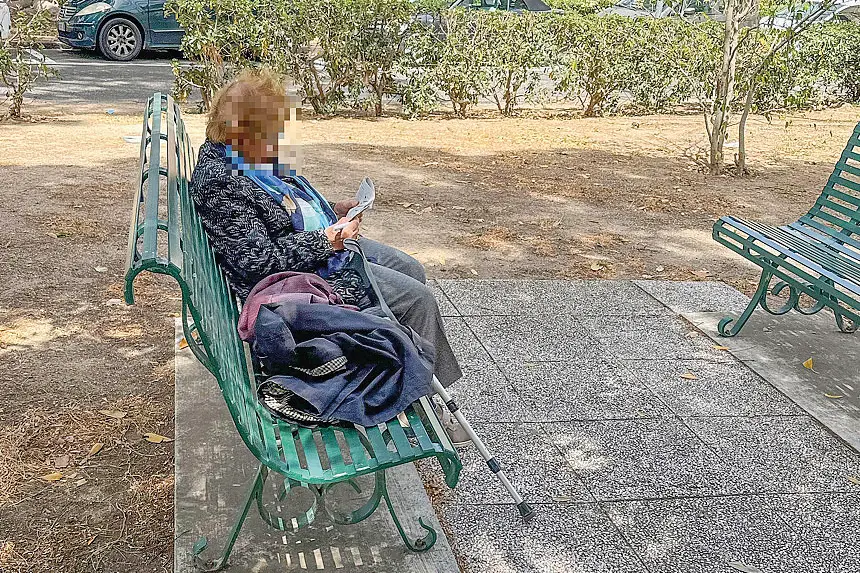
An elderly woman in Cagliari (L'Unione Sarda)
Per restare aggiornato entra nel nostro canale Whatsapp
Increasingly depopulated (100,000 fewer inhabitants in 25 years), it is therefore increasingly older. And, despite the centenarians, it has a lower life expectancy than the national average. To put this into perspective, on average, people die earlier than elsewhere. Furthermore, education is low, as is employment. People are fleeing the countryside where businesses are slowly disappearing, few have jobs in the industrial sector (weak compared to the national average), and too many are employed in "low knowledge intensity" sectors, which therefore do not require any particular specific skills.
There are the narratives. And then there's the data that tells the story of Sardinia. The latest, merciless data was published yesterday by Istat with its report on the transformations of Italy's regions. It turns out the island is better off than it was in the 1950s—and thank goodness— but the current overall picture is far from comforting.

The population
Since the 1990s, "the natural balance" between births and deaths "became negative, but Sardinia did not benefit from significant positive migration; therefore, the demographic decline preceded the national trend by almost 15 years." This brings the population to just over 1.5 million. In 1991, there were over 1.6 million. "Due to demographic dynamics, the aging of the Sardinian population is more pronounced than at the national level, but only starting in the last 15 years," writes Istat: "In 2024, the number of people over 65 for every 100 young people under 15 reached 283, compared to a national average of 208." A lot of old people, then. And we know. But the additional factor to consider is life expectancy: "At birth, in 1974, it was 73.8 years —over 1 year higher than the national average—but in the following decades it increased more slowly than for Italy as a whole, and in 2025 it stands at 83.1 years, compared to 83.7 at the national level." In this "special" ranking, Sardinia is the sixth-to-last region in Italy.

Education and employment
In 1951, Sardinia was a relatively poorly educated region: 22% of the population aged at least six years was illiterate (9 percentage points higher than the national average). But "even in 2024," ISTAT warns, "in a general context of widespread higher education, the island's share of graduates and diploma holders is approximately 7 percentage points lower than the national average." Employment rates are lower than the national average, both in 1977 and 2025: as for Italy in general, "the increase in rates is attributable exclusively to the contribution of women, while male rates have declined." But in what sectors do Sardinians work? "Currently, the share of industry is less than 17%, approximately 7 percentage points lower than the national average, and services account for 77%, approximately 6 percentage points higher." Manufacturing is scarce, offices are plentiful. Agriculture: "The decline in agricultural entrepreneurship is relatively late, but similar to the national decline." And outside of rural areas, employment "is characterized by a relatively high share of workers in low-knowledge-intensity services —particularly accommodation and food services (+4.8 points) and retail trade (+3.7 points)—and in non-manufacturing industry, while employment in medium-high and high-tech industrial sectors is almost zero."
The capital
Between 1861 and 1981, Cagliari's population increased from 33,000 to approximately 197,000 (+595%) and then declined to its current level (147,000) , "mainly due to deurbanization: during the same period, neighboring municipalities gained population. The percentage of people over sixty-five in the capital is slightly higher than in other Sardinian municipalities." And the capital is also aging.