

Record heat in Cagliari between May and September: 24% increase in deaths among those over 65.
Analysis for the Ministry of Health. 54 cities monitored. The Sardinian capital was among the centers with the highest mortality during the 2026 heatwaves.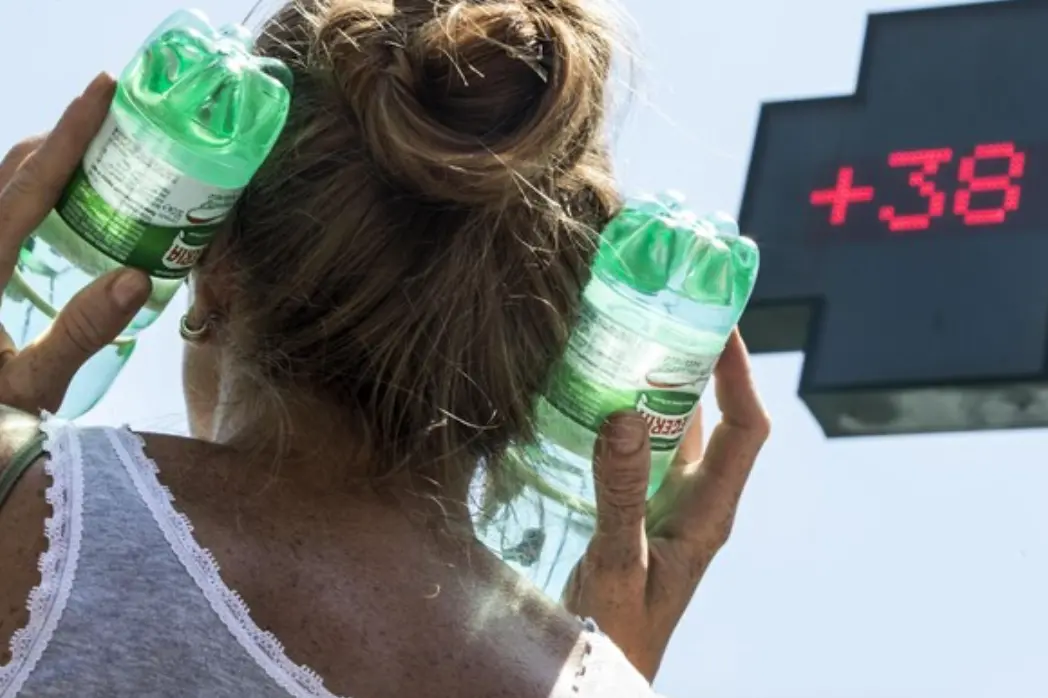
(Handle)
Per restare aggiornato entra nel nostro canale Whatsapp
An exceptionally hot summer in Sardinia (only in September did highs reach 3.9 degrees above normal ) and an impact on health that in Cagliari was much more severe than in the rest of the country .
This is the picture that emerges from the latest report of the Daily Mortality Alarm and Surveillance System , developed by the Department of Epidemiology of the Lazio Regional Health Service (Dep Lazio) for the Ministry of Health , which monitored 54 Italian cities between 25 May and 15 September 2026.
Nationally, the report explains, the increase in mortality in the cities monitored was limited, at +2% , despite particularly intense and prolonged heatwaves. However, the data is unevenly distributed: in the North, the values are in line with expectations, while in the Center-South, where the heatwaves were more prolonged, there was an overall increase of 4% among the over-65 age group, rising to +10% among the over-85s.
The increase in mortality in conjunction with heat waves – the report further underlines – was statistically significant in eight cities: Turin, Padua, Rome, Latina, Bari, Palermo, Catania and, as mentioned, Cagliari .
In the Sardinian capital, in particular, mortality in the over-65 age group increased by 24% in the period considered, that is, ten times the national average and six times that of Central and Southern Italy as a whole.
In Cagliari, in fact, the total deaths, of all ages, were 484, of which 426 were among those over 65. The "expected" deaths in this age group, that is, the deaths calculated as an average by day of the week and week number of the year in the period 2016-2025, were 343. Therefore, there were 83 more deaths than the historical average.

The climate context partly sheds light on the numbers. According to Copernicus data cited in the report, summer 2026 saw record temperatures at global and European levels , with temperatures exceeding the 1991-2020 climate baseline, particularly over central and western Europe (averaging 2.54°C).
In Italy, in the 27 cities covered by the HHWWS forecasting and warning system, all indicators were above normal: positive anomalies averaged +3.7 °C for the maximum apparent temperature (Tappmax) and +3.0 °C for the maximum and minimum temperatures.
As for heat waves, five have hit Italy this year: one from May 25th to 30th, with the first rise in temperatures; one from the second half of June, which lasted until early July, and which mainly affected central and northern Italy; a third in the middle of July, followed by a fourth between late July and mid-August (the most intense and longest, affecting all of Italy); and a fifth, between the last week of August and early September, which affected only central and southern Italy.
The report, however, highlights how mortality in Italy was lower during the period considered compared to that of other countries, such as Germany, France, Belgium and the Netherlands.
"These results have several possible explanations," the report notes. "On the one hand, they confirm the progressive adaptation to heat already observed in previous studies, which can be attributed to greater public awareness, the greater diffusion of air conditioning that reduces the population's exposure , changes in individual behavior to protect themselves from the heat, but above all , the interventions established under the national operational plan and implemented at the local level . Over the years, the coverage of regions, local health authorities, and municipalities has increased in terms of prevention and information activities, and specific interventions aimed at the subgroups most at risk."