

Identities Revealed: The exhibition, spread across four locations, opens in Sassari.
The exhibition is hosted in the Tavolara Pavilion, the “Sanna” Museum, the Pinacoteca and the Sala Duce in the Palazzo Ducale.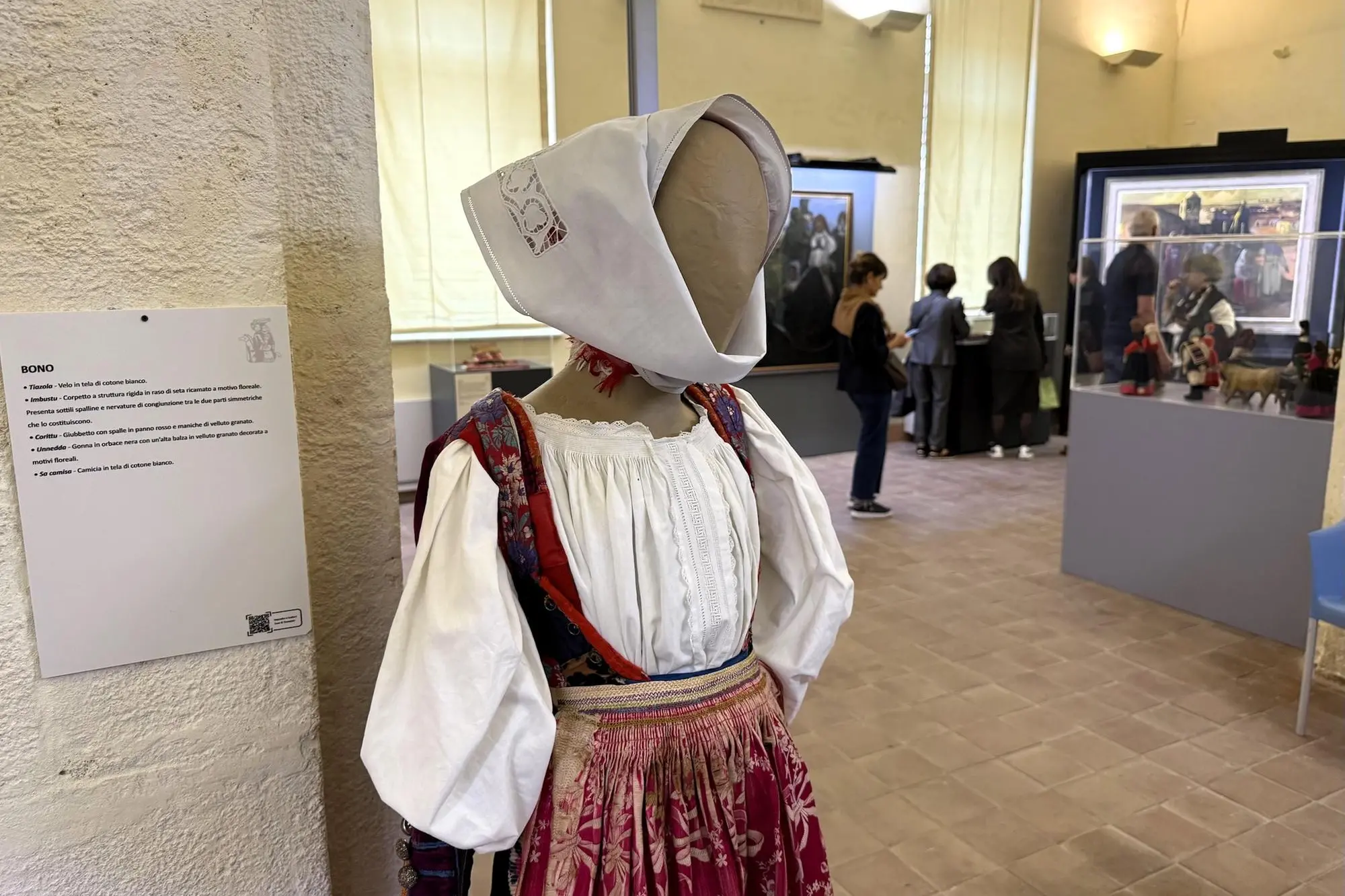
Per restare aggiornato entra nel nostro canale Whatsapp
An exhibition that goes out of its way to bring the city closer to the Cavalcata Sarda. The "Identities Revealed" exhibition, organized by the Municipality of Sassari, has opened. The exhibition spans four different iconic locations in Sassari: the Tavolara Pavilion, the "Sanna" Museum, the National Art Gallery, and the Sala Duce in the Palazzo Ducale, all linked by a coordinated image designed by Mara Damiani. All exhibitions are free to enter.
The exhibition "Between Me. Tradition and Wonder" in the Tavolara Pavilion features Eugenio Tavolara's splendid wooden Cavalcata Sarda . The exhibition also features women's costumes, accompanied by a selection of paintings from the Piloni Collection, created between the 19th and 20th centuries, on the theme of the May parade. In addition, you can view period films from the Istituto Luce, the Cineteca Sarda, and the ESIT Fund of the Sardinia Region, depicting several historic editions of the Cavalcata Sarda.
The Pinacoteca in Piazza Santa Caterina hosts the exhibition "Dressing Like a Queen: Painting a Fabulous Island," featuring several canvases dedicated to the Sardinian dress and tradition of the Cavalcata, painted by major artists including Giuseppe Biasi, Antonio Ballero, Tarquinio Sini, Cesare Cabras, and a rare painting by Argentinian artist Dante Canasi. Other pieces on display include a gala dress by Ollolai and several corsets.
The exhibition in the Giuseppe Duce room , in the internal courtyard of the Palazzo Ducale , is dedicated to women's corsets: The art of embroidery presents thirty different versions of a fundamental accessory in traditional Sardinian women's dress, highlighting the peculiarities of the cuts, the embroidery techniques, the fabrics and materials that characterise the different communities, an object that combines beauty and art with an extraordinary artisan technique.
The National Archaeological and Ethnographic Museum hosts "Inside and Outside the Museum: Sanna Costumes in a participatory exhibition . " Seven pairs of traditional costumes from Cossoine, Ittiri, Osilo, Ossi, Ploaghe, Sennori, and Thiesi are on display.