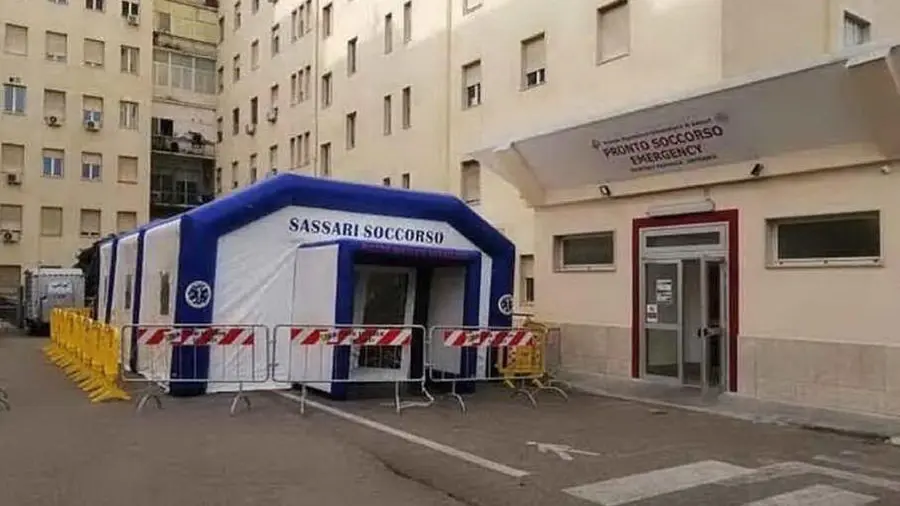


The bed alarm in the internal wards of the Aou of Sassari re-explodes, while the chaos of non-Covid infectious patients, hospitalized outside the infectious diseases department, breaks out.
There are countless reports from relatives of hospitalized people. This morning in Internal Medicine, with all the beds occupied, there were almost 30 patients lying on stretchers, in the rooms with other patients or even in the corridors.
Only at lunchtime, 14 patients were discharged, which freed up as many beds and thus allowed to halve the number of hospitalized patients on stretchers. But in the afternoon other patients were hospitalized on stretchers.
The wards are saturated, in addition to the patients with highly infectious diseases other than Covid who cannot be accepted in the ward, totally dedicated to Covid.
There was talk of malaria patients in the internal medicine ward, eleven infected with the Klebsiella bacterium in the medical clinic of people with meningitis in whole medicine and several suspected cases of tuberculosis hospitalized outside infectious diseases.
But the Aou of Sassari, through the voice of Francesco Bandiera, clarifies: "No cases of tuberculosis or, least of all, of meningitis, not even suspected, among those hospitalized in the wards of the internist area. It is worth remembering that if there had been cases of tuberculosis these would have been admitted, as logical, in the unit of Pneumology. Ten days ago in the emergency medicine was admitted a case of bacterial meningitis subsequently transferred to resuscitation ".
"We have a case of malaria, which is treated in the internal department in collaboration with infectious diseases, - the second we treat this year - but for this pathology there is no risk of spreading contagion among patients", reassures Bandiera.
Again: “In the morning today (Monday, editor's note) a large number of hospitalizations were registered and it was necessary to accommodate some patients on stretchers. Later in the morning, following resignation, it was possible to free up beds to accommodate the new entrances. Later in the day, however, overcrowding returned due to the high number of accesses ".