Giara in bloom: the unique spectacle of the water buttercup on the plateau
The spectacle among the marshes, where the Giara horses graze, among the last wild animals in Europe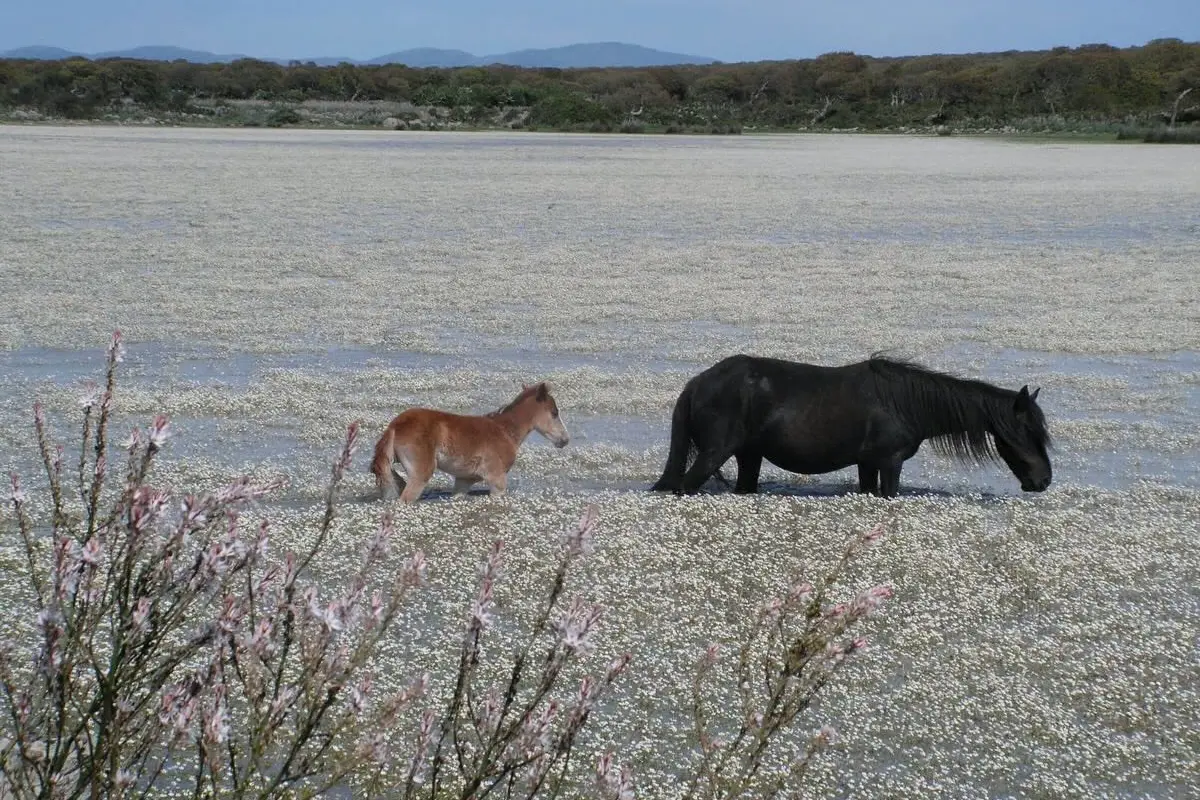
Per restare aggiornato entra nel nostro canale Whatsapp
There's a flower on the Giara that marks the end of winter and the arrival of spring in Sardinia. It does so by painting the marshes scattered among shrubs, rocks, and lush forests a pure white. It's the water buttercup, a very common plant in the plateau's bodies of water, which at this time of year offers postcard-perfect views, piquing the curiosity of those who choose the Giara as a destination for a day trip or exploration. The carpet of flowers becomes so dense that the eye, at times, struggles to distinguish the water beneath the petals , so numerous are they.
Also known as "ebra de arràsa" (frog grass), this plant is part of the diet of the Giara horses, the undisputed protagonists of the area . And this is precisely the surprising detail: buttercups are generally not included in the animals' diet due to ranunculin, an alkaloid highly toxic even to humans. The extraordinary inhabitants of the Giara, however, graze on these flowers without any problem, undisturbed also by the fact that no other animal seems interested in consuming them. This behavior is most likely the result of a long evolutionary process , which has led to the development of a particular resistance to this substance.
Besides being an integral part of the lives of these unique animals, the water buttercup has a fascinating characteristic: it has two completely different types of leaves. The above-ground leaves are lobed and rounded, while the submerged leaves are thin and filamentous, gathered in dense tufts. They oxygenate and filter the water, limiting the growth of green algae.
This is the best time to be surprised by one of the most evocative spectacles of the island: the flowering of the buttercups and the Giara horses – among the last wild animals in Europe – that move freely in this landscape suspended in time.
(Unioneonline/vf)