Calasetta: A tourist hides a castanet among the rocks and is reported and faces a hefty fine.
Intervention by the Sant'Antioco Forestry Station on the Grande beach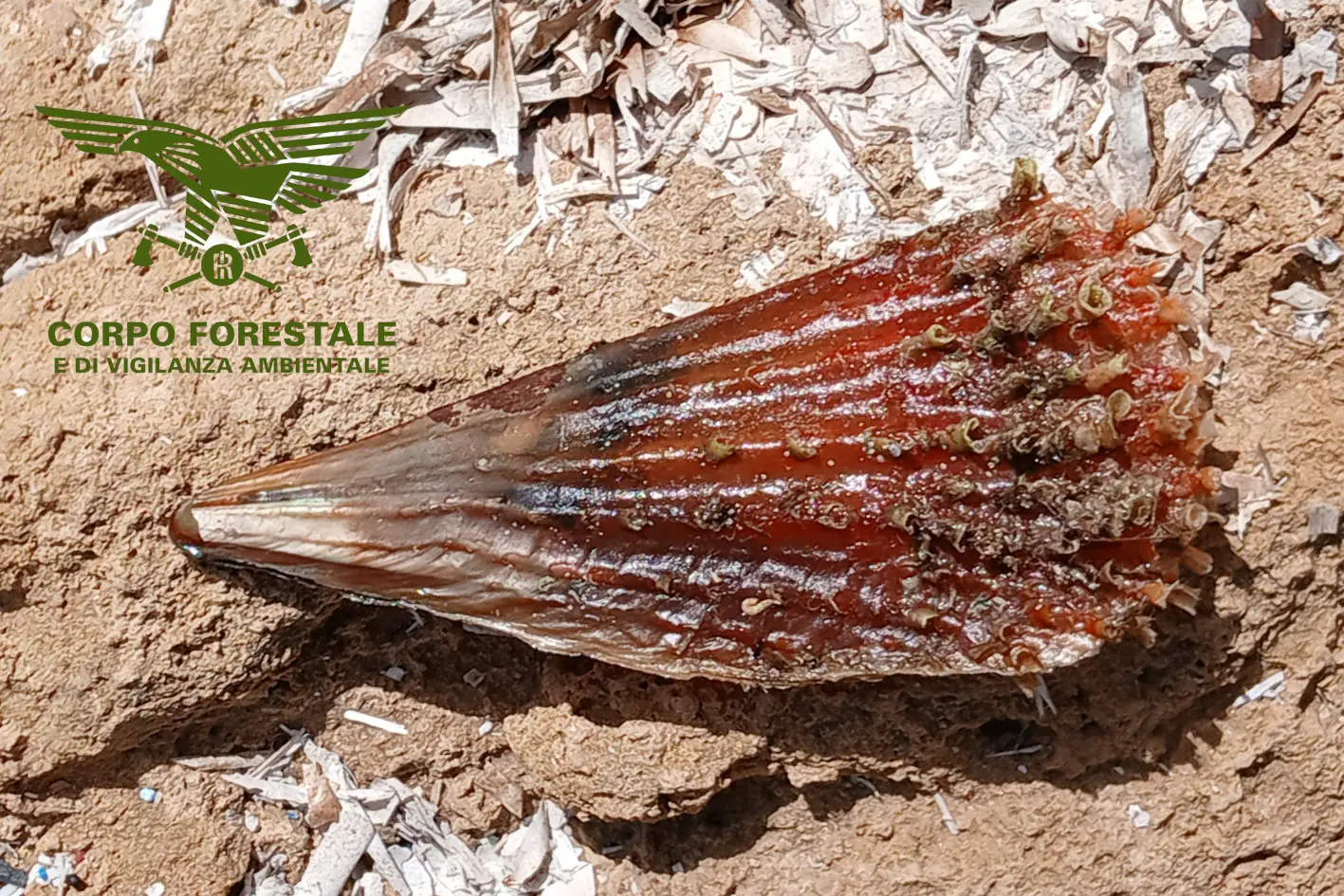
Per restare aggiornato entra nel nostro canale Whatsapp
On Calasetta's Spiaggia Grande beach, a tourist had stolen and hidden a young silver clam (Pinna nobilis). The still-alive bivalve had been hidden in a crevice between the rocks, a short distance from the beach umbrella.
But officers from the Sant'Antioco Forestry Station, following a specific tip-off, responded to the scene and uncovered everything. They immediately began an investigation into the alleged perpetrator, inevitably resulting in a report for the Public Prosecutor's Office.
The Forestry Corps reminds that the law strictly protects this species: violating the ban on harvesting constitutes a crime, punishable by imprisonment for two months to two years or, alternatively, a fine of €2,000 to €12,000 . These bans and penalties apply not only to live specimens, but also to the removal, possession, or sale of empty shells (valves) or parts thereof.
The Forestry Corps appeals to all citizens and tourists to refrain from removing shells, sand, or pebbles from the coast for any reason. Sardinia has specific regulations in place to protect its coastline: anyone who removes, possesses, or sells even small quantities of these materials without proper authorization is subject to an administrative fine ranging from a minimum of €500 to a maximum of €3,000, unless the act constitutes a more serious criminal offense.
(Unioneonline/AD)