

Ukraine, General Camporini: "Putin is a danger to Europe, the conflict transcends borders."
The former Chief of Defense Staff: "A hybrid war is already underway, but the tsar is struggling to achieve his goals."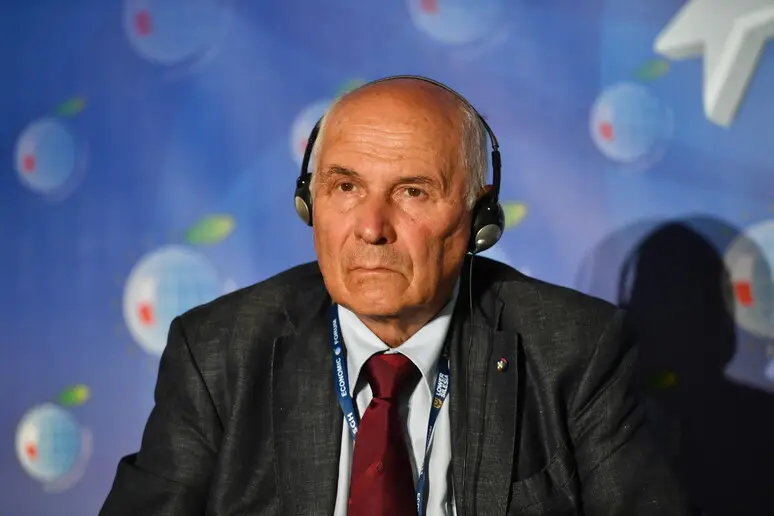
Per restare aggiornato entra nel nostro canale Whatsapp
Since Russia's invasion of Ukraine on February 24, 2022, Europe has been living with the ghosts of war. A conflict that has weakened the Old Continent's dream of peace and is now extending beyond the borders of the two countries involved, targeting other states with subtle attacks, particularly those in the NATO bloc. General Vincenzo Camporini, former Chief of the Defense Staff, is concerned about the latest developments in the political-military crisis that has struck the heart of Europe. "A hybrid war is already underway," he explains, "visible in the symmetrical press releases between Moscow and the West and in verbal and media clashes. This is the frontier on which Vladimir Putin is moving, using every available tool—think of what happened in Leipzig—to assert his interests and realize his expansionist plans."
Is Russia attacking Europe?
The danger is very serious. Moscow floods the media, especially sympathetic ones, with reports that constitute a form of aggression. This is compounded by threats to the internal balance of power within individual countries and cyber attacks on critical facilities such as banks and hospitals.
Is there a risk that Putin will overstep his bounds and decide to directly attack his Western enemies?
I'm skeptical that the current situation will degenerate into a direct armed conflict in the coming months, although it cannot be ruled out for the future, given that Putin's imperialist plan is very long-term. Russia remains a large country with ample resources, despite demographic difficulties and a low birth rate.
But what is the real situation of this war?
Winning a war means achieving one's goals, and Putin has not yet achieved his: a "Belarusized" Ukraine as a satellite state, a friendly government, and an armed forces reduced to just 80,000 men.
Russia is failing to implement its plans.
The tsar is aiming to annex territories he has not yet conquered, despite having already included them in the Russian Constitution. At the moment, Moscow is not winning the war. Ukraine is demonstrating a strong will to resist, supported by the people, not just its leaders, a great technological capability, and the ability to adapt tactics to new weapons systems. While all this is still not enough to completely repel the Russians, the initiative has, in many cases, passed into Ukrainian hands.
The Ukrainians are also attacking Russian logistics in Crimea. What could happen?
A crucial example is Crimea, which is supplied via the Kerch Bridge and the land route along the Sea of Azov. New Ukrainian drones are strangling the peninsula, turning the land route into a "graveyard" for trucks and vehicles, which are systematically targeted. There is a real risk that Crimea will end up under siege.
What are the prospects for a conflict that has produced death and destruction? Is peace a viable option in the near future?
This situation could continue for a long time, and no significant changes are expected before the end of the year, with the hope that something will move in 2027. Diplomatic efforts, such as Cardinal Gallagher's mission to Moscow, have so far failed to produce concrete results.

It is a war waged with drones and brand new attack systems.
European armed forces and NATO must adapt to new warfare realities. This is a necessity in the face of profoundly changed military scenarios. A NATO exercise recently demonstrated how a Ukrainian drone unit was able to defeat a Western armored regiment in a single day. This doesn't mean that tanks are obsolete, but that they must evolve by integrating defense systems to resist drones, such as the use of improvised protective nets. It is essential to acquire new operational and technological capabilities without forgetting the skills of the past that could still be useful.