The Russian-Ukrainian conflict and the future of the European Union: is peace still possible?
Energy remains the fundamental problem today, with all the consequent repercussions on the most disparate productive sectors.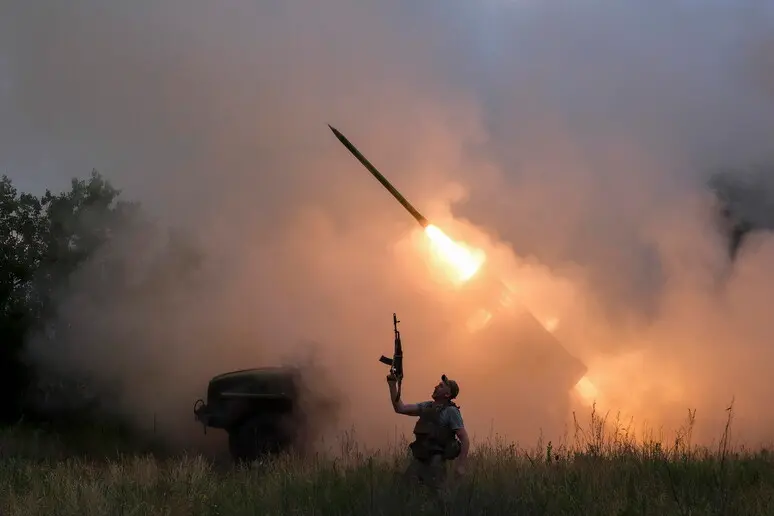
Per restare aggiornato entra nel nostro canale Whatsapp
More than four years have passed since the conflict began, and Russia and Ukraine are still facing each other on the battlefield, with the outcome well known. The passage of time, upon closer inspection, seems to be working in favor of Vladimir Putin's Russia, not only militarily, but also and above all on the geopolitical and economic levels of Europe, where, according to many, the consequences of sanctions against Russia are weighing heavily. Energy remains the key issue today, with every conceivable impact on the most diverse production sectors and the resulting crisis, compounded by all the critical issues triggered by the blockade of the Strait of Hormuz.
The European Union, and with it the Meloni government, in full continuity with the Draghi government, has always stated its determination to end its energy dependence on Russia and to ensure stable energy supplies and prices. But between words and action, as they say, there's a world of difference. And the passage of time, combined with the resulting economic crisis, requires us to focus on realistic hypotheses rather than ideological outbursts.
Meanwhile, a growing sense of weariness and division is emerging among European citizens, including Italians, regarding military support for Kiev. The opposition expressed by many regarding increased military spending and the so-called European rearmament plans is felt in all its severity precisely because of the short-, medium-, and long-term economic consequences it will cause. Moscow, meanwhile, has announced that Chinese President Xi Jinping and Indian Prime Minister Narendra Modi have offered their active mediation to reach a peace agreement with Ukraine. According to a Kremlin statement, Vladimir Putin himself has welcomed the proposal put forward by the two Asian leaders. If this were to happen, the European Union, and with it the West, could definitively lose its centrality and position as a potential "middle ground" of influence. Ukraine's function has always been that of a neutral buffer state between two worldviews deemed irreconcilable: between a system based on pluralism, rights, and democratic alternation, and an authoritarian model. This fact appears undeniable.
Rather, it is the attitude of the United States, or rather its President Donald Trump, that raises concerns. Statements about a possible disengagement are not merely provocative statements, but rather signals a strategic redefinition that seeks, so to speak, to leave the continent exposed, exposing it in various ways and to varying degrees to repercussions from Asian powers. What appeared to everyone as a potential convergence of interests between Donald Trump and Vladimir Putin—welcomed, let us remember, with full honors by the former in Alaska—although likely based on very different assumptions, appears plausible. Both, if one were to reason with sufficient cynicism, could benefit from a divided Europe, less capable of acting as a unified political entity. Despite the passage of time, it has not been possible to achieve a shared European foreign policy among the Twenty-seven Member States. Despite everything, it is still impossible to assert a shared vision on key issues, from the Middle East to relations with Iran and Israel, or even on the conflict in Ukraine. The European Union appears unable to continue to suffer, primarily economically, the repercussions of international tensions that could lead to the disintegration of the continent in the medium and long term. The Russian-Ukrainian conflict must end (with all that this likely entails in terms of gains on the battlefield), and at the same time, direct dialogue with Moscow and the entire Asian continent must resume full force. We must be active and proactive participants in the new geopolitical context to avoid having to endure it. The European Union's inertia, its inability to react, combined with its inability to play the role of mediator in international disputes that, ultimately, is its proper role, unfortunately renders it inevitably marginalized and seriously exposed. The time has probably come to rethink the parameters of foreign policy so that we can effectively work towards finding solutions that won't deprive European citizens, including Italians, of their pockets.
Giuseppina Di Salvatore – Lawyer, Nuoro