

Hantavirus, the Tenerife outbreak ship. The ministry: "No vaccine, here's how it's transmitted and what the symptoms are."
Mara Campitiello, head of the prevention department, takes stock of the Hondius case: "It's different from the more lethal Covid, but it's less contagious."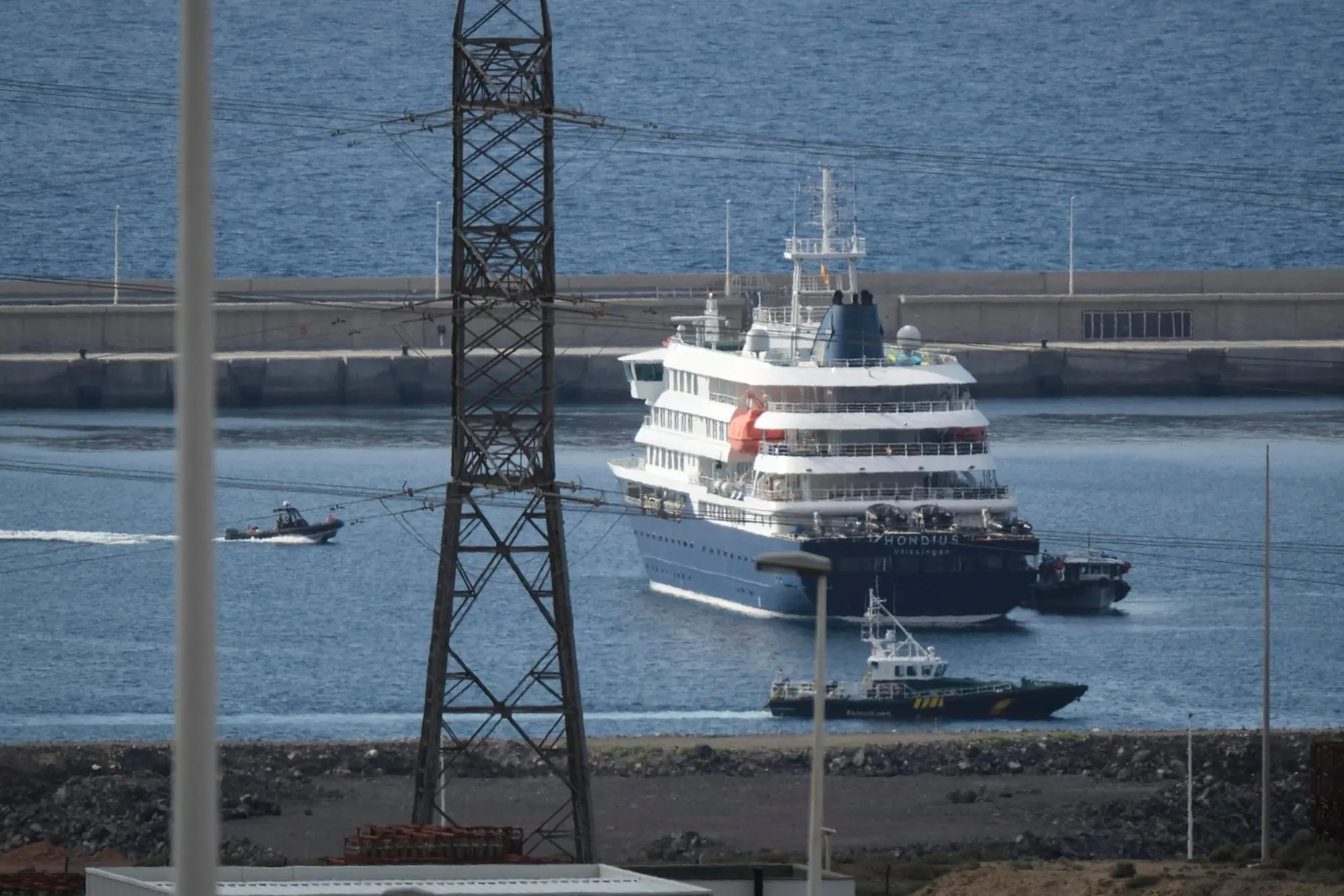
Per restare aggiornato entra nel nostro canale Whatsapp
The first evacuation plane for passengers disembarked from the Hondius ship, which was hit by a hantavirus outbreak , took off from Tenerife. Aboard were 14 Spaniards bound for Madrid, who were transferred to a military hospital. Flights for passengers from France, Canada, the Netherlands, the United Kingdom, Turkey, Ireland, and the United States will depart later. "The process is operating normally and in complete safety," said Spanish Health Minister Monica Garcia, as she reviewed the operation in Tenerife, coordinated by the Spanish government under the supervision of the World Health Organization, represented by Director-General Tedros Adhanom Ghebreyesus. "All passengers are asymptomatic," Garcia reiterated.
Meanwhile, Mara Campitiello, head of the Ministry of Health's Prevention Department, provided an update on the hantavirus situation in an interview with Rai News24.
Is there a risk of a new pandemic? "There is no risk of a new pandemic," Campitiello said, "because we are not in the same situation as Covid. Currently, there is no alarm. It is a different virus from Covid, albeit more lethal, with low contagion. Transmission is primarily through saliva, urine, and rodent feces, with only a small amount transmitted through the air and human-to-human. The incubation period is long, so isolation is recommended. Contagiousness does not appear to be in the pre-clinical stage, but rather at the onset of symptoms. Currently, the four passengers are symptom-free."
Are there vaccines for the harpsichord? "There's no vaccine, but there is a diagnostic test available in Italy. Without raising alarm, the situation isn't comparable to that of Covid; we're certainly far from a pandemic," Campitiello explained.
Mortality – "It's a virus that can lead to death, especially in some variants. The American variant is very aggressive and directly affects the lungs, with a mortality rate of over 30%; the European variant, which primarily affects the kidneys, has a mortality rate of 10%. COVID was much more contagious but less lethal," the expert emphasized.
The symptoms – "The initial symptoms," the Department Head also explained, "are those of a common flu, like almost all viruses: tiredness, cough, general malaise; in more severe cases, respiratory symptoms appear, and if there has been contact, as in the case of the four passengers, the health authorities must be notified. As soon as the Ministry of Health learned of the four passengers' presence, it promptly tracked them down, and we instructed the Regions to take care of them and recommend mandatory isolation."
How does contact occur? "Contact," Campitiello continued, "occurs through the air, via respiratory droplets, saliva droplets that become airborne particles and can cause infection. However, I reiterate that contact is very difficult; confined spaces and close encounters are required, and for this reason, we are reassured for the four passengers: the passenger who later died was on the flight for only a few minutes, and the four were seated far apart from her."
"We've known about this virus for a long time, but we had little information about human-to-human transmission because, like all viruses, they mutate," Campitiello concludes. "It's a transfer from animal to human, which is well-known and tied to restricted and circumscribed environments."
(Unioneonline)