Tehran rejects the peace plan and makes a 10-point counterproposal. Trump calls it "insufficient."
Islamabad's framework agreement called for a 45-day ceasefire, but Iran "will not reopen Hormuz for a temporary truce."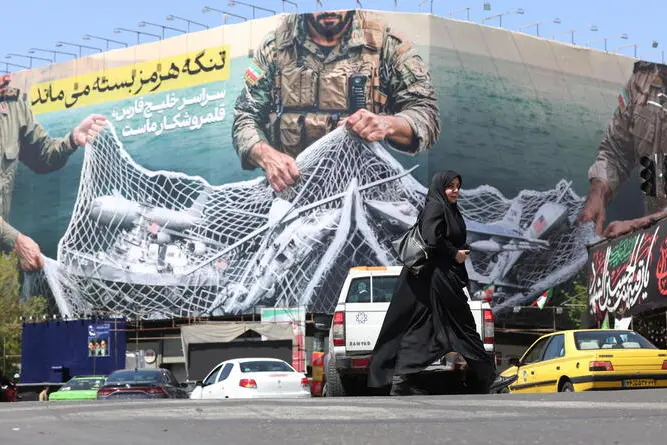
(Handle)
Per restare aggiornato entra nel nostro canale Whatsapp
Iran and the United States have received a plan to end hostilities and reopen the Strait of Hormuz, Reuters reports online, citing anonymous sources with knowledge of the matter. The framework agreement was drafted by Pakistan and exchanged with Iran and the United States overnight.
The plan outlined calls for a two-phase approach, with an immediate ceasefire followed by a comprehensive agreement. The agreement, dubbed the "Islamabad Agreement," also calls for the reopening of Hormuz "within 15-20 days."
Yesterday, Donald Trump gave the United States 48 hours to reopen the Strait, threatening attacks on bridges and energy infrastructure starting Tuesday.
Tehran rejected the ultimatum and the temporary ceasefire: another Iranian official said that "we will not reopen the Strait of Hormuz in exchange for a temporary truce." Tehran presented a 10-point counterproposal, transmitted to the US via Pakistan, which includes a series of demands, including an end to the conflict in the region, a protocol for safe passage through the Strait of Hormuz , reconstruction, and the lifting of sanctions.
The news of April 6th
- Erdogan: "Israel is blocking efforts to stop the war."
"The Israeli government continues to obstruct every attempt to end the war," Turkish President Recep Tayyip Erdogan said, also criticizing the Jewish state for its attacks on Lebanon. "As Turkey, we will continue to raise our voice for peace," the Turkish leader added in a speech after a cabinet meeting in Ankara, broadcast on state television TRT. Addressing energy problems caused by transit restrictions in the Strait of Hormuz, Erdogan stated that since the conflict began, Turkey has had "no problems in terms of the security of energy supply and storage."
Netanyahu: "We destroyed Iran's largest petrochemical plant."
"Today we destroyed the largest petrochemical plant in Iran. This means we are systematically dismantling the financial machine of the Revolutionary Guards. We are destroying factories, eliminating agents, and we continue to eliminate high-ranking officials," Israeli Prime Minister Benjamin Netanyahu said in a video statement. "Iran is no longer the same Iran, and Israel is no longer the same Israel. Israel is stronger than ever, and the terrorist regime in Iran is weaker than ever. What is the secret? Faith and power. We have plenty of both," Netanyahu added.
- Trump: "Weapons were sent to Iranian protesters, but another group kept them."
"We sent weapons to Iran. They were intended for the protesters, but another group kept them," Donald Trump reiterated.
Trump: "Iran's proposal is a big step, but it's not enough."
Iran's proposal is a "big step," but "it's not enough." Donald Trump said this, reiterating that Iran cannot have a nuclear weapon. "We'll see what happens. The war could end quickly if they do certain things," he noted. Trump then reiterated the deadline: Tuesday is the final deadline for Iran to reach a deal. "We could walk away from Iran already, but we want to finish the job," the US president said.
- Israel carries out attacks on Tehran airports
The Israeli Air Force announced that it conducted a "large-scale wave of strikes" overnight against aircraft and facilities at Tehran's airports, which Israel claims were used by the Iranian armed forces and the Revolutionary Guards. The army said dozens of Israeli fighter jets struck "a variety of air assets" belonging to the Iranian Air Force, including planes and helicopters, as well as military infrastructure at Mehrabad International Airport and Bahram and Azmayesh airports in the Iranian capital, further reducing "the regime's air capabilities."
Iran rejects temporary truce, response to US transmitted via Pakistan
Iran rejected the proposal for a temporary ceasefire in its response to the United States, brokered by Pakistan. According to the foreign policy correspondent for the Iranian news agency IRNA, in its ten-paragraph response, Iran emphasized the need for a permanent end to the war, taking into account its own considerations. The response includes a series of demands from Tehran, including an end to conflict in the region, a protocol for safe passage through the Strait of Hormuz, reconstruction, and the lifting of sanctions. According to an American source, Iran's response is "maximalist" and "it is unclear whether it will allow progress toward a diplomatic solution."
- Netanyahu: "We will not stop until the threat is eliminated."
"We will continue with all our strength, on all fronts, until the threat is eliminated and all war objectives are achieved," wrote Benjamin Netanyahu in a post on X following the killing of Majid Khadami, head of the Revolutionary Guards' intelligence department, and Athar Bakri, commander of Branch 840 of the Quds Force, "responsible for attacks against Jews and Israelis around the world." "Those who work to assassinate our citizens, those who direct terror against the State of Israel, those who build the Iranian axis of evil, their blood is on their heads. We act with strength and determination: we will reach out to anyone who seeks to harm us," Netanyahu added.
- Hormuz, Tehran: "Ships from friendly countries are subject to a fee; those from hostile countries are prohibited."
Even ships from friendly countries must pay to pass through the Strait of Hormuz. This is what the Nournews agency reports in connection with the news that Iran has granted permission for Iraqi ships to transit the Strait of Hormuz. "An informed source," the agency's website states, "referred to a new protocol drafted and adopted for naval traffic in the Strait of Hormuz, stating that permits for safe passage through the Strait of Hormuz for friendly countries will be issued exclusively upon the payment of security fees, and no country will be exempted from this requirement." The source also emphasized that the country's strategy is to offset part of the damage resulting from enemy aggression by collecting security fees in the Strait of Hormuz. The implementation of the new protocol will be strictly enforced for all non-hostile countries, including friendly states.
- Trump has not yet approved the 45-day truce
Donald Trump has not yet approved a 45-day ceasefire proposed by mediators, a White House official quoted by American media said.
- For the White House, a 45-day ceasefire is one of the ideas under discussion.
The plan for a 45-day ceasefire between the United States and Iran is "one of many ideas" currently being discussed, a White House official told Axios reporter Barak Ravid. According to the source cited by the reporter, Donald Trump "has not yet given his approval" and "Operation Epic Fury is continuing."
Iran: "Attacks on sites pose risk of radioactive leaks, but the IAEA is doing nothing."
"The International Atomic Energy Agency's inaction regarding US and Israeli attacks on Iranian nuclear sites such as the Bushehr plant emboldens the aggressors to continue their ruthless attacks, which violate international law and constitute crimes against humanity," said Mohammad Eslami, head of the Atomic Energy Organization of Iran. Iran's only functioning nuclear power plant, Bushehr, has been hit four times so far, Eslami added in a letter to IAEA Director General Rafael Gross, cited by ISNA news agency. He warned: "Such attacks could pose a risk of radioactive radiation release from an operating reactor and could have irreparable consequences for people, the environment, and neighboring countries."
- Israel Raid Iran's South Pars Petrochemical Complex
Iran's South Pars petrochemical complex in Asaluyeh was hit by US-Israeli strikes, according to the Fars news agency, which reported "several explosions" in the area. Israeli Defense Minister Israel Katz confirmed the attack on the facility, which he described as Iran's "largest" petrochemical facility.
- Iran: "US raid on pilot likely aimed at stealing enriched uranium"
"The US operation to rescue its pilot, missing after his fighter jet was shot down in Iran, may have been a deceptive operation, as the Americans likely intended to steal Iranian enriched uranium," Iranian Foreign Ministry spokesman Esmail Baghaei said. "There are ambiguities and uncertainties surrounding the operation, which turned out to be a disaster. The location where the Americans claim to have lost the pilot, in Kohgiluveh and Boyer-Ahmad province, is quite different from the location where American forces attempted to land in central Iran," the official added, cited by IRNA news agency.
- "Israeli container ship destroyed"
The Revolutionary Guards Navy "attacked and destroyed" an Israeli container ship, designated SDN-7, with a cruise missile, the Fars news agency reported, citing a knowledgeable military source. The vessel is reportedly on fire, according to the same source.
Iran: "We have submitted a response to mediators; the US plan is unacceptable."
An Iranian Foreign Ministry spokesman said a response has been drafted to mediators working to end the war between the United States, Israel, and Iran. The BBC reports. Esmail Baghaei, quoted by the state news agency IRNA, said that the 15-point plan shared by the United States through intermediaries "was in no way acceptable to us." Negotiations to end the conflict are "incompatible with ultimatums and threats to commit war crimes." Iran has drawn up a series of demands "based on our interests and considerations."
- Israel, Iranian missile strike on Haifa kills four
The death toll from an Iranian attack on Haifa yesterday has risen to four: the bodies of a couple in their eighties had already been found; today, rescuers reached their son (about 40 years old) and his partner (about 35), a foreign citizen. According to Tel Aviv media, the four had sought shelter in the stairwell and were buried under the rubble.
- Costa: "Attacks on civilian infrastructure in Iran are illegal and unacceptable."
"After five weeks of war in the Middle East, it is clear that only a diplomatic solution can address the root causes of the conflict. Any attack on civilian infrastructure, especially energy plants, is illegal and unacceptable. This applies to Russia's war in Ukraine and everywhere. Iran's civilian population is the Iranian regime's main victim: it would also be the main victim of an escalation of the military campaign," wrote European Council President Antonio Costa in X.
- Third Turkish ship passes through Hormuz
A third vessel belonging to a Turkish shipping company, an oil tanker bound for Malaysia, passed through the Strait of Hormuz on Sunday evening. Turkish Transport Minister Abdulkadir Uraloglu announced this morning. "Thanks to our joint efforts with the Ministry of Foreign Affairs, the Turkish vessel Ocean Thunder, en route to Malaysia with a cargo of crude oil from Iraq, passed through the Strait of Hormuz without incident last night," the minister wrote in a social media post. According to the specialized website Marine Traffic, the Panamanian-flagged oil tanker Ocean Thunder departed from the Iraqi port of Basra. According to Uraloglu, eight vessels belonging to Turkish shipping companies have requested permission to pass through the Strait.
- Pasdaran intelligence chief killed in raid
The head of the Pasdaran's intelligence service, Seyed Majid Khademi, was killed in a raid attributed to the US and Israel, according to a statement issued by the Revolutionary Guard Corps itself, cited by Iranian media. Majid Khademi was killed this morning, and Iran is accusing Israel and the United States of the murder. The BBC reported this on its website. He replaced Mohammad Kazemi, who was also killed in an Israeli attack in June 2025 during the 12-day Iran-Israel war. In February, following the bloody anti-government protests in January, Khademi accused US President Trump of fueling what Iranian officials described as a "staged assassination" strategy, aimed at inflating casualties to justify foreign military intervention.
- At least 34 dead in Iran after the latest US-Israeli raids
The death toll from the latest US and Israeli strikes against Iran has risen to 34, Al Jazeera reports, specifying that the night and morning raids caused at least 23 deaths, including six children, in Tehran province, five in a residential area of the city of Qom, south of Tehran, and six deaths in the southern city of Bandar-e Lengeh.
(Unioneonline)