

Rubio: "An agreement with Iran is possible as soon as today." Tehran: "Progress is being made, but it's not imminent."
Hormuz closed and no agreement, for now: the main issue to be resolved is the nuclear issue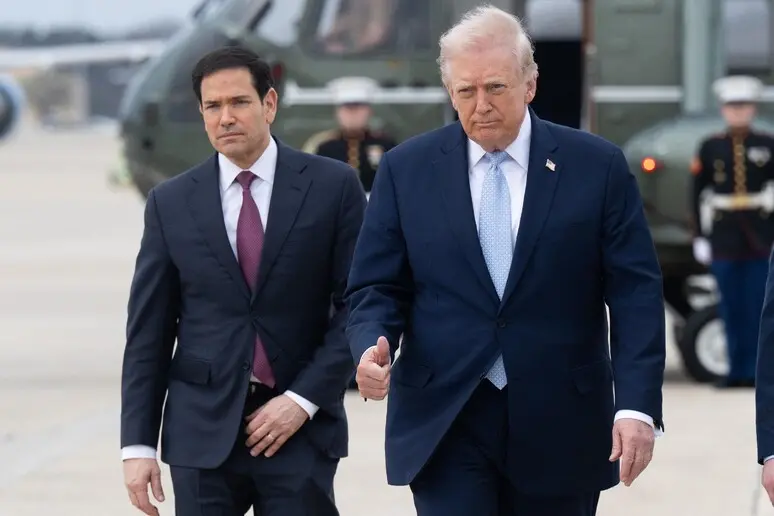
Donald Trump and Marco Rubio (Ansa)
Per restare aggiornato entra nel nostro canale Whatsapp
The United States is optimistic, Iran much less so. But the fact is that as of today, Monday, May 25, there is no agreement between Washington and Tehran on ending the war, while the Strait of Hormuz remains closed , with all the disastrous consequences for the entire world economy.
Secretary of State Marco Rubio said the agreement could materialize "as soon as today." "We have on the table," Rubio said, "what I think is a pretty solid proposal in terms of the ability to open the straits, to make them open. It has a lot of support in the Gulf... every country we've talked to about it understands that it's not only very reasonable, but it's the right thing to do for the world."
Rubio also expressed confidence that Iran "will engage in very real, meaningful, and time-limited negotiations on the nuclear issue." Otherwise, he threatened, "we will resolve this another way ."
Trump, however, had scaled back expectations of an agreement that seemed so close last Friday: "It might take days, we're in no rush." What's certain, Rubio reiterated, is that the president "won't make a bad deal."
Tehran, for its part, despite its trust in Pakistani mediators, continues to harbor a "deep mistrust" toward the United States, as a source quoted by the Tasnim news agency stated . The Islamic Republic "is not optimistic at all," and its current exchanges with the United States are conducted with a "deep pessimism" toward Washington .
A final agreement has not been reached, and "differences" remain on several points under discussion. However, "progress has been made on many issues under discussion, but an agreement is not imminent." Foreign Ministry spokesman Esmaeil Baghei stated that "Iran's goal is to end the war, and we have not yet discussed the nuclear issue."
Among the issues to be resolved, the most complicated is the nuclear issue . Tehran does not want to dismantle its laboratories or hand over its enriched uranium to the US, as Trump would like. A moratorium is therefore being considered: the US is asking for twenty years, which Iran considers too long. Then there is the issue of long-range missiles : Netanyahu is pushing Trump to close the launch bases that the Pasdaran are reactivating, but Tehran will not listen to reason, considering long-range missiles vital to the country's security. Finally, the lifting of sanctions requested by Tehran and the return of funds frozen abroad since 1979, approximately 25 billion dollars .
(Unioneonline)