

Hurricane Melissa threatens Caribbean disaster with 300 km/h winds
The weather monster has made landfall in Jamaica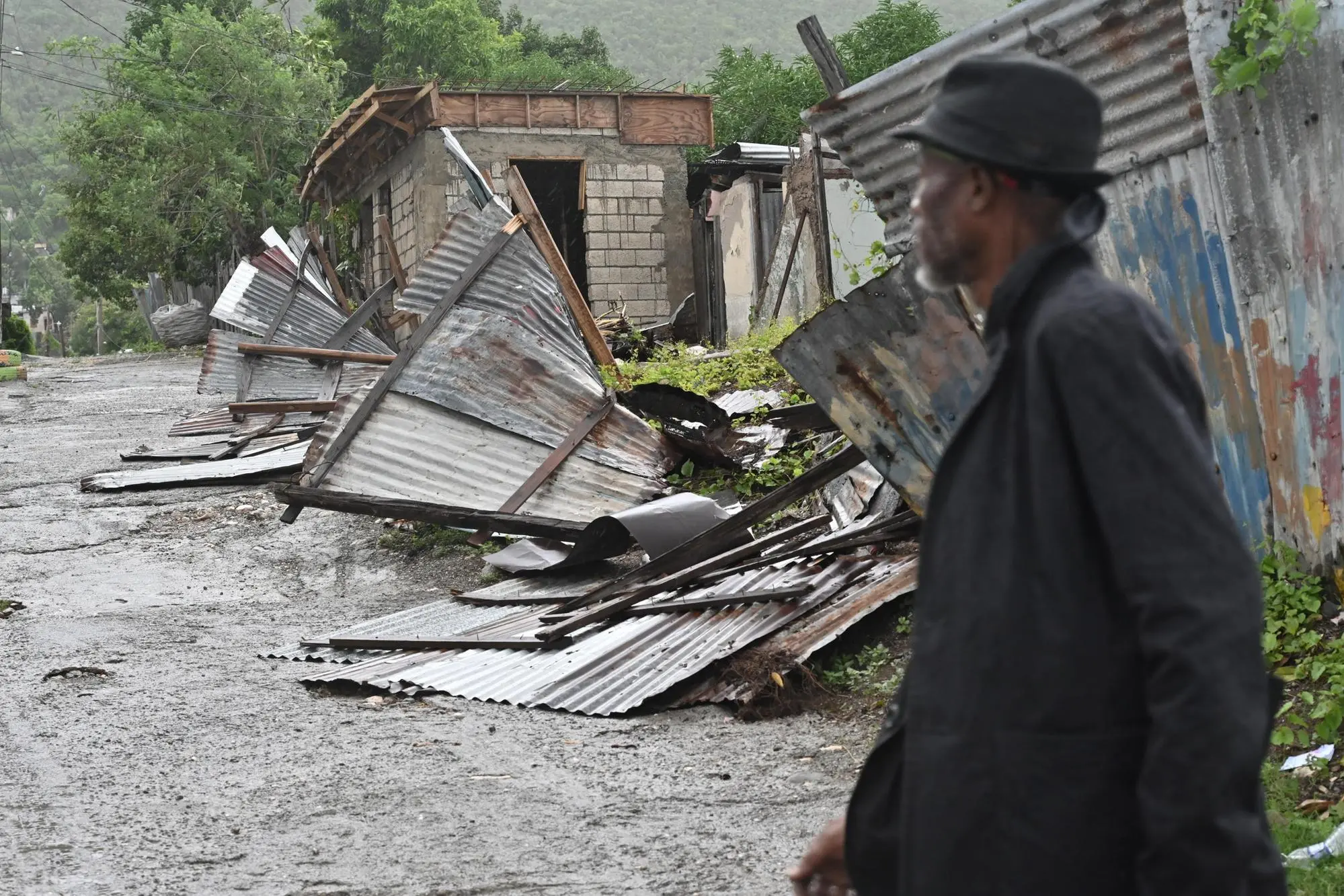
Per restare aggiornato entra nel nostro canale Whatsapp
Hurricane Melissa, the worst of the century—even more so than the ferocious Katrina that hit the United States in 2005—made landfall in Jamaica near New Hope, in the southwest of the Caribbean island, accompanied by a terrifying roar, 300-kilometer-per-hour winds, lightning, and torrential rain, after already killing four people along its path.
The streets of the capital, Kingston, had emptied hours earlier, while thousands of people had already moved away from the coast, because the category five cyclone (the maximum), having been widely preceded by its reputation for "catastrophe and death," promised the heaviest impact ever recorded in 174 years of data collection in the country, home to just under three million people.
Since the early hours of the morning, webcams have been showing images of a ghostly city, of fallen trees, and of families struggling with sandbags and plywood boards, busy building barriers to protect doors and windows.
"We're worried. Last year, Hurricane Beryl devastated our community, and it was a Category Four. We don't know what it will be like this time. We've done our best to prepare, but we're scared," Rebecca Allen from southern Southfield confided to BBC News a few hours before Melissa's landfall.
"The authorities have been updating us with bulletins for a week. We've put as many tourists on planes as possible, but about thirty are still left in hotels," explained Shaquille Clarke, who works at a hotel on Negril Beach, on the western side of the Caribbean island, where waves have reached four meters high. While waiting for Melissa, "we explained to our guests that none of us have ever faced a phenomenon of this magnitude and we all worked as a team to mitigate the structure's vulnerabilities."
According to Colin Bogle, a consultant for the humanitarian organization Mercy Corps, most residents near Kingston have remained in their homes despite the government's order to evacuate communities at risk of flooding. "Many have never experienced anything like this before, and the feeling of anxiety and uncertainty is frightening," he explained. "There's a deep fear of dying, of losing loved ones or their homes, of losing access to livelihoods, of being injured, of being displaced."
According to estimates by Necephor Mghendi, head of the ICRC regional delegation for the English-speaking and Dutch-speaking Caribbean, at least 1.5 million people are in the hurricane's path. "The entire population could be affected in one way or another."
(Unioneonline)