The Zuncheddu bill, which provides compensation to victims of justice, has surpassed 50,000 signatures.
Now the ball is in the Chamber's court: the law provides for immediate compensation for those who have ended up in prison unjustly and cannot provide for themselves.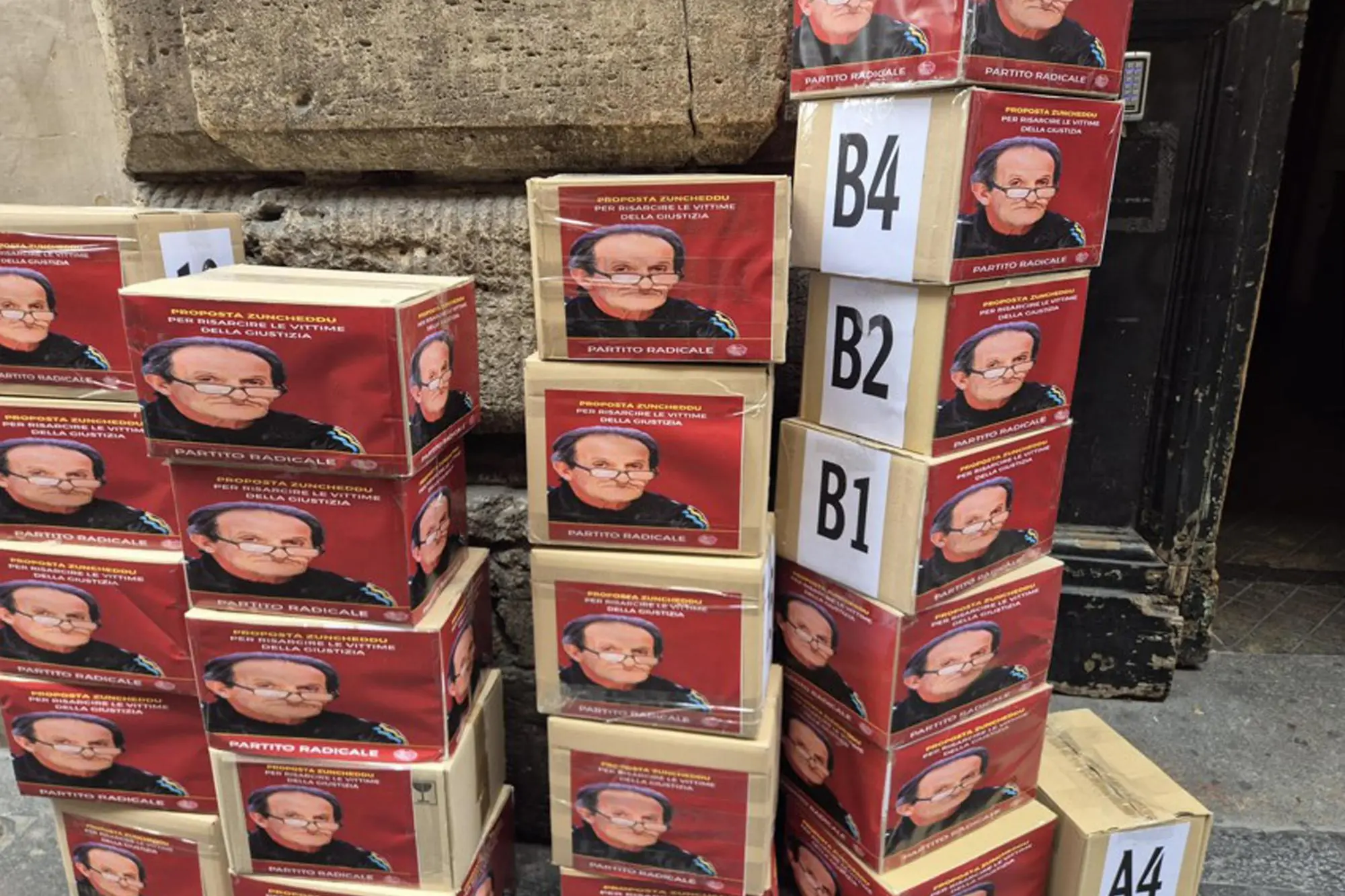
Per restare aggiornato entra nel nostro canale Whatsapp
The 50,000 signature threshold required to ask Parliament to debate Zuncheddu and others' bill on compensation for victims of criminal justice has been surpassed.
This is a popular initiative to provide provisional financial compensation to those who have been acquitted at the end of a trial, including those convicted of wrongful imprisonment , and who then have to wait up to 10 years to be awarded financial compensation.
The law, if approved, would allow those, like Zuncheddu, who are unable to support themselves to receive an advance to support themselves. The petition was launched by the Radical Party and the family of Beniamino Zuncheddu, the Sardinian shepherd who spent 33 years in prison for a triple homicide in 1991 and was acquitted in January 2024 after a review trial.
Initially, signatures were collected online on the Ministry of Justice website, then manually at stands in various parts of Sardinia.
"I should thank you one by one. I've encountered such beauty and solidarity over these past months. We've laughed and cried together. I've met wonderful people," Sardinia Region Prison Ombudsman Irene Testa wrote on social media, announcing that the threshold had been exceeded. "Starting with the countless volunteers who collected tirelessly; the authenticating lawyers who accompanied us every step of the way; the many municipalities who went above and beyond to certify the signatures, some even working overtime. Of course, we also thank the Radical Party , which promoted this civilized bill. We dedicate this achievement to Beniamino and others, so that his story may serve as a warning to a political system that is often deaf and indifferent, both now and in the future. Now, however, the battle continues, moving from the streets to Parliament."
The Chamber now has three months to submit the bill to the relevant committee, where it could be consolidated with other bills submitted by individual MPs or parties. "We won't stand by and watch, but will apply the necessary pressure to ensure this bill sees the light of day as soon as possible."
(Unioneonline)