

The Scardella case: "Forty years without Aldo, no one has ever apologized."
The brother of the young man from Cagliari who, unjustly accused of murder, committed suicide in Buoncammino after six months in prison, speaks out.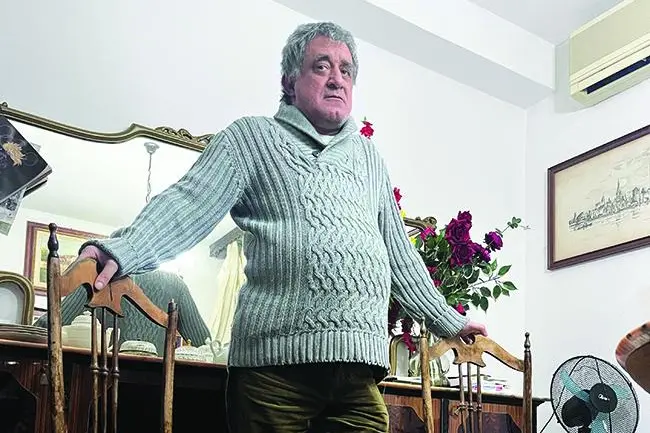
Per restare aggiornato entra nel nostro canale Whatsapp
Forty years have passed. "I bear no resentment," Cristiano Scardella swears: "But forgiveness does not exclude the pursuit of truth and justice."
Forty years ago, his brother Aldo, a 25-year-old economics and business student with a background in the '77 movement (on the "Metropolitan Indians" side), was in prison: arrested on December 29, 1985, on charges of participating, two days before Christmas, in a robbery at a market on Via dei Donoratico in Cagliari, during which shopkeeper Giovanni Battista Pinna was killed. He was held in pre-trial detention, first in Buoncammino, then in Oristano. Aldo spent 185 days in solitary confinement (no shaving, no changes of clothes, only four interviews allowed). In 185 days, no interrogations were conducted: they waited for him to break down and confess. He didn't.
On July 2, 1986, Aldo was found hanged in his cell: "I die innocent," he wrote. It was true: ten years later, those responsible for that robbery ended in tragedy were revealed. Aldo had nothing to do with it: one of the most sensational miscarriages of justice in Italian history. Since then, his family has continued to fight. And fighting on the front lines, in court but also with books and petitions, was (and still is) his brother Cristiano, now 61: "I and two sisters are the only ones left. Our father had already been dead for two years when they arrested Aldo. My brothers, Franco and Mario, died in the following years (Mario, a sergeant in the Guardia di Finanza, of leukemia that flared up during the affair). Mom passed away in 2018."

He had time to see the inauguration of a square named after Aldo in Cagliari in 2008.
"Yes, she was present at the ceremony. Then Alzheimer's came. But even at the end, if we showed her a photo of Aldo, she recognized him, called him by name, and—she, who was a staunch supporter of law enforcement—she would ask, 'But why did they arrest him?'"
And what's your answer? Why did they arrest him?
They found a balaclava in a courtyard two buildings away from ours. Evidence? None. But that investigation, in my opinion, was always political: they sought the culprits in political opposition circles, not in criminal circles. I wouldn't call it a mistake, but rather a judicial horror. And of violated rights.
You family members have never received compensation.
"No. There was no law back then. And we wouldn't want it anyway."
Why?
«In all these years, I have always been interested in only one thing: the truth.»
Which came out at some point, but too late. Did anyone ever apologize for the mistake?
"Never. No investigator, no magistrate. Yet a democratic institution would be strengthened if, having made a mistake, it admitted it and apologized."
No exceptions?
Yes, Enzo Tortora. He was also wrongfully arrested. Three months after my brother's death, he came to Cagliari to place flowers on his grave. He returned several times, and chose Aldo as the symbol of his association "Just Justice." He criticized the delays in the investigation that prolonged Aldo's solitary confinement, and the investigating judge at the time had gotten away with a simple censure from the CSM: "A life is worth a life cut short." And this when the only ones who believed in my brother's innocence were us, his family, and those who had always known him. And I would add the lawyer Gianfranco Anedda, whom Aldo chose as his defense attorney despite their very distant political sensibilities, and who fought so hard for him.
The investigating judge at the time is now a commentator on a TV show that covers crime and judicial news.
"I don't watch that show. I like 'The Ladies' Paradise.'"
You're not even following the Garlasco case? After 18 years, the possibility of a serious miscarriage of justice seems increasingly likely.
"I try watching something on TV, but I can't make out anything: expert opinions clashing with expert opinions, experts talking over each other. I find some newspaper articles clearer."
Have you followed the case of Beniamino Zuncheddu? Another alleged offender, rehabilitated, but only after 33 years in prison.
"Of course, I've followed the case from the beginning. I've always been convinced of his innocence. I even participated in the petition calling for his release, while he was still in prison. And recently I also signed the bill that bears his name, the one for compensation for victims of miscarriages of justice."
Is it better to have a guilty person at liberty than an innocent person in prison?
"Absolutely. The pain of an innocent person in prison is far greater than the danger posed by a guilty person at liberty."
Has social sensitivity on these issues changed since Aldo's time?
"Now there's social media, for example. On the one hand, there's more protection, more attention. On the other, there's the risk of repeating waves of hostility like the ones we've experienced."
What did you experience?
"The victim of that murder was well-known and respected in Cagliari. And for many, Aldo was the culprit. You know, human beings... Even here in the neighborhood, they looked down on us. They even smashed the window of my brother Franco's car."
Has your brother's tragic story left any positive legacy?
"More than a few things. First and foremost, I'd put reform of solitary confinement in prison: now, a prisoner remains in those conditions for a maximum of 15 days; in Aldo's time, one could remain segregated for years. The bill was proposed by PSDA and PCI, with Francesco Macis, Luciano Violante, and others as signatories. It was signed by Professor Giuliano Vassalli, then Minister of Justice, and by President Francesco Cossiga."
It's not a small thing.
"Not at all. And I would add the introduction of the preliminary hearing, again on the initiative of Violante and Macis. The magistrate could prohibit the lawyer from speaking to his client: not anymore. Aldo's death reopened the debate in Parliament on pre-trial detention. And it also brought important news for you journalists."
Would be?
A 2009 Supreme Court ruling states that when serious events like those involving Aldo Scardella occur, journalists can use very harsh and harsh language against the magistrate who caused the harm. All my reports, including in Europe, have prevented similar legal cases, and these laws would never have been implemented if I hadn't kept the injustice he suffered high on the agenda.