

The Sardinian mayors' front against the wind turbines: "Hands off our history!"
Wind and solar farms are planned on the island near key landmarks, but small municipalities in particular are having difficulty blocking the large number of projects submitted: "Enough with top-down decisions without consulting the communities."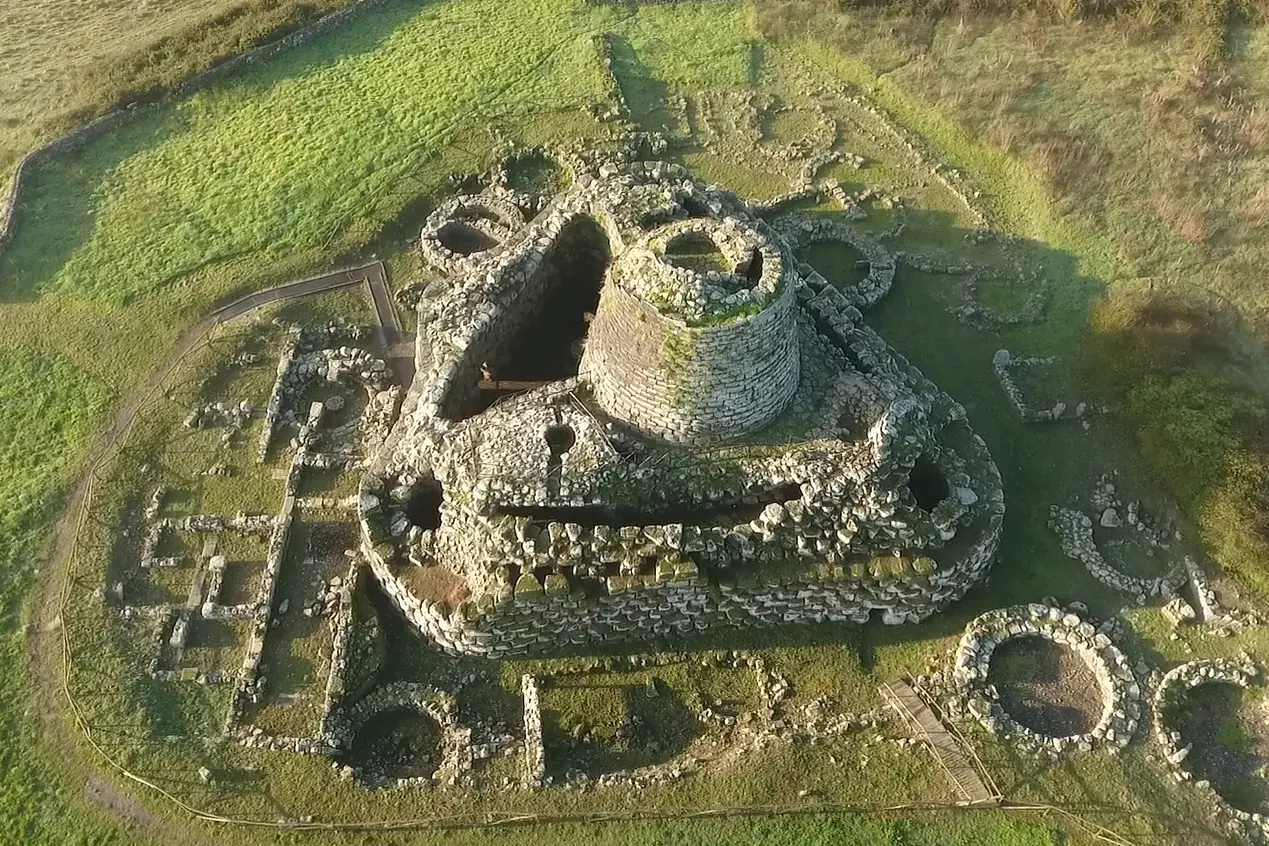
Per restare aggiornato entra nel nostro canale Whatsapp
There are places of memory, ancient lands, always explored with the respect due to the past, which carry with them the legacy of ancestral traditions and civilizations that have shaped history. A history lost over millennia, but from which still—thanks precisely to that almost religious respect—a ray of light shines, pointing to Sardinia's future. Multinational wind and agri-photovoltaic companies are about to intervene, de imperio , to extinguish it. "Enough interventions imposed from above," is the cry of the mayors. "The wind turbines will not destroy our landscape and our communities." But will rebellion be enough? In the municipalities with the most historically and archaeologically significant monuments, exclusive and untouchable, no one has ever attempted to plan interventions other than protection.
Jewels under fire
Yet, two kilometers from Santa Cristina di Paulilatino, something no one would have ever imagined is about to happen: "Devastation," says the mayor, Domenico Gallus, a former regional councilor. "Speculation imposed from above. I myself learned about the project by chance: we will certainly fight to prevent such a devastation. It's no coincidence that we are the town in the Province of Oristano that received the highest percentage under the Pratobello law." Protests are also being held in neighboring municipalities: "We are for a transition that stems from everyone's agreement," explains Bauladu mayor Ignazio Zara, interested in the wind farm plan, which could impact the nearby Santa Cristina site. "The landscape is ruined: the problem is that you can't ruin the view of an extraordinary hill overnight." Another affront to history, which, with a barrier of wind turbines that risks obscuring decades of scientific studies conducted by Giovanni Lilliu, a member of the Lincei Academy, could occur in Barumini.
The palace
The City Council immediately opposed the project for the construction and operation of a wind power plant called "Luminu," consisting of 17 wind turbines, each with a nominal power of 6.6 megawatts, for a total capacity of 112.2 megawatts. The project, to be built in the municipalities of Barumini, Escolca, Gergei, Las Plassas, and Villanovafranca, will include connection works in the municipalities of Genoni, Gesturi, and Nuragus. Michele Zucca, mayor of Barumini, noted: "The project is now being examined by the Prime Minister's Office, and we are ready to fight. A deafening silence has reigned for a year, but evidently, even in Rome, some people are not in favor of these plants. The point, however, is that we want to preserve not only the archaeological area but also the agricultural land, which would be compromised by the towers: they would change the landscape and the very structure of production activities." There were also vehement protests in Genoni. Gianluca Serra, who has been head of the city council for several years, maintains that, in the investors' plans, "the town is a sort of land-based Tyrrhenian link. A power plant will be built in our municipality, a 'power strip' that everyone can connect to, and we will become prey to wind and photovoltaic plants. It's not a question of incentives: impositions from above don't take root. They bring benefits to a few and disadvantages to many. Building the plant 600 meters from the nursery school and 700 meters from the hospice means building a new Ottana, and without even a shred of a study on the health consequences. But we've been here for 3,000 years; it will take them a long time before they kick us out." Samuele Gaviano, mayor of Serri, makes more or less the same argument about the wind and photovoltaic projects near the sanctuary of Santa Vittoria: "They want to fill the areas surrounding the archaeological site and the Giara with wind and photovoltaic power. A disaster: Santa Vittoria is among the 33 sites listed. Sardinians registered on the UNESCO Tentative List . They presented a copy-and-paste plan with photographs from other territories. There will be no return for the people, only destruction."
In the North
Then Saccargia. To avert the worst, the committees have filed a complaint with the Public Prosecutor's Office, requesting a thorough investigation into the preparatory studies for the wind farm project near the basilica. The permits, according to activists, were issued based on unreliable data. And now we come to Torralba. First of all, the town, protected by archaeological site protection regulations, has no plans for any projects. But Mayor Pierpaolo Mulas points out that the wind turbines will be installed in Bonorva, Mores, Ittireddu, Borutta, and Cheremule: "In Santu Antine, the wind turbines would be visible, and it would be detrimental to us." In Putifigari, both the photovoltaic system and the wind farm near S'Incantu would certainly be visible: "For the photovoltaic system, after a long battle, we obtained the annulment of the environmental impact assessment," argues Mayor Antonella Contini. "We're conducting checks on wind power, but in small municipalities, there's at most one technician who can't handle a veritable onslaught of paperwork." But the fight continues, even when it seems impossible to win.
Lorenzo Piras


 bans feeding stray dogs. Veterinarians: "There's an emergency."")