

"Fluorsid has kept its promises: the cleanup is not our responsibility."
CEO Andrea Muntoni: atmospheric emissions reduced to a minimum, the Cagliari lagoon is not polluted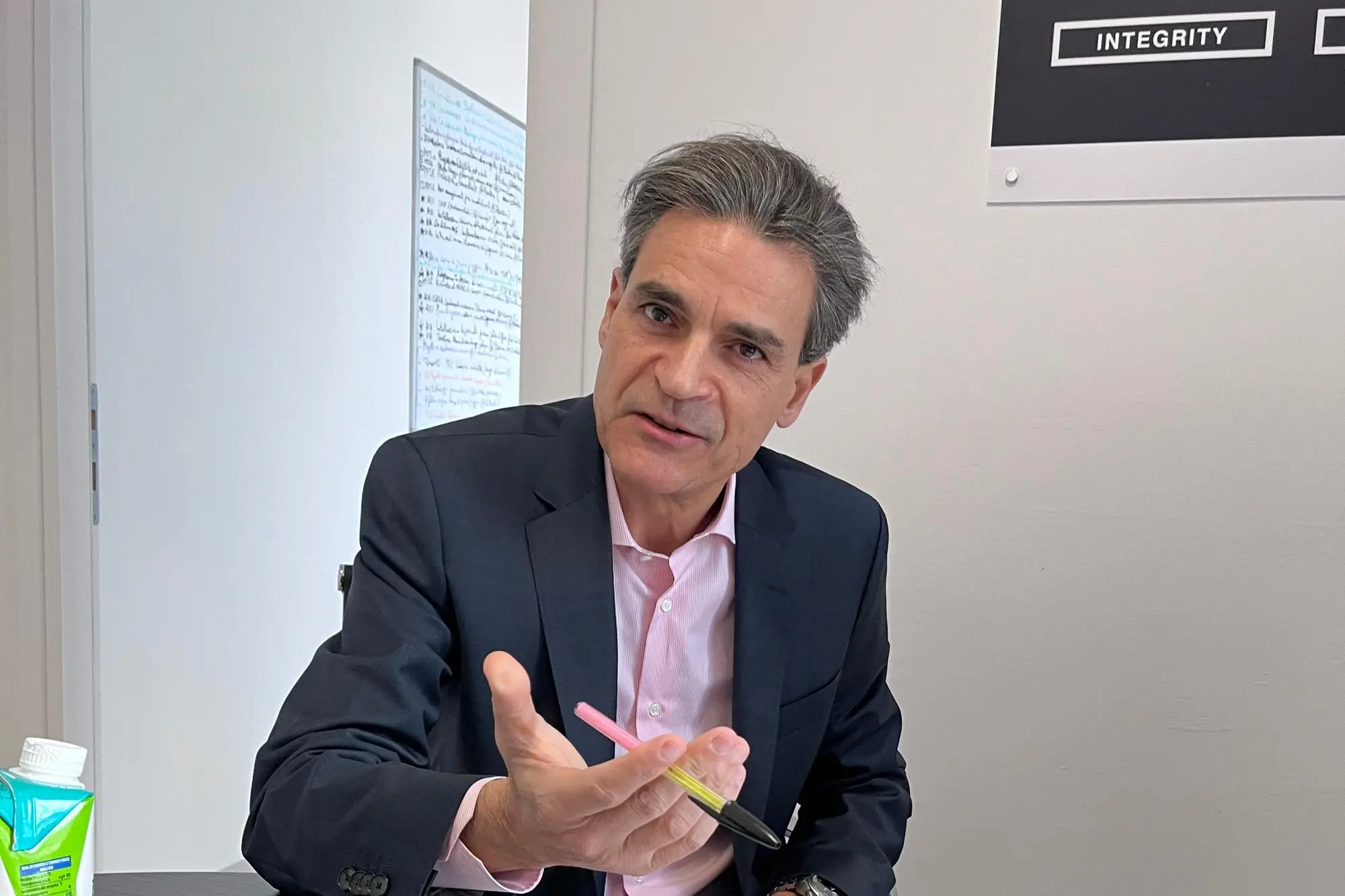
Per restare aggiornato entra nel nostro canale Whatsapp
"For years I've been reading that our plant has polluted the Cagliari lagoon. That's not true. I speak as a manager and also as an end consumer: people can rest assured, very much so, that the products they catch are uncontaminated." Andrea Alessandro Muntoni has been CEO of Fluorsid for just over six months. He rose to the top of the company after heading the Environmental Department since 2017. That was the year a judicial storm erupted on the banks of the Macchiareddu lagoon—where smokestacks coexist with a unique and extremely delicate ecosystem. It began with seizures and arrests and ended with 11 plea deals for environmental disaster. Now the affair—which has never directly involved the company or its president, Tommaso Giulini—is once again in the news. Dragged to the forefront by two investigations by the Cagliari prosecutor's office into the area's failure to clean up, and by an order from the Municipality of Assemini requiring Fluorsid to intervene. "But we voluntarily made a commitment to the court in 2019: at that time, we planned investments estimated at €22 million. We kept our promises, even incurring even greater costs."
What does that plan consist of?
"It's a fifty-page document, which includes technological interventions to reduce atmospheric emissions. These are commitments I made seven years ago and which I intend to honor both in my role then and in my personal capacity. This is the first time I've spoken about them."
What was the most important intervention?
"Even in terms of investment, it's the 'Zero Front Loader', an automated raw material handling system that helps reduce dust. Today, materials are unloaded via conveyor belts in engineered warehouses, and everything is sent to the production lines without the use of mechanical shovels, thus also reducing the risk to plant employees to zero."
And how much has environmental pollution decreased?
"Let me start by saying this. Based on the data I have, I haven't found any pollution issues that warranted interventions other than improvements. In short, even before 2017, regulations were being respected. But some authorities have raised the bar. They told us: 'You've done well so far, now let's see if you can do even better.' And air quality has improved."
Were all the points of the 2019 plan met?
«90% of the interventions have been completed».
What's missing?
"In 2026, we'll complete the improvements to the water treatment system. Then we need to expand the current by-product storage facilities: we have another 36 months. So, everything should be shut down in 2028."

Is the industrial site now polluted?
Fluorsid has never carried out any production activities that could have contaminated the Santa Gilla lagoon or the Cagliari pond. This is a firm point. There was no evidence in 2017, and there isn't any now. All the plant's water is connected solely to the consortium network managed by Tecnocasic.
Never any accidents?
There was only one incident in 2016 that could have indirectly led to a discharge of contaminated water into the consortium sewer system. But even if such an event had occurred, the water would not have reached the lagoon because a guard canal had been built. What happened in this single incident cannot have caused any pollution.
Is the land contaminated?
The ministry recently asked us to do so. It's paradoxical, given that in 2011, Fluorsid voluntarily prepared a site characterization plan for the 20 hectares on which the plant is located. That plan was approved and implemented. And all the soil within our property is not contaminated by any substances. If the soil around the plant isn't contaminated by fluorides or other substances, I find it hard to believe that the soil outside our perimeter is.
However, the aquifer is polluted.
"The Ministry of the Environment, based on our characterization plan, has identified elements that could be traced back to our production site, but also to those of many other companies. Fluorides and sulfates may be traced back to us, but the other organic substances certainly do not originate from our plant. This makes it difficult for the authorities to intervene in such a vast industrial area."
Is fluoride contamination serious?
"Fluorides are viewed as something strange. But Europe's largest fluorite mine was in Sardinia. And there's evidence of fluorides much further upstream from our plant."
The Municipality of Assemini recently issued an ordinance requesting you to reclaim the land in Macchiareddu.
We were saddened to read the document at the end of 2025. That ordinance doesn't even list the affected areas. We currently believe it to be unfounded, unsupported by any investigative activity conducted in consultation with the entities deemed obligated to carry out the cleanup. It doesn't specify why the polluting materials should be traced back to us. Furthermore, the documents in our possession don't show any of the external areas being contaminated to the point of requiring such an intervention.
But isn't there a commitment to clean up the area, thanks to which some of those investigated in the 2017 investigation obtained plea bargains?
Other operators have committed to remediating all the land affected by the investigation by the Public Prosecutor's Office and the Forestry Corps. The court documents include a plan that calls for "real and concrete remediation," along with characterization activities, a framework contract, an explanatory report, and a timeline. All signed by another party.
Who?
"People who didn't hold positions within the company: I'm referring to external individuals, well-known to the authorities. For years, very inaccurate things have been said, and Fluorsid's only fault, if anything, is that they never wanted to respond before this interview. Others have made the commitment: why don't we go knocking on their door and ask why they haven't done anything?"
If it doesn't concern you, how do you know nothing has been done?
"In 2025, we inspected the documents to see if there was any characterization of the land. And there isn't."
There are two new investigations by the Public Prosecutor's Office into these failed cleanups: have they implicated you so far?
We need to understand who and what they're referring to. From what we've read, one concerns the local authorities, which allegedly failed to fulfill their obligations. One thing is certain: in recent months, before the Municipality of Assemini unexpectedly issued the ordinance we discussed, Fluorsid had reached out to the local authorities, arguing that it was impossible to issue ordinances without a cross-examination.
But do you want the cleanups to be carried out?
It has become difficult for any administrator to find the time to carry out their duties professionally and diligently. In any case, there is currently no evidence of the presence, outside the plant, of materials attributable to Fluorsid's production cycle. Should any cleanup operations be necessary, those who originally made the commitment to the court will have to take responsibility for them.