

Pintor brothers killed on Fiat 129, mystery surrounding road documents
The trial for the Nuoro-Macomer tragedy: The court requests the guardrail documents. Anas: We don't have them.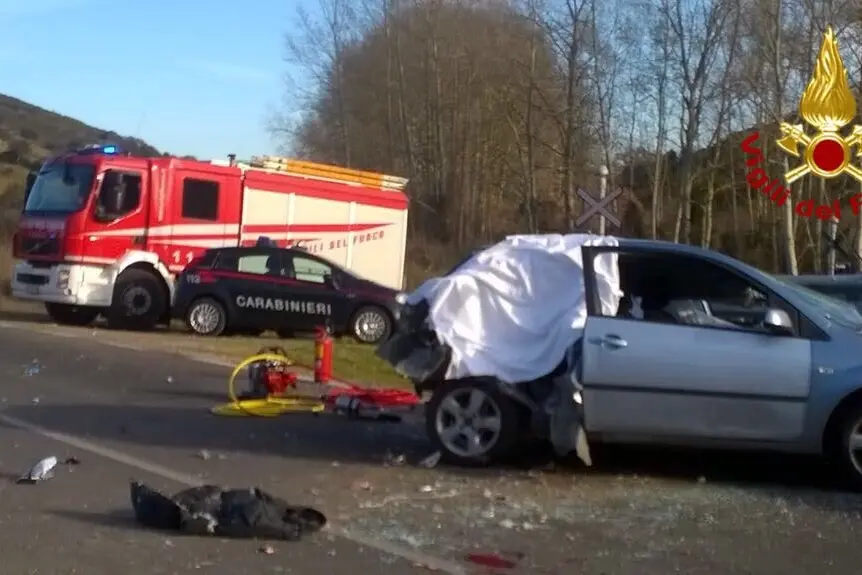
The car after the accident
Per restare aggiornato entra nel nostro canale Whatsapp
"I'm shocked. People are dying on Sardinia's roads, and we find out there's not even documentation on how they were built." This was Giovanni Pintor's reaction to Anas's response, which came after the Nuoro Civil Court ordered him to hand over, within 30 days, the documentation relating to the design and technical specifications of the guardrail on State Road 129, where, on Christmas Day 2017, brothers Matteo and Francesco Pintor died when they were impaled by the guardrail that penetrated their passenger compartment. At the end of July, Judge Riccardo De Vito ordered Anas to provide the technical consultant, engineer Paolo Marcialis, with the documents necessary to reconstruct the history of that infrastructure: technical and design documents, permits, approvals, maintenance, testing, and any other information useful for verifying the guardrail's characteristics, design, installation, and safety. After 30 days, Anas now responds: "We don't have the documentation."
The news
The road manager explained that "despite a thorough search of the archives, it was not possible to find any technical documents relating to the guardrail and the adjacent road." Anas emphasizes that the project dates back to the 1970s, and at that time, there was neither a cataloging system nor a precise archiving system. But, according to Pintor, there is another factor that Anas is entrenching itself on, making it impossible to trace those technical notebooks: in the 1980s, a pipe broke in the archives of the old Anas headquarters in Cagliari, flooding the rooms where the documents were stored. The documents sought but not found may have been destroyed.
The process
The Court had ordered the technical consultant to acquire the documentation even without the operator's consent. Judge Riccardo De Vito overturned the previous order, which, in November, had denied access to the documents after ANAS refused. That refusal has now made it unavailable. The matter will be assessed in the coming days during the hearing. Meanwhile, the "death curve" has been completely redone following the efforts of the #AdessoBasta association. "Today, no one dies on that curve anymore," recalls Pintor, who emphasizes: "But people continue to die on Sardinia's roads. It seems incredible to me that an agency that manages a large portion of Italy's roads doesn't have the technical documentation for the infrastructure where people lose their lives."