Oristano: Students discover the value of palliative care at the Angela Nonnis hospice.
The team from the facility met with the students of the Mariano IV biomedical high school on the occasion of the National Relief Day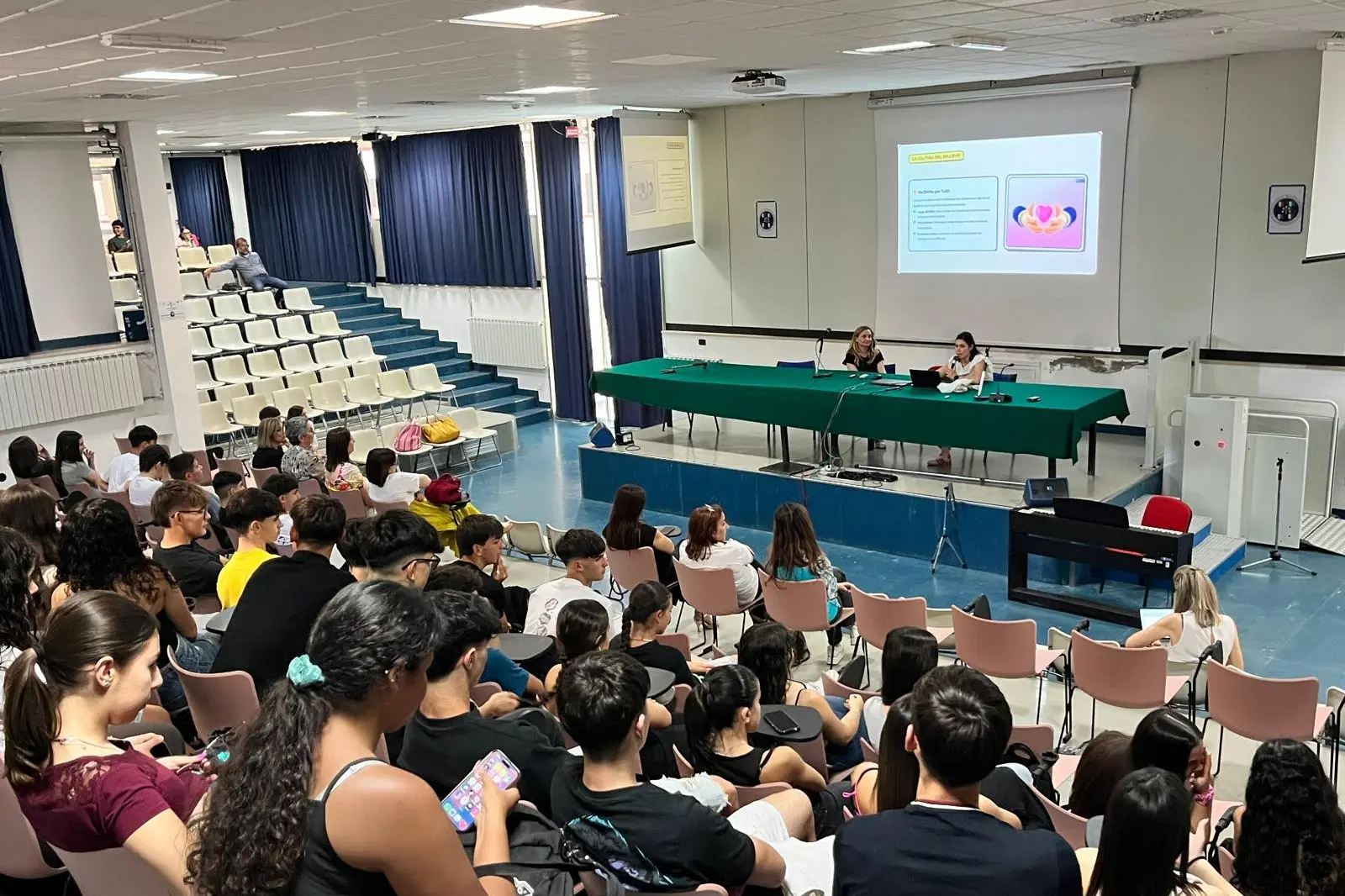
Per restare aggiornato entra nel nostro canale Whatsapp
The goal was clear: to explain to young people aspiring to become doctors, nurses, and healthcare workers the importance of palliative care, a combination of pharmacological, psychological, and spiritual therapies that bring relief to incurable patients. With this goal in mind, the team from the "Angela Nonnis" hospice in Oristano met with fourth-year students from the "Mariano IV" high school, led by principal Donatella Arzedi.
The meeting, titled "Being as Relief," was organized in anticipation of the twenty-fifth National Day of Relief, an event sponsored by the Ministry of Health and the Gigi Ghirotti Association, celebrated today, Sunday, May 31, to promote a culture of relief from physical and emotional suffering for those facing chronic or incurable diseases, with a focus on palliative care and the humanization of medicine. The value of palliative care was illustrated by hospice director Giuseppe Obinu, nursing coordinator Simona Pes, and psychologist Emanuele Bilancetta.
"When there's nothing left to do, there's still a lot to do," the team said. "That 'much to do' is defined by the difference between 'treating' and 'curing': even when a disease can no longer be cured, it's still possible to treat the patient to alleviate their pain and provide psychological support." As the Oristano Local Health Authority (ASL) specifies, the hospice's attention is not only directed at the patient, but also at their family members, who can be with them 24/7, without time limits, and are in turn supported and cared for by the facility's staff, who become a second family. The Oristano hospice—a hub in the ASL 5 palliative care network, which can also be provided in the hospital, in an outpatient setting, or at home—has 8 beds and in 2025 cared for 150 patients, in addition to the 210 cared for at home.
"Palliative care is a fundamental component of the treatment process, ensuring that patients beyond recovery enjoy the most peaceful and dignified end of life possible," says Grazia Cattina, General Director of the Oristano Local Health Authority (ASL) 5. "Our organization has a state-of-the-art facility, the hospice, and a team of doctors, nurses, social workers, a psychologist, and a spiritual advisor, who care for patients and their families with great professionalism and compassion."