

Giorgio Zanchini to Guasila: "Lockerbie was born from a chance encounter I've never forgotten."
The journalist closes, on Tuesday 14 July at 7.30 pm, the preview of the tenth edition of the Festival dell'Altrove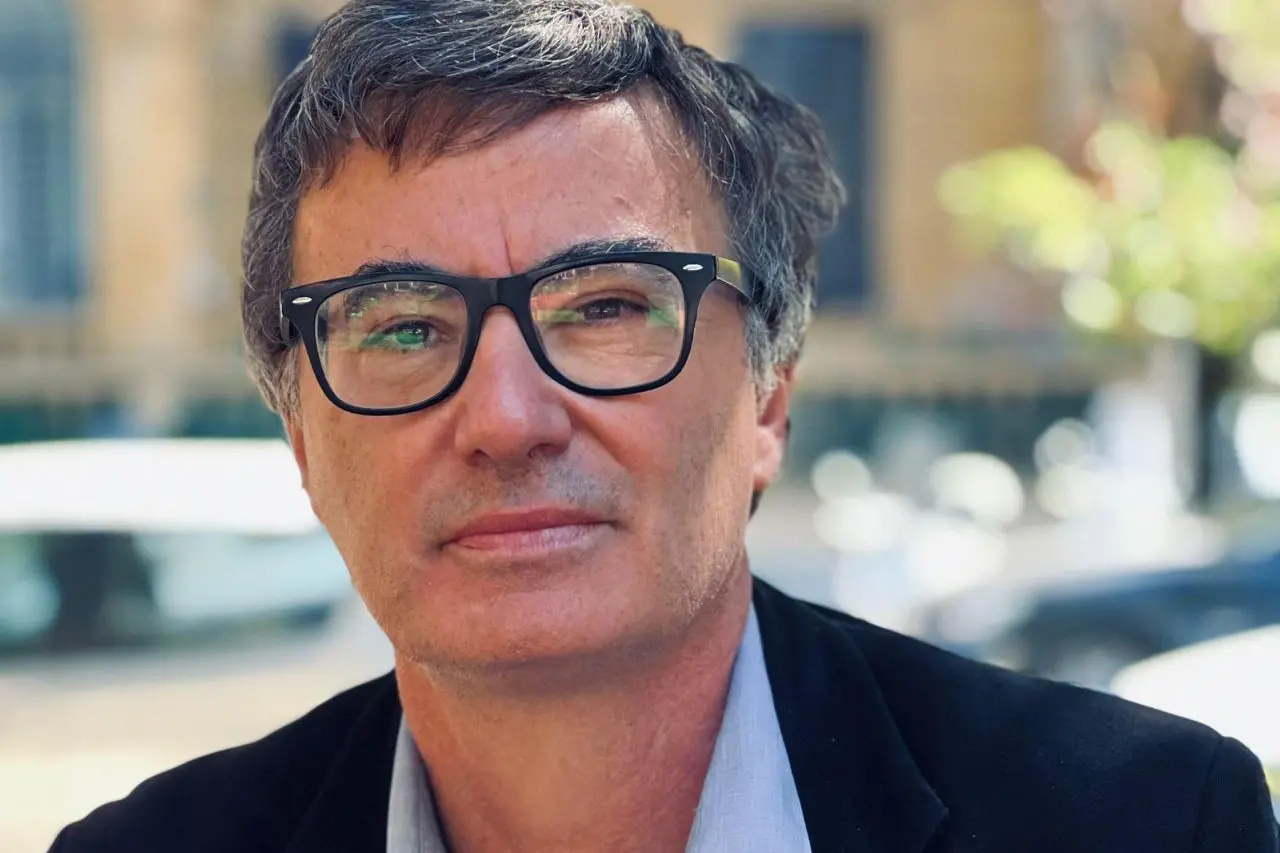
Per restare aggiornato entra nel nostro canale Whatsapp
On Tuesday, July 14, at 7:30 PM, RAI journalist Giorgio Zanchini will close the preview of the tenth edition of the Guasila Festival dell'Altrove, a festival dedicated to promoting reading and remembering anthropologist Giulio Angioni. For the occasion, he will present "Lockerbie" (Laterza), a book that draws on a personal experience to recount one of the most dramatic episodes of international terrorism. We interviewed him for the occasion.
Let's start from the beginning, from that chance meeting in a Parisian wine bar with an English girl named Sophie. She couldn't have known that a few days later she would find her among the 270 victims of the Lockerbie bombing. How did this book come about?
It was a completely chance meeting with a person destined for a terrible fate. We spoke for just half an hour, but I was struck by her kindness and charm. Three days later, an English friend of mine told me that that girl had been on the plane that exploded over Lockerbie. At the time, it was shocking, a silent trauma of my youth. Many years later, also because in the Anglo-Saxon world the spotlight on that story has never faded, I decided to address it with the tools of journalism, launching a dual investigation: into Sophie's story and into the massacre.
"Lockerbie" was born from a face and a smile that remain etched in our memory. How do you move from a private memory to the reconstruction of a tragedy with international geopolitical implications?
"For me, it was almost natural. Sophie's fate coincided with that of the other 269 people caught up in games much bigger than themselves. I followed both leads: the human one and the investigative one, trying to tell them together."
The book intertwines microhistory and high-level international politics. As a journalist, were you concerned that personal involvement might overwhelm the rigor of the narrative?
"Yes, I was a little worried about it. A journalist must maintain an objective perspective, and the risk was that my ego would prevail. By instinct and nature, I was very careful to keep the two levels separate, trying never to lose the rigor of reconstruction."
In your book, you discuss the "darkness of the past" and the difficulty of obtaining justice. Nearly forty years after the attack, what remains unanswered?
"A great many things. There's a court ruling that convicted a mid-level Libyan agent, but we still don't know much about the instigators. We're waiting for intelligence documents to be declassified. Besides, in Italy too, we have the Ustica case, about which, after so many years, there are still unanswered questions."
The book travels through Paris, London, Lockerbie, Libya, and Malta. How important was the journey, in addition to the archival work, in crafting the story?
"There was a significant amount of research through archives and court rulings. Then I returned to Paris, to the places where I met Sophie, and I also went to Lockerbie, where I visited the memorial in the cemetery and the places where the bodies, the fuselage, and the plane's fragments were found. Visiting those places was crucial to fully understanding the extent of the tragedy."
You'll be presenting "Lockerbie" at Guasila, as part of the Festival dell'Altrove, dedicated to Giulio Angioni. What does it mean to engage with an audience interested in fiction and anthropology?
I read Giulio Angioni thanks to my friend Flavio Soriga, who insisted I discover him. It was a significant discovery. It's a great honor for me to be a guest at a festival dedicated to such a significant figure and to engage with an audience that loves literature and reflection on the world.