

Eni Rewind gets green light for groundwater discharge into the sea
The Integrated Environmental Authorization (AIA) will be formalized in the next few days.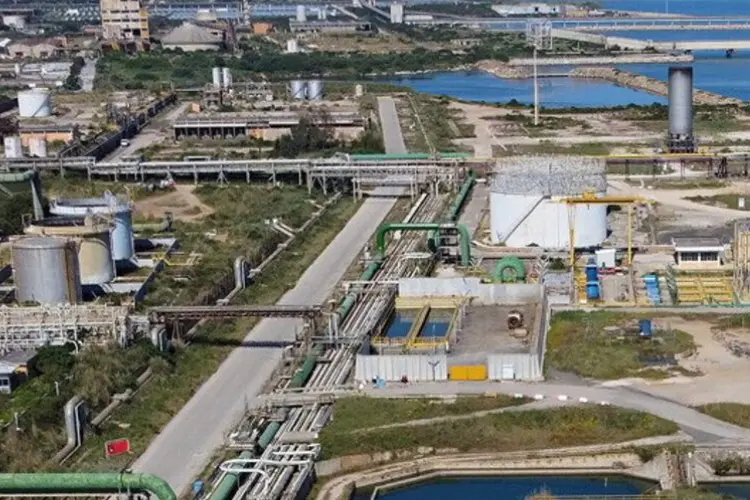
Per restare aggiornato entra nel nostro canale Whatsapp
Eni Rewind Spa is authorized to directly release remediated water into the sea, within the internal basin of the industrial port of Porto Torres. The Decision-Making Services Conference, convened yesterday morning by the Metropolitan City of Sassari, expressed a favorable opinion, authorizing the multinational to deliver the treated water to the new SF2 discharge point located by the company, bypassing the consortium's wastewater treatment plant operated by the Provincial Industrial Consortium of Sassari.
Representatives of the Sassari Regional Environmental Protection Agency (ARPA), the Municipality of Porto Torres, and the CIPSS (Italian Environmental Protection Agency) also attended the meeting. The Integrated Environmental Authorization (AIA) will be formalized in the coming days. The Municipality and Consortium, both opposed to the procedure, expressed a negative opinion and presented the relevant requirements. "We fully agree with the Municipality of Porto Torres's observations regarding the need to implement a redundancy system designed to ensure greater safety than the one proposed by Eni Rewind," said Simona Fois, president of the CIPS. "Although the services conference approved Eni Rewind's discharge into the sea, we believe that the issue of environmental characterization," she added, "extended to the entire industrial port, remains of fundamental importance. Obtaining the authorization does not, in fact, exempt one from the need to acquire a complete and up-to-date technical and scientific overview of the environmental matrices involved: water, sediments, and biota."
The entire industrial port area will therefore be subject to a comprehensive environmental assessment, for which €2,119,727 in funding is already available. Last July, the Regional Department for Environmental Protection proposed to the Ministry of the Environment and Energy Security that the Sassari Provincial Industrial Consortium be the entity responsible for carrying out these assessments.
"Our position is not an ideological rejection," Simona Fois continues, "but rather a call to proceed with greater responsibility, ensuring that each step is based on objective and verifiable data. If the environmental characterization were carried out across the entire body of water bordering the industrial port, it would be possible to effectively monitor the impact of the discharge and more clearly identify any liability in the event of alterations to environmental quality." CIPS remains willing to collaborate with the Region and the Ministry of the Environment in carrying out the characterization of the marine-coastal area, "to ensure that the actions necessary to protect the environment and support industrial development," Simona Fois concludes, "proceed in parallel, without compromising the quality of the ecosystem."