Cagliari's historic center is increasingly touristy, but it's losing residents and shops: "Over a thousand businesses have disappeared in 15 years."
In three decades the city has said goodbye to over 35 thousand inhabitants, with a progressive depopulation of the neighborhoods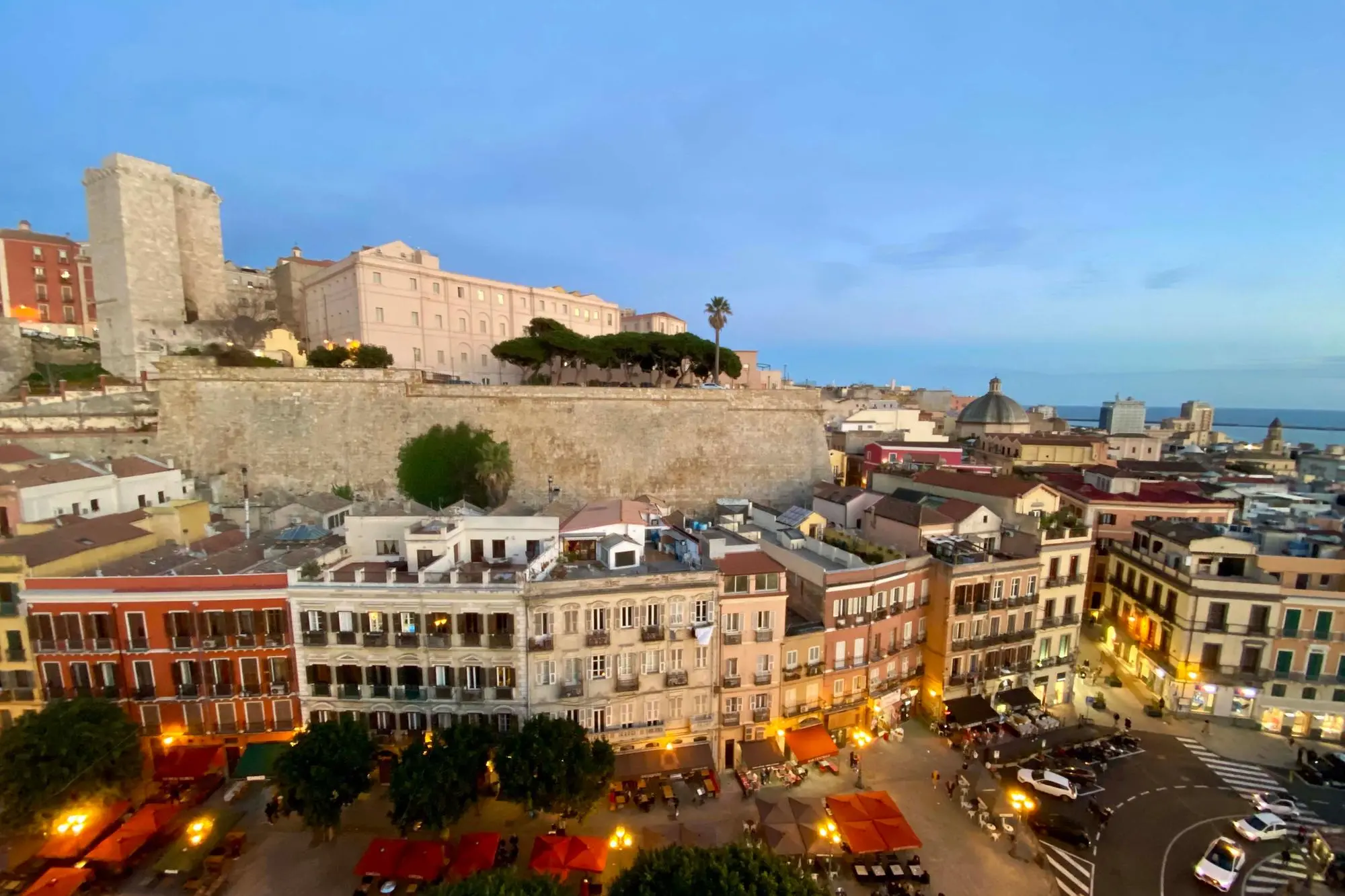
Per restare aggiornato entra nel nostro canale Whatsapp
Historic centers are not open-air museums or mere tourist attractions , but the social and economic driving force of cities. This is the powerful message that emerged from the conference "Historic Centers – Analysis and Future," organized today by Confcommercio Sud Sardegna in the Cagliari City Council Chamber, before institutions, trade associations, and industry experts.
The meeting was moderated by Giuseppe Scura, director of Confcommercio Sud Sardegna . The focus of the meeting was the report presented by Cristiano Erriu , secretary general of the Cagliari Chamber of Commerce, which painted a stark and somewhat alarming picture of the city's historic center. Over the past 30 years, Cagliari has lost approximately 35,000 inhabitants , with a progressive depopulation of the central areas. At the same time, however, the number of families has increased, from approximately 67,000 in 2003 to 78,000 today, becoming increasingly smaller, older, and often single-parent. This structural change directly impacts the demand for local commerce and services.
On the economic front, the numbers are even starker : over the past 15 years, approximately 1,200 commercial businesses operating in Cagliari's historic center have closed (1,073 if only registered businesses are considered). This "impressive" figure reflects a similar trend across the rest of the metropolitan city. Despite these closures, however, there has been selective growth: 511 more bars and restaurants and 224 more accommodation businesses. In total, 735 more businesses related to catering and hospitality. The result is a profound transformation : historic centers are increasingly becoming "open-air hotels," with a concentration of B&Bs, takeaways , and catering, while artisans, markets, greengrocers, and neighborhood shops are disappearing.
Furthermore, many new businesses have a short lifespan : they open and close rapidly, generating instability and lowering urban quality . Among the critical issues highlighted: commercial monoculture, standardized offerings, absent or makeshift signs, poor integration with the urban context, as well as noise, waste, and growing conflicts with residents. The data illustrated confirm that competition today is no longer between streets, but between sales channels. By 2025, e-commerce is expected to exceed €60 billion, equal to 11% of consumption, with 84% of Sardinian families connected to the internet. Online purchases primarily focus on clothing (23%), but home, food, and restaurant sales are also growing.
Four major factors are impacting: e-commerce, accessibility and parking, competition from suburban shopping centers, high costs, and urban planning constraints. Another critical sign concerns entrepreneurship : women-owned businesses are growing, while youth-led businesses are showing "completely negative" signs. Foreign businesses now account for approximately a third of retail trade. "Historic centers are not postcards, but actual social and economic infrastructures," Erriu emphasized. "Our goal is to develop indicators that allow us to analyze and monitor demographics, accessibility, commercial structure, and urban quality. Only in this way can public policies be effective, sustainable, and long-term." The proposal is for a shared, updated, and periodic analysis dashboard to support political decisions.
For Emanuele Frongia, president of Fipe Confcommercio Sud Sardegna , "the historic center is a collective asset: not just a physical space, but a place of daily life . Bringing people back to the heart of the city is the real challenge. For everyone, the inconvenient must become easily manageable." This is an issue that concerns Cagliari as well as Florence: " Italy's soft power also comes from its historic centers ." Fipe national deputy director Luciano Sbraga recalled that "today we live in a service economy: 41% of added value is created in metropolitan cities. If cities don't function, the country doesn't function," emphasizing the need for urban policies geared toward development and not just regulation. Aldo Cursano, national vice president of Fipe Confcommercio, also emphasized that "it is necessary to protect the country's historic sites, especially by revitalizing their social, cultural, and economic value," noting that Florence has pioneered planning to find solutions for coexistence between residents and businesses.
Marco Mainas, president of Confcommercio Sud Sardegna, sounded the alarm : "Historic centers are experiencing profound social and cultural difficulties. We're losing an average of five shops a day, leaving entire streets without an identity. The risk is a monocultural city, overwhelmed only by tourism and restaurants. A turning point is needed to revitalize commerce." Cagliari's mayor, Massimo Zedda, welcomed the proposal from Confcommercio and the Chamber of Commerce: "The phenomena we're experiencing are global, and we can't stop them. Habits have changed, but we can manage the change. Where tourists live well, citizens live well too."
The discussions highlighted the need for a comprehensive toolkit: municipal regulations, targeted urban planning policies, selective incentives, training, vacancy agreements, and rent management, to rebuild a quality retail mix and reduce conflicts between residents and businesses. The conference concluded with a shared commitment: to place data at the center of decisions to restore the future of historic centers and restore them to being liveable, inhabited, and accessible places. Also participating were Paolo Murenu, board member of Confcommercio Nord Sardegna; Agostino Cicalò, president of Confcommercio Nuoro Ogliastra; Nando Faedda, president of Confcommercio Oristano; and Franco Cuccureddu, regional councilor for Crafts, Commerce, and Tourism.
(Unioneonline)