

Emergency room chaos, local health authority managers threatened: "But the department must disclose its actions."
Letter to healthcare company leaders regarding overcrowding: "Revoke your appointment if goals are not met." The doctors' union Cimo (CIMO) urges "General Manager Schael to explain whether he has recovered the promised beds."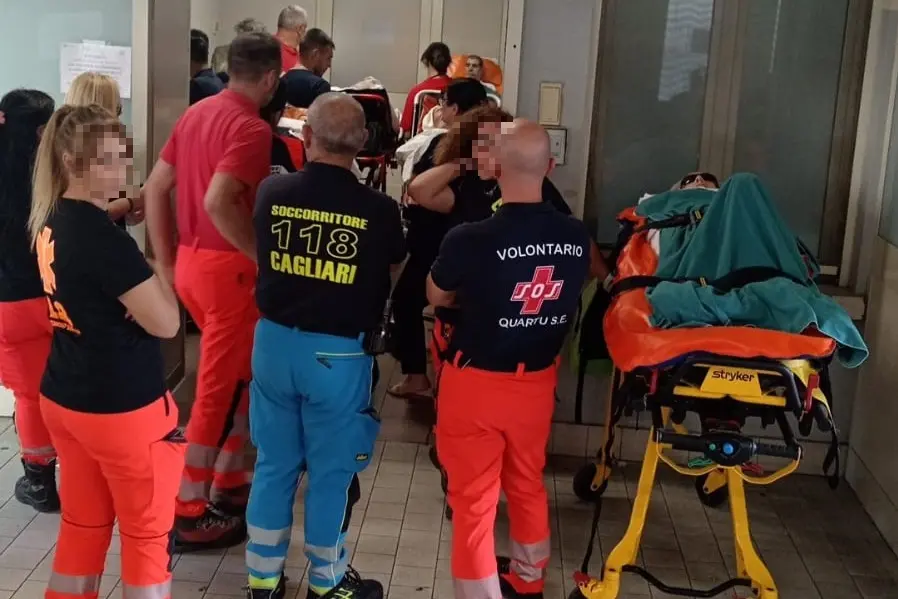
Per restare aggiornato entra nel nostro canale Whatsapp
"If you don't achieve the goals to eliminate overcrowding in emergency rooms, we may revoke your appointment." This is the tenor of the letter sent in recent days by the Director General of the Department of Health, Thomas Schael, to the managers of the Sardinian Local Health Authority (ASL) . "Yes, but what has the department done to resolve the situation?" This is the question posed by the Cimo-Fesmed doctors' union, whose president, Luigi Mascia, has taken a stand. The intent is not to absolve the general managers, "because it is right to demand results," but responsibilities must be identified along the entire decision-making chain, starting with those responsible for planning and coordinating the regional healthcare system." Therefore, from the councilor on down, including Schael.
The CEO's stance is described as "surprising," given that he "has chosen the path of protests and threats to remove directors general, giving his own initiatives widespread media coverage, while continuing to fail to engage with doctors' unions, who have long demanded a hearing on critical issues facing the hospital system."
Before assigning responsibility and threatening action, according to the union representing the doctors, "it would be appropriate for the department's director general to explain what concrete measures have been implemented to enable the companies to achieve the required objectives."
There is one element that deserves particular attention, according to Mascia. The Regional Council approved the plan to combat overcrowding on April 8th: the document expressly acknowledges that one of the causes of the crisis is the significant reduction in hospital beds in the Cagliari area, particularly at the Marino and Binaghi hospitals. The same document mandated the reactivation of approximately 20–25 beds at Binaghi within 60 days, envisioned the immediate recovery of beds closed at Santissima Trinità, and indicated the need to evaluate the reopening of beds at Marino Hospital.
"Six months later, we are asking Schael directly to clarify the status of these interventions and what results have been achieved," says Cimo. "The issue also directly concerns Brotzu, which continues to receive a significant portion of the trauma emergency in Southern Sardinia. The regional plan recognizes Brotzu's role as a Trauma Center for major trauma, providing for a proportionally smaller participation in the rotation of surgical and orthopedic admissions, precisely to safeguard its capacity to respond to the most complex cases. These recommendations are commendable. But they must be translated into concrete organization, availability of beds, and staff."
According to doctors, a structural deficiency cannot be resolved solely through bed management, patient rotation, or a temporary increase in ward capacity.
Even the use of the so-called Fast Track system, presented as a tool to relieve emergency departments, risks producing a paradoxical effect: rather than solving overcrowding, it could simply transfer it from the emergency room to hospital wards and outpatient clinics, where patients end up waiting for specialist consultations. Without truly organized pathways, adequate space, and dedicated staff, neither waiting times nor the overall healthcare burden are reduced. It simply shifts the problem from one area of the hospital to another, with the risk of compromising the departments' regular operations.
Cimo is asking Schael "to make public the implementation status of the interventions envisaged in the April 8th Plan, indicating for each hospital the number of beds actually recovered, the professional resources assigned, and the measures to rebalance the hospital network actually implemented. It is unacceptable that the responsibility for planning should be placed exclusively on those who must manage the consequences on a daily basis."
Enrico Fresu

: "Migrants stranded in Olbia, either Meloni and Piantedosi are incompetent or fueling tensions."")


 was a key: attacker acquitted in Sassari")