After price hikes and excise duty cuts, Sardinia is now the "cheapest" fuel in Italy.
It's a matter of cents, but diesel has the lowest average price among the regions. Gasoline ranks second after Marche. The ministerial affordability map is slowed down by too many accesses. Farmers: "We're being cut off from the benefits."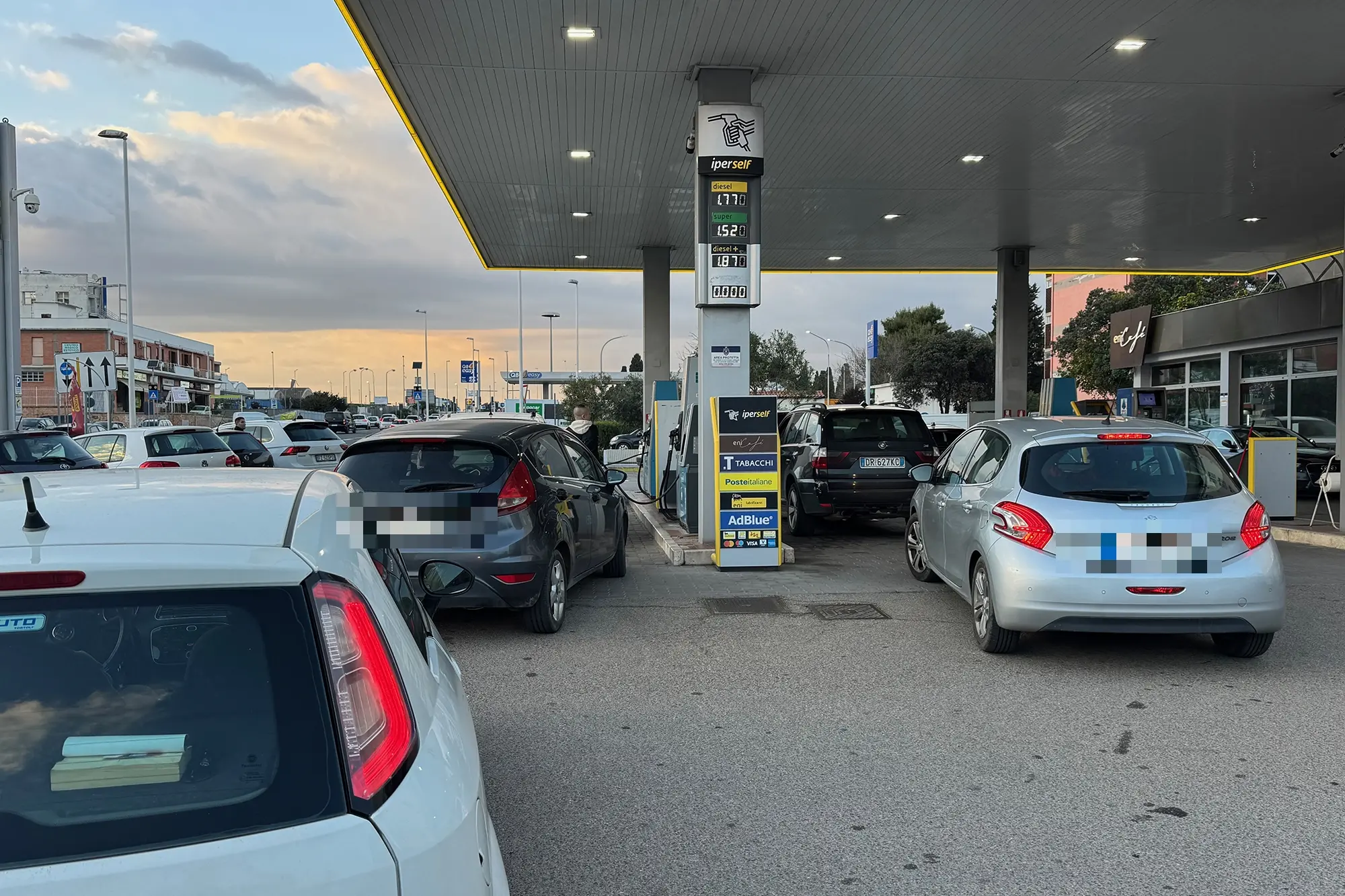
Per restare aggiornato entra nel nostro canale Whatsapp
Sardinia has the cheapest diesel in Italy. The consolation is slim, as we're talking differences of just a few cents, and the record could last only a day, but the data is clear: for self-service diesel, the average price at the pump today, March 21, 2026, is €1.946 per liter. A significant blow, considering that before the Israeli and US attacks on Iran, prices were under €1.70. But it's still the lowest figure among the regions, according to the latest monitoring by the Ministry of Enterprise and Made in Italy, published at 8:30 a.m.

Those who need to fill up their tanks, however, have to "settle" for second place: a liter of unleaded fuel—self-service—in Sardinia costs €1,694, while in the Marche region, the lowest price, it's €1,687. It's a matter of thousandths of a euro now. With soaring prices and the temporary excise duty cut, however, the island has slipped in the rankings: under normal market conditions, its gas stations were still among the most expensive in the country.

The map
But how do you know where it's best—if we can still accept this term—to fill up? There is some help: the ministry itself provides the Osservaprezzi carburanti website ( SEE HERE ), which should allow you to identify which service station offers the best prices, also thanks to geolocation, with the option of searching by province and geographical area.

It's possible—and it should be possible—to sort results by highest and lowest price in your area. And you can decide who to go to. Pump owners are required to report data daily, under penalty of fines. But it's a portal that, apparently, wasn't designed to handle such a large user base: at this time, with so many drivers interested in the topic, it frequently crashes, and searching is made difficult by the slow data loading.

Farmers mocked
While the excise tax cut had an immediate impact on the final cost of fuel, the agricultural sector feels left out of the benefits: " The price cap will not affect the agricultural sector. We hope that politicians will quickly remedy a decision that smacks of mockery toward one of the productive sectors that risks bearing the most serious consequences of the ongoing crisis."

The alarm was raised by Stefano Taras, president of Confagricoltura Sardegna, who noted that the trade control operation, implemented for twenty days by Rome, failed to take into account the emergency that has affected the agricultural sector since the outbreak of hostilities, with a worrying increase in raw materials. "The surge in fertilizer prices, now exceeding 30%," Taras continued, "is the more than 50% increase in urea: a nitrogen fertilizer derived from the processing of natural gas and produced in the Persian Gulf, which provides approximately half of the world's needs. Urea is an essential fertilizer for agricultural treatments, starting with those already planned for recent weeks on cereal crops, primarily durum wheat, and for preparing for the upcoming spring and summer crops." Another aspect highlighted by the president of Confagricoltura Sardegna concerns the high cost of transportation. "The volatile oil prices will soon impact transportation, particularly maritime transport, which is already burdened by increases resulting from EU sanctions for shipping companies' failure to reduce CO2 emissions. This burden adds to the insularity gap, recognized and enshrined in the Constitution, but still lacking implementing regulations and state financial resources. This state of extreme geopolitical instability risks dragging Sardinian agriculture, already vulnerable to numerous critical issues, and our region's consumers into a vortex of extreme uncertainty," Taras concluded.