

After 16 hours of no response, an elderly woman asks to go home at the Nuoro emergency room.
The odyssey of a ninety-year-old heart patient: "I never thought it would get to this point."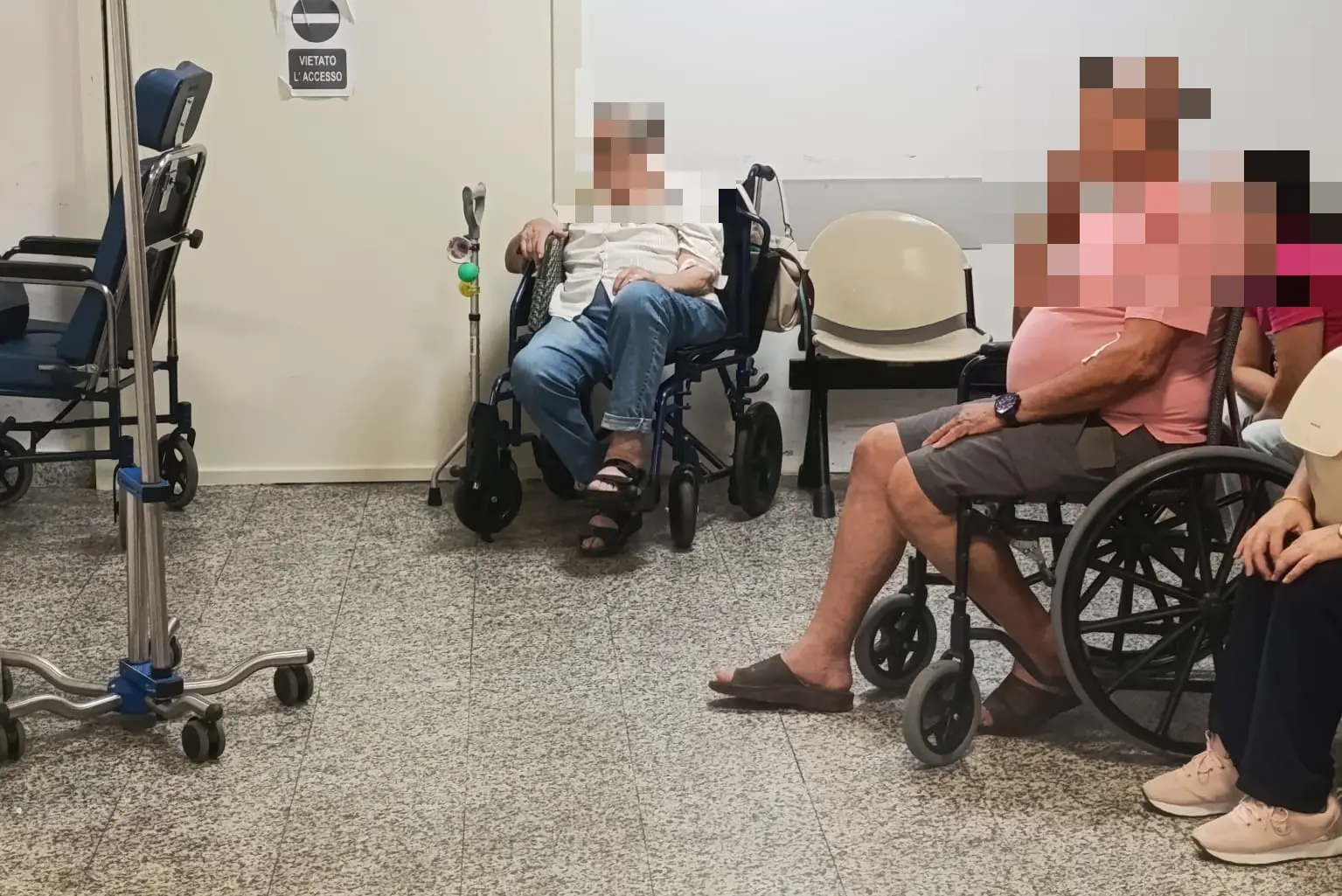
Per restare aggiornato entra nel nostro canale Whatsapp
Vincenza Ruggiu, a ninety-year-old woman with a heart condition, underwent a 16-hour journey to the Nuoro emergency room. She arrived at the emergency room at 11:00 a.m. last Saturday and was discharged at 2:00 a.m. the following day.
This scorching summer's temperatures caused her severe hypotension, nausea, loss of appetite, and severe dehydration. After arriving at 12:00 PM, she was admitted to triage only at 5:00 PM, where she was assessed as having a "code blue" status, meaning a deferrable emergency requiring rapid management and complex procedures. The maximum waiting time allowed by the protocol for a code blue status is 60 minutes. But in reality, with the Nuoro Emergency Room and the healthcare system extremely overstretched and extremely complicated, it became four hours.
Long hours, spent waiting for the ward door to open and someone to finally call his name. Endless hours in a wheelchair that became more uncomfortable as time passed, with the need to stretch or flex his legs; feeling worse pain in his back, neck, and head, and then the need to hydrate or force himself to eat something to raise his blood pressure. Thus, the waiting area of an emergency room ended up resembling a bivouac.
At 9:00 PM, the ward door opened and someone called his name: after evaluating the tests performed, the doctor on duty requested a specialist consultation. This was the third station in the Via Crucis for the patients in the Emergency Room. Once admitted, they find themselves in a far from linear cycle, where human resources are clearly insufficient, especially when a single ER doctor is on duty with an average of 40 patients to see, or when the specialists on duty per ward are reduced to just one, tasked with managing the consultations requested by the Emergency Room in addition to routine care.
Since July, the failure to renew the contracts of "paid doctors" has severely penalized the Emergency Room and patients end up in a game of snakes and ladders in which every progress in the process requires them to return to the waiting room for an indefinable amount of time to wait, once again, for the door of the department to open and the diagnostic process to resume.
Mrs. Ruggiu says: "I've seen a lot in my life, but if someone had told me about the state of the healthcare system being so bad, I wouldn't have believed it. I feel like I'm in a limbo of hell. I was moved to see a very young child wait so many hours for a CT scan."
A hellish limbo where no one is truly to blame and everyone is damned: doctors are overwhelmed with workloads that are difficult to manage when, in a single night, the Nuoro Emergency Room can record up to 120 admissions, and patients are damned by excruciating wait times. After so many hours, at 2 a.m., Mrs. Vincenza "surrendered," asking to be discharged.