

Yet another Easter of price increases, from eggs to flights, prices are at their highest.
Egg prices are skyrocketing despite the drop in cocoa prices. And flying to Sardinia already costs over €300.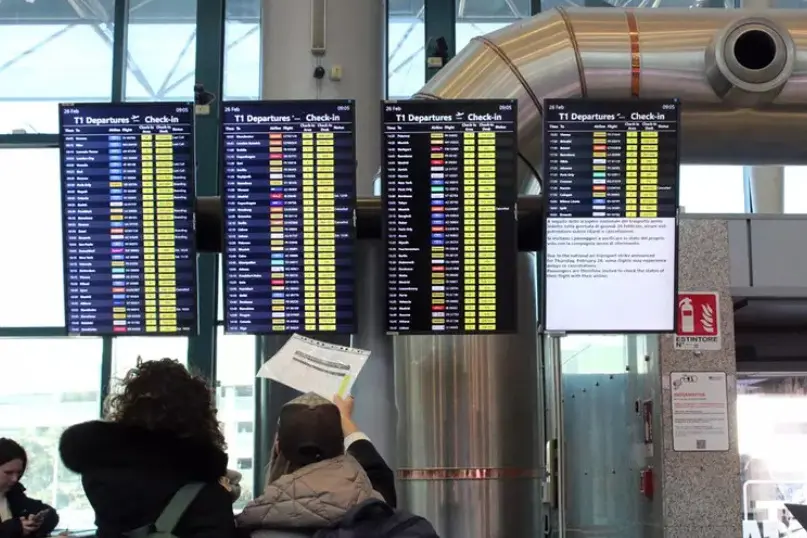
Per restare aggiornato entra nel nostro canale Whatsapp
It's not even a surprise, but Easter brings with it price increases, from transportation to eggs: everything goes up. With an additional risk: that of price spikes due to the US and Israeli attack on Iran.
Consumer associations are calculating increases for the upcoming holidays, net of new, obvious, and significant fuel price hikes. For example, double-digit increases have already been recorded for Easter eggs, despite international chocolate prices declining: "Supermarkets and food stores, net of offers and promotions, have seen upward adjustments compared to last year, ranging from 6% to as much as 10% for some brands," explains Codacons. "In fact, the price per kilo of a mass-produced chocolate egg can exceed 77 euros, compared to 70 euros last year. Depending on the size, brand, and chosen line (whether for adults or children), the cost of a chocolate egg sold in large-scale retail chains ranges from 7 to 22 euros. For artisanal eggs, the average price varies between 30 and 40 euros, while for gourmet eggs, they can even exceed 100 euros per egg."
Colomba cakes are doing better, although there's also been an increase in prices for those: "For the classic ones, prices are around 3% higher than last year, with average prices for industrial ones ranging between €5.40 and €15.90. Stuffed ones, on the other hand, cost more: between €8.50 and €19.90. Easter eggs and Colomba cakes generate over €600 million annually in Italy."
But, the association emphasizes, the increases in traditional chocolate eggs are recorded despite cocoa prices having dropped significantly to around $3,300 a ton, compared to the record $12,000 at the end of 2024. However, "eggs and chocolate-based confectionery products sold in stores today were made with cocoa previously purchased from food companies at significantly higher prices than today, and producers still have to dispose of the quantities of raw material acquired during the record prices: for this reason, despite the cocoa crash, retail prices for Easter eggs have not recorded any decrease."
And what about transportation? "Even though Easter is still 20 days away, flight prices are already very high, so much so that departing on Friday, April 3rd and returning on Tuesday, April 7th, the minimum cost starts at €418 for the Genoa-Catania route, €343 for Milan-Crotone, €324 from Rome to Reggio Calabria (€308 if departing from Milan)," explains Assoutenti. It costs more than €320 to fly to Catania on the same dates from Turin, Florence, and Ancona. Also among the highest prices are the Naples-Olbia routes (€310), Verona-Catania (€297), Milan-Brindisi (€296), Milan-Catania (€290), Verona-Palermo (€282), and Bologna-Reggio Calabria (€281). These prices also don't include additional services like carry-on luggage or seat selection. Things aren't much better on the train front: "A one-way trip (April 3) on a high-speed train, purchased today, costs at least €185 to go with Italo from Turin to Reggio Calabria, €175 from Milan. With Trenitalia, it costs €120 from Milan to Lecce, €116 from Turin to Bari, €96 from Venice to Lecce, and €92 from Genoa to Salerno."
And these rates are set to rise further in the coming days "as a result of increased demand from citizens wanting to return home during the holidays. However, another threat also looms over Italians' air travel and travel: the fuel price increases and the losses suffered by airlines in recent days due to the closure of airspace risk soon being passed on to consumer rates," warns President Gabriele Melluso.
(Unioneonline/E.Fr.)