Via d'Amelio: Certainties and Doubts Regarding the Assassination of Judge Borsellino
A reflection by Luigi Patronaggio, magistrate and attorney general of the Court of Appeal of Cagliari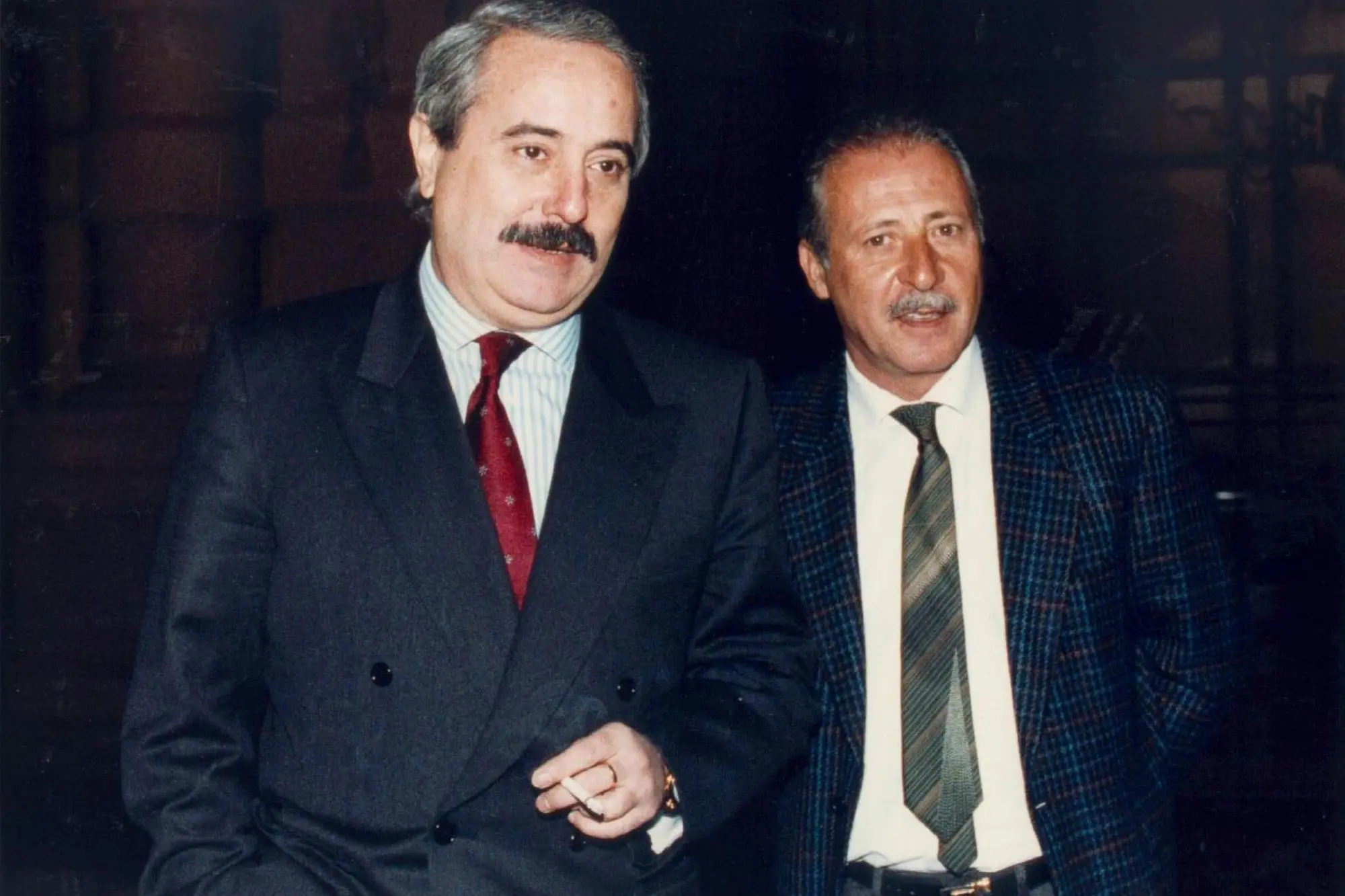
Per restare aggiornato entra nel nostro canale Whatsapp
As we approach the thirty-fourth anniversary of the Via D'Amelio massacre, it seems appropriate to offer some considerations that, while necessarily based on a cautious reading of the events, aim to contribute to a more orderly and informed reconstruction of one of the most dramatic episodes in the history of the Republic. In this perspective, the visit to Palermo by Prime Minister Giorgia Meloni, accompanied by a significant government delegation, which took place just days before the official celebrations, deserves to be welcomed as a sign of renewed institutional attention to the fight against mafia crime. This is particularly significant at a time when the city appears to be experiencing worrying signs of a resurgence of the mafia phenomenon, fueled both by traditional territorial control dynamics and by renewed criminal alliances between the Cosa Nostra and forms of common crime rooted in the most vulnerable and marginalized neighborhoods.
However, a fundamental question remains unsolved and continues to loom large with undiminished force: why was Paolo Borsellino killed with such urgency and violence just fifty-seven days after the Capaci massacre?
A segment of contemporary public debate, often marked by biased or ideologically biased interpretations, tends to underestimate the motive established so far in the trial: the elimination of a magistrate deemed extremely dangerous by Cosa Nostra, because he was capable of pursuing with determination, autonomy, and competence the anti-mafia strategy already shared with Giovanni Falcone.
At the same time, another narrative, now strongly present in political and institutional discourse—a sort of party-based anti-Mafia denialist—tends to identify the relationship between mafia interests, the procurement system, and the financial world as the central, if not exclusive, motive for the Via D'Amelio massacre. This approach, however, risks excessively narrowing the scope of the analysis if it is used to fundamentally exclude any other competing investigative avenues, starting with the possible role of deviant state apparatuses. This perspective, as is well known, has also gained prominence in the work of the Parliamentary Anti-Mafia Commission, where interpretations have emerged that are not always consistent between the parliamentary majority and minority, the latter often being prevented from effectively influencing the Commission's work.
The author does not intend to prejudge any of the possible reconstructive paths. Rather, he believes it is necessary—also in light of his personal experience during that judicial period—to address some questions that remain relevant and cannot be dismissed from a report of the facts that aspires to be complete, balanced, and respectful of the procedural findings.
A first, agonizing question concerns the magistrate's protection. Why was Paolo Borsellino not promptly removed from Palermo, in a context in which the risk of a new attack appeared real, present, and perceptible even outside the most qualified investigative circles? Why did the security measures put in place for him prove so grossly inadequate given the nature and intensity of the threat? And, furthermore, what significance should be attributed to the presence, at the site of the massacre, of individuals linked to state apparatuses at a time and in a manner that, due to their unusual nature, have fueled questions over the years that have never been fully resolved?
Proceeding in order, the first question to address concerns the reasons why Cosa Nostra felt the need to repeat such a devastating attack so soon after the Capaci massacre. What danger did Paolo Borsellino pose to the mafia organization at that time? It seems insufficient, if not downright misleading, to assume that Cosa Nostra's primary concern was attributable to the magistrate's knowledge of the Carabinieri Special Operations Unit's "mafia-contracts" relationship. Indeed, that relationship had long been available to the mafia organization and was known to Borsellino himself; furthermore, as far as we know, it contained no specific references to the Buscemi family, the Massa Carrara quarries, the Ferruzzi group, or, therefore, the alleged involvement of high finance in Cosa Nostra's strategies. This further investigative line had been developed, moreover, by the Guardia di Finanza (albeit in an investigative and procedural context not free from shadows) and was not mentioned in the well-known ROS report.
We must therefore ask ourselves what was really worrying the Cosa Nostra and what other interests Borsellino's activities might have threatened. Given the author's personal knowledge and the findings emerging from investigations conducted between Palermo and Caltanissetta, it seems plausible to assume that a particularly alarming aspect was the revelations Gaspare Mutolo had begun to disclose to the magistrate, concerning not only the mafia's top brass but also significant segments of the institutions and the professional world: security forces, magistrates, lawyers, members of the State Police and the Carabinieri. From this perspective, the disappearance of Borsellino's red diary, which most likely contained notes of thoughts and information not yet fully documented, becomes crucial. Investigations by the Caltanissetta judicial authorities have highlighted how the interest in stealing that diary cannot be traced back to the Cosa Nostra, but rather appears compatible with the interests of individuals within deviant areas of the state apparatus, eager to learn or prevent knowledge of its contents. Trial documents show that Borsellino's last interrogation of Mutolo took place on July 17, 1992, just two days before the Via D'Amelio attack; on that occasion, the magistrate appeared particularly distraught and aware of being surrounded by enemies not only within the Mafia, but also within the institutional world. In this context, the bitterness he allegedly confided to his wife Agnese and a small group of colleagues cannot be overlooked, after developing the suspicion of a traitor among those he trusted most.
A second consideration concerns the inadequate assessment of the statements made by Gaspare Spatuzza regarding the presence of an unidentified individual, unrelated to Cosa Nostra, at the time the Fiat 126 used in the massacre was being loaded with explosives. In this context, it is striking that the fabrication constructed around the false collaborator Vincenzo Scarantino—as part of the serious misdirection attributable to the investigative team led by Arnaldo La Barbera, a figure himself characterized by the dual role of judicial police officer and an individual connected to the secret services with the code name "Rutilius"—focused precisely on attributing a role in the theft and loading of explosives into the car used in the attack. It is therefore legitimate to ask whether the construction of a false truth about that part of the execution phase served to prevent a more accurate interpretation of the episode and, above all, of the identity of the individuals involved.
A third consideration requires reading the 1992 massacres in close connection with those of 1993, which took place in Rome, Florence, and Milan. The existence of a political-subversive dimension to the strategy of massacres now appears difficult to dispute. From this perspective, the role of Giuseppe Graviano, a central figure in the 1992 and 1993 massacres, becomes significant, as do the statements made by Gaspare Spatuzza regarding the claims attributed to Graviano himself at the Doney bar in Rome regarding the imminent success of the terror strategy. Nor can the significance of the statements contained in the first- and second-instance rulings handed down in Reggio Calabria in the proceedings on the so-called "'Ndrangheta massacres" be ignored. These rulings reconstruct a convergence between Cosa Nostra and Calabrian criminal organizations oriented towards exerting violent and destabilizing pressure on the state. And yet, how could it not be considered absolutely relevant to delve into the role of Paolo Bellini, a man already convicted with a final sentence for the Bologna train station massacre, in the relationship, still to be fully explored, between black subversion, secret services and Cosa Nostra.
The foregoing considerations are not intended to propose an alternative truth to that handed down by the court rulings, nor to superimpose investigative suggestions on the findings of the trial. Rather, they stem from the need to avoid undermining the complexity of the facts, to enrich the public debate, and to prevent the reconstruction of the Via D'Amelio massacre from being reduced to a single interpretative framework, however relevant. The killing of Paolo Borsellino was certainly deliberate and carried out by Cosa Nostra; but it remains necessary to fully understand whether that decision was merely an expression of the mafia organization's strategy of revenge and survival, or whether it intercepted, supported, or favored ulterior interests, located in opaque areas of connection between organized crime, economic powers, untrustworthy institutional circles, and subversive networks. Moreover, Borsellino himself, during a public conference shortly before his murder, commenting on the instigators and motive for the Capaci massacre, said: "I don't know if it was the Mafia, but it was the Mafia anyway, and the Mafia organization planned and carried out the attack on May 23rd... when Giovanni Falcone was just a step away from becoming the National Anti-Mafia Director..." In another passage of the same conference, he graphically stated: "The Capaci massacre was carried out by Cosa Nostra, but it was made possible by the indifference and complicity of those within the institutions who should have defended Giovanni and instead fought him."
For this reason, the questions surrounding Borsellino's lack of adequate protection, the disappearance of the Red Diary, the role of individuals outside of Cosa Nostra in the execution phase of the attack, the construction of the Scarantino cover-up, the statements of Mutolo and Spatuzza, and the connections between the 1992 and 1993 massacres cannot be considered marginal issues or exercises in judicial memory. Rather, they constitute the still-living core of a quest for truth that concerns not only the criminal responsibility of individuals, but the very stability of the democratic state in the face of mafia violence and its potential external complicity.
Luigi Patronaggio - Magistrate