The Senate approves the bill on the Court of Auditors: the reform is now law.
All that's missing is publication in the Official Journal. There were 93 yes votes, 51 no votes, and 5 abstentions.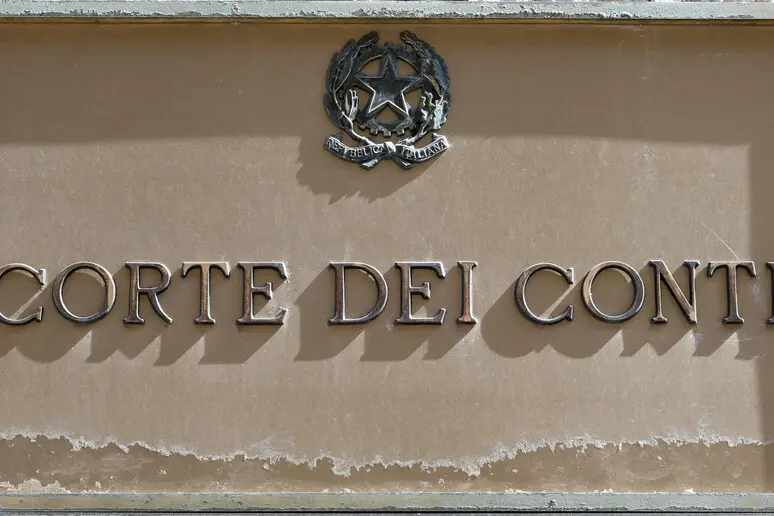
Per restare aggiornato entra nel nostro canale Whatsapp
The Senate has definitively approved the bill on the Court of Auditors , a law on the functions of the Court of Auditors, confirming the text approved by the Chamber of Deputies. The measure, once published in the Official Journal, will become law. The bill received 93 votes in favor, 51 against, and 5 abstentions. Among other measures, the bill consolidates the tax shield introduced during the Covid-19 pandemic in 2020 and so far extended until 2025. Among other things, the bill limits the administrative liability of public officials by rewriting the definition of gross negligence; it also introduces new advisory functions for accounting magistrates.
"Today marks a dark chapter for all citizens: the Senate of the Republic has approved the reform of the Court of Auditors, a judiciary mandated by the Constitution to ensure that public resources are allocated to community services and are not wasted through incompetence or corruption. This decision marks a step backward in the protection of public finances and ushers in a phase in which the principle of accountability in the management of citizens' funds is significantly weakened." This is according to the Association of Magistrates of the Court of Auditors.
"From today," the Court of Auditors' Association continues, " in the event of serious negligence, the damage caused to public finances will be compensable only up to a maximum of 30% of the ascertained damage. The remainder will not be recovered and will remain the responsibility of the community ." "Further serious concerns," the magistrates continue, "are the introduction of automatic exemptions from liability , linked to the silence of the Court of Auditors during legitimacy reviews or opinions. In this way, the absence of an explicit ruling from the Court of Auditors risks becoming an automatic justification , subjecting these functions to a rationale of exclusion from liability rather than improving services. The reform negatively impacts the principles of legality, responsibility, and proper administration , enshrined in the Constitution, and raises a central issue of fairness: public resources belong to everyone, and their protection requires effective and credible forms of accountability."
"Greater administrative efficiency is not achieved by reducing the role of the Court of Auditors, but by enhancing its independent and impartial oversight to ensure the proper use of public funds," the Association concludes.
(Unioneonline)