

According to the prosecutors, there are 21 elements that incriminate Sempio: the fingerprint, the DNA, the lies, the false alibi, the soliloquies in the car.
The investigators' list also includes phone calls to Poggi's home and alleged corruption in the first investigation against him.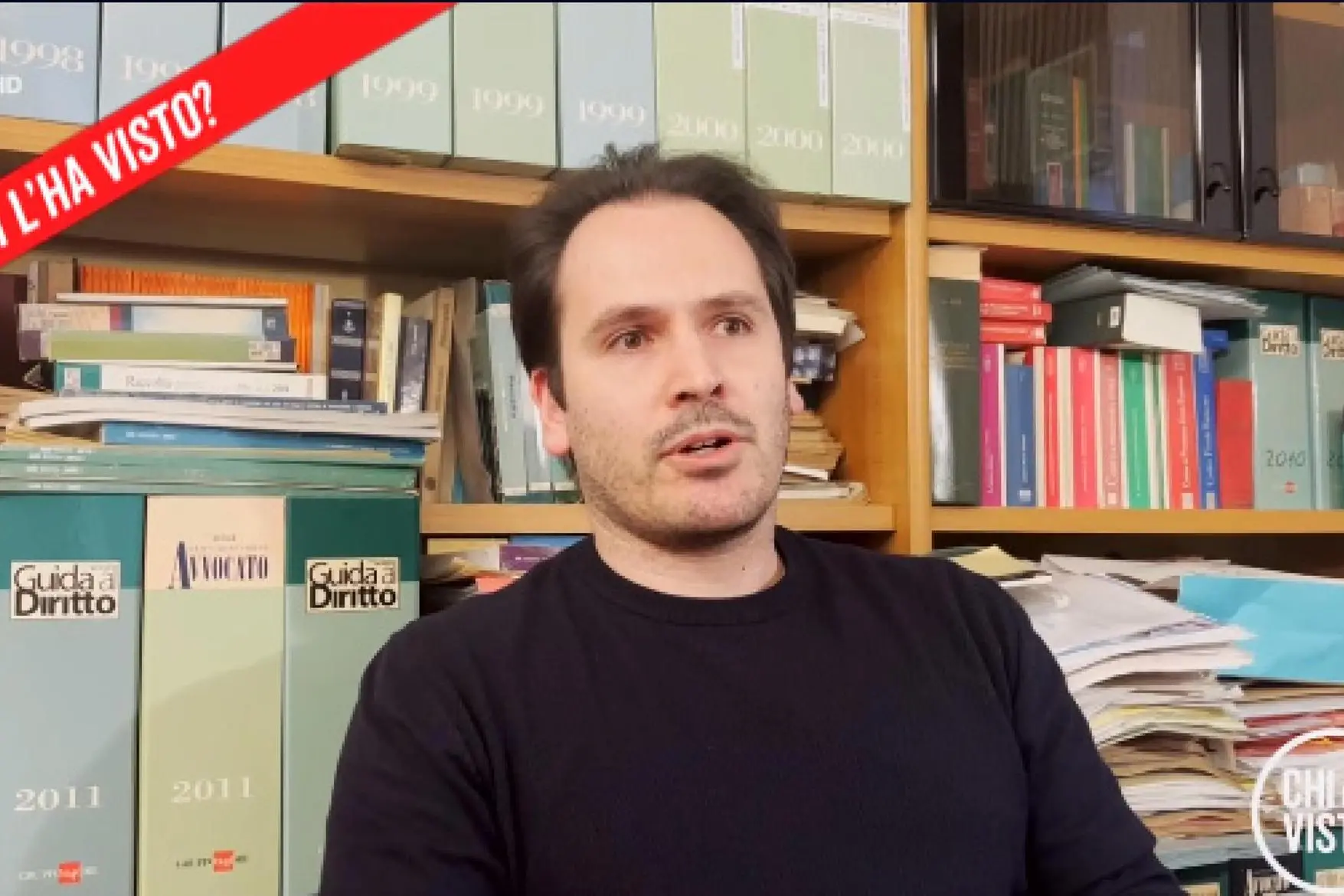
Andrea Sempio (Ansa)
Per restare aggiornato entra nel nostro canale Whatsapp
The Pavia Prosecutor's Office believes it has 21 pieces of evidence proving Andrea Sempio's guilt, enough to at least send the 38-year-old shop assistant, the only suspect in the new investigation into the Garlasco crime, to trial.
Many are clearly interrelated and address different aspects of the same research topics. Here they are grouped by key themes.
The phone calls to the Poggi house
Three calls to the Poggi home were made on August 7 and 8, 2007, a few days before the murder and when Sempio knew Chiara was home alone, as his friend Marco was in the mountains with his parents. According to the Prosecutor's Office, the 38-year-old lied when he said he didn't know Marco Poggi was on vacation; those calls were attempts to contact Chiara and approach the 26-year-old.
Intimate videos
In one of the soliloquies intercepted in the car, Sempio discusses the intimate videos Chiara had made with her boyfriend Alberto Stasi, which he allegedly obtained and which, watching, triggered his "unrequited attraction" to her. The clerk also mentions a USB stick containing the footage, and he mentions this before the existence of the flash drive surfaced in the media.
Money to pay the investigators of the first investigation
When he was investigated in the closed case, he "immediately took action," along with his father, to "raise money to pay the investigators." During the February 2017 interrogation, he lied "easily," having "become aware of the evidence against him."
DNA research and the 2014 Stasi trial
The evidence also includes web searches conducted by Sempio in 2014, during Alberto Stasi's second appeal trial. According to prosecutors, these searches revealed "particular interest and concern" regarding the DNA found on the victim's fingernails.
DNA
One of the strongest pieces of evidence is the scientific one. The DNA found on Chiara Poggi's fingernails, according to the preliminary investigation, has a "moderately strong" compatibility with the male genetic line (Y haplotype) of Andrea Sempio's family, and is incompatible with Andrea Stasi. According to the reconstruction of the new investigation, also by the Cagliari RIS, the attack on Chiara Poggi was a multi-stage attack, and the victim attempted to defend herself.
Footprint 33
Another significant scientific finding. Footprint 33 was left on the wall along the stairs leading to the cellar where Chiara's body was found. Investigators already said at the time that it was the killer's footprint, but it was never attributed to anyone. According to the prosecution and the experts called by the prosecutors, it is attributable to Sempio, and the anthropometric measurements are also compatible with the bloody shoeprint found on "step zero." Furthermore, the footprint, already visible before the RIS sprayed the ninhydrin, would have been made by a wet hand: not simply sweat, which doesn't remain visible over time, nor even just water, which wouldn't have reacted to ninhydrin.
The lack of alibi and the case of the receipt
Andrea Sempio has no alibi for that morning. And even the one investigators believe was fabricated doesn't match the new time of Chiara Poggi's death. Furthermore, there's the case of the parking receipt from Vigevano. Sempio brought it to investigators a year after the crime, and it raised suspicions even then. According to the reconstruction by Pavia prosecutors, it wasn't Sempio who went to Vigevano, but his mother, who was meeting a friend of hers who is a firefighter, as the latter confirmed in a testimony. "I don't remember exactly what happened that day, but when we texted, it was to see each other." And that morning, the man and Sempio's mother exchanged several text messages.
Returning to the scene of the crime
Sempio visited the crime scene twice. The first time was in the morning: his version, according to which he went to Via Pascoli after "noticing an ambulance and a large crowd in front of the house," is "unbelievable." This was not the route he was traveling, and in fact, he was "in the exact opposite direction." It is "unbelievable that from the short stretch of Via Pavia traveled by the suspect and his father, the people on Via Pascoli could have been visible, given the distance and the presence of two roundabouts." Sempio's version, on this point too, according to the prosecution, is "patently implausible." Furthermore, he returned to the scene again in the afternoon.
Notes in the trash and soliloquies in the car
There's also an incident from February 26, 2025, the beginning of the new investigation, when Sempio allegedly threw some notes "related to the murder" in the trash. On this point, however, journalist Gianluigi Nuzzi confirmed Sempio's version: it was a "setlist" for a show.
The various car soliloquies intercepted by investigators have emerged in recent days: one in which he talks about the video and his obsession with Chiara, the phone calls, and the murder; another in which he appears to refer to the time he entered the Poggi home that morning.
The profile of Racis
Then there's the profile of the Racis Carabinieri, outlined in Sempio's writings: personal notes and posts on a forum about "seduction." They reveal a man "obsessed with violent sex," "completely disrespectful of women's personal lives."
The illness and the lies
Sempio allegedly lied several times during the first and second investigations. In 2008, when asked more specific questions "to test his alibi" (the one with the infamous receipt), he felt "unwell." So much so that emergency services had to be called, the interrogation was interrupted, but the report makes no mention of that feeling.
The motive
The obsession with Chiara Poggi after seeing the video, the attempted approach, and the refusal that, according to prosecutors, triggered the clerk's murderous rage.
(Unioneonline/L)