Trump slams Iran: "Our Apache was shot down over the Strait of Hormuz, we'll respond."
The two pilots were rescued within two hours by a naval surface drone that transported them to shore.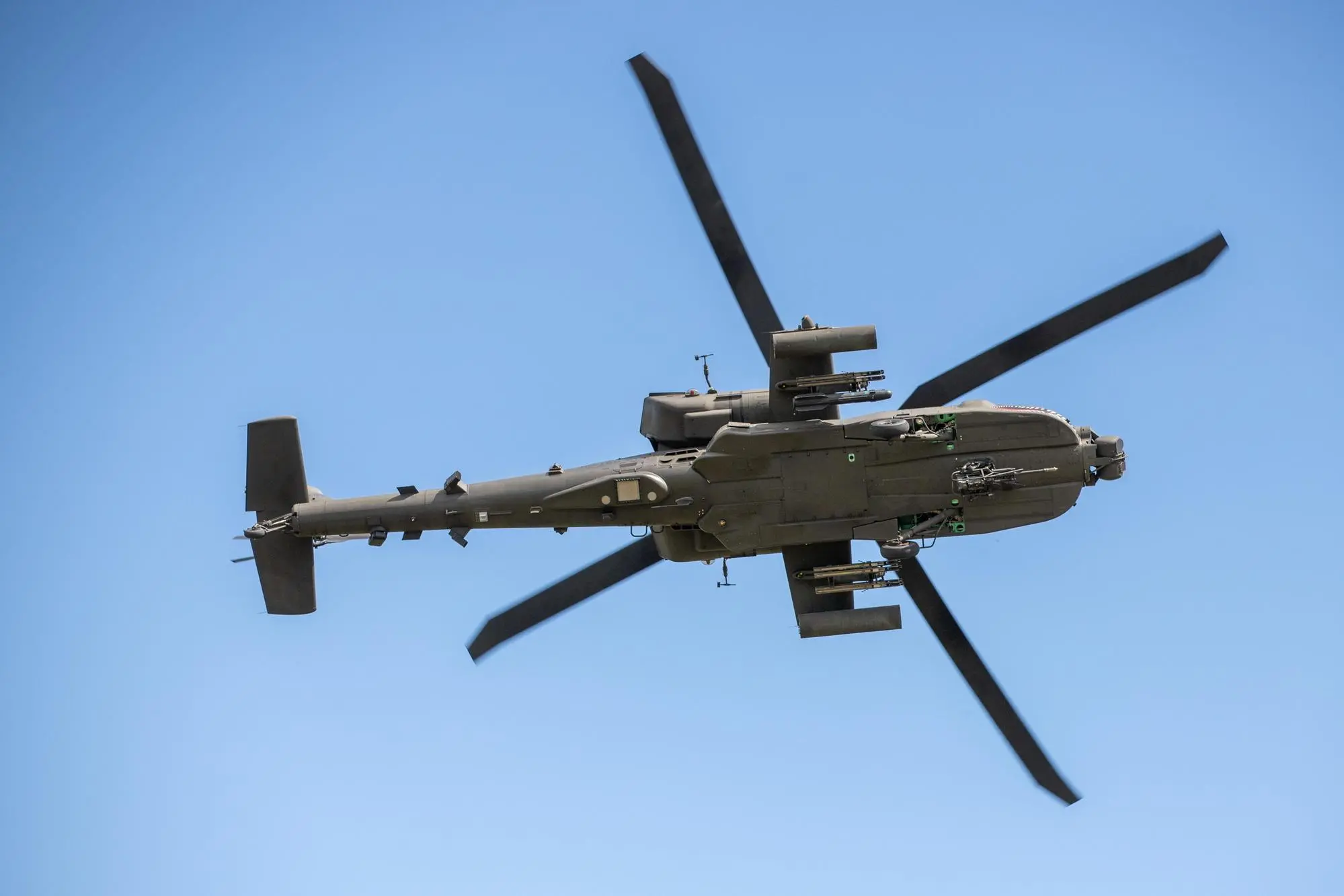
An Apache helicopter (photo Ansa - Agnieszka Bielecka)
Per restare aggiornato entra nel nostro canale Whatsapp
Tensions between the US and Iran are rising after Tehran shot down an American combat helicopter—the first of this war—over the Strait of Hormuz and Donald Trump announced retaliation, despite the two pilots being "safe and sound." "I was just informed by our great military that last night, the Iranians shot down one of our highly sophisticated Apaches while it was patrolling the Strait of Hormuz," the commander-in-chief revealed to Truth, warning that "the United States must respond to this attack." The AH-64 Apache crashed Sunday near the coast of Oman while "patrolling regional waters." Trump had already reported that the two pilots were "fine," but was awaiting a Pentagon report on the cause of the crash. Armed with Hellfire missiles, the Apache is one of the most fearsome aircraft types operating in the region: they patrol the strategic waterway partly to deter small-boat attacks and shoot down drones, but they have been pushing ever closer to Iranian territory, including Iranian-controlled islands in the Straits and the Persian Gulf.
The two pilots were rescued within two hours by a surface naval drone—designed like a speedboat—that transported them to shore: the first operation of its kind conducted by US forces. In April, the IRGC had already shot down an F-15E Strike Eagle fighter, and two crew members were rescued in a high-risk rescue operation after ejecting from the damaged aircraft and landing in hostile territory. Tehran has also destroyed approximately 30 Reaper drones, while several US fighters have been lost to enemy and friendly fire since the start of the war. The situation is now further aggravated by the continuation of Israeli strikes in Lebanon. "If I tell him to do something, he does it," Trump said, denying that Benjamin Netanyahu defied him by attacking Iran on Sunday because, he explained to the BBC, "the missiles were already on their way" when he scolded him over the phone. But the Israeli prime minister continues to take carte blanche in Lebanon, risking undermining the agreement with Tehran, which the tycoon envisioned "within 2-3 days" before the Apache's downing. The ayatollah regime, in fact, ties the signing to a truce on all fronts, including Lebanon, where the Hezbollah-allied militia operates.

According to the latest daily report from the Lebanese Ministry of Health, at least 29 people have been killed and 133 others injured in the past 24 hours in Israeli airstrikes in the south and east of the country. The worst raid was on Tyre, the deadliest in that city since fighting broke out in early March: a single attack on the eastern outskirts left eight dead. The intersecting attacks also left two Iranian air defense personnel killed on Sunday, and a drone launched Monday by the Houthis—Tehran's allies—on Eilat was intercepted by the IDF. Satellite images suggest that the Israeli Air Force's Ramat David air base in northern Israel suffered damage during the Pasdaran missile strikes. Trump is convinced he is in the final stages and that "in two weeks we will declare total victory," but CNN calculated that the commander-in-chief has announced 37 times that an agreement with Iran is imminent.
A Pakistani source also told Al Arabiya that "Islamabad is communicating with all parties involved to reach an agreement by this week." Iran's UN representative, Saeed Iravani, for his part, said he hoped negotiations would be concluded by the end of this month, but reiterated that the ceasefire must be "global" and cover "the entire region, including Lebanon." An Iranian official, meanwhile, insisted that "there will be no agreement with the US before sanctions are lifted and frozen Iranian assets are released." And that "any violation of the ceasefire will affect talks between Tehran and Washington." Therefore, the risk of a new escalation with Israeli raids in Lebanon and renewed tensions between Trump and Netanyahu remains. Because, as Vice President J.D. Vance also acknowledged, "sometimes US and Israeli interests are not the same."
(Unioneonline)